Irony-Covered Hearts and Frenetic Hypercuriosity: The Multimedia Work of Yuri Umemoto
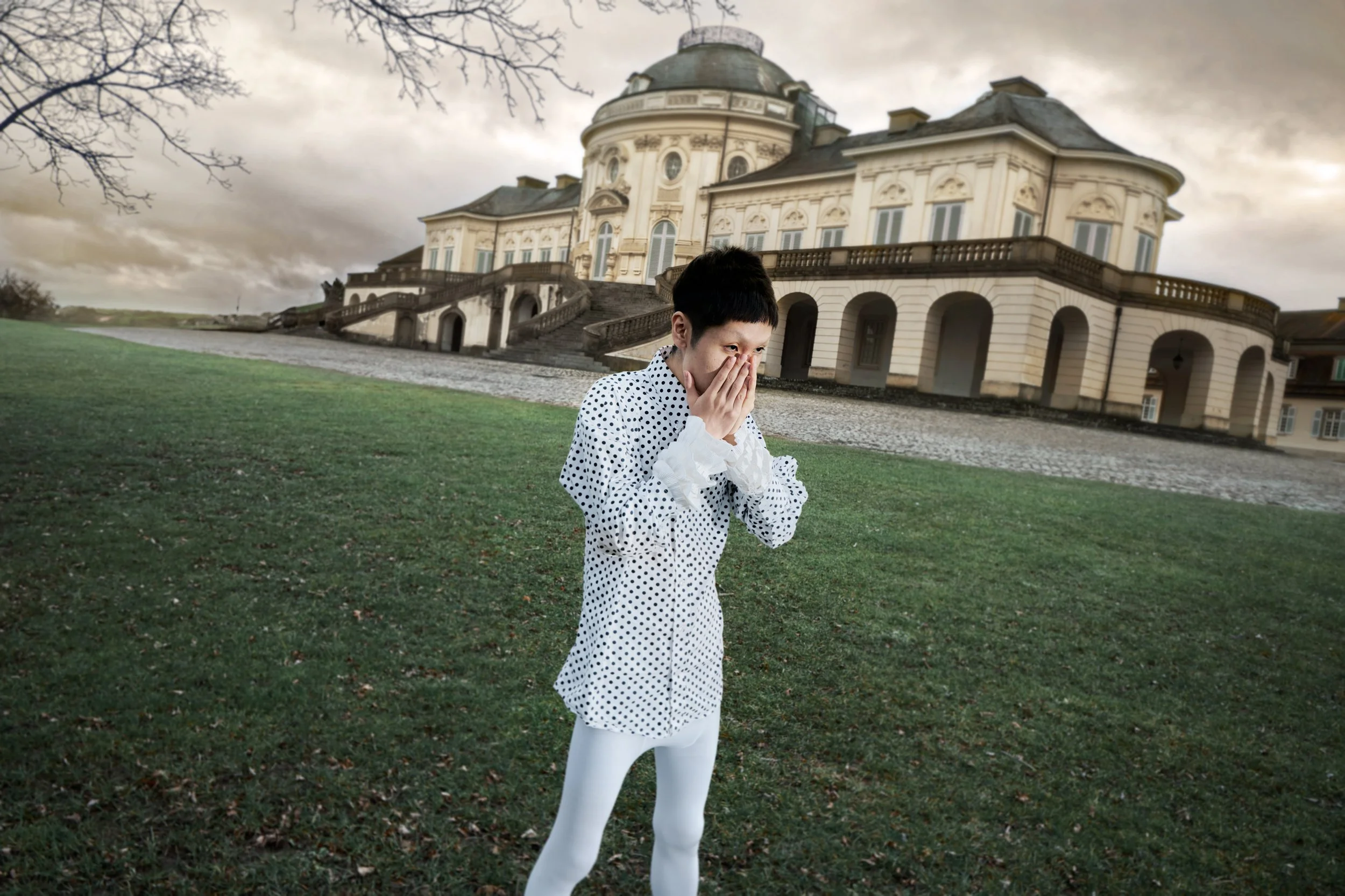
Yuri Umemoto is a young composer born and raised in Tokyo, but mostly working in Europe. In his work he combines western classical music with influences of Japanese pop and internet culture. Writer Elia Brülhart and photographer Johanna Bommer met up with him in February this year, in his current residency studio.
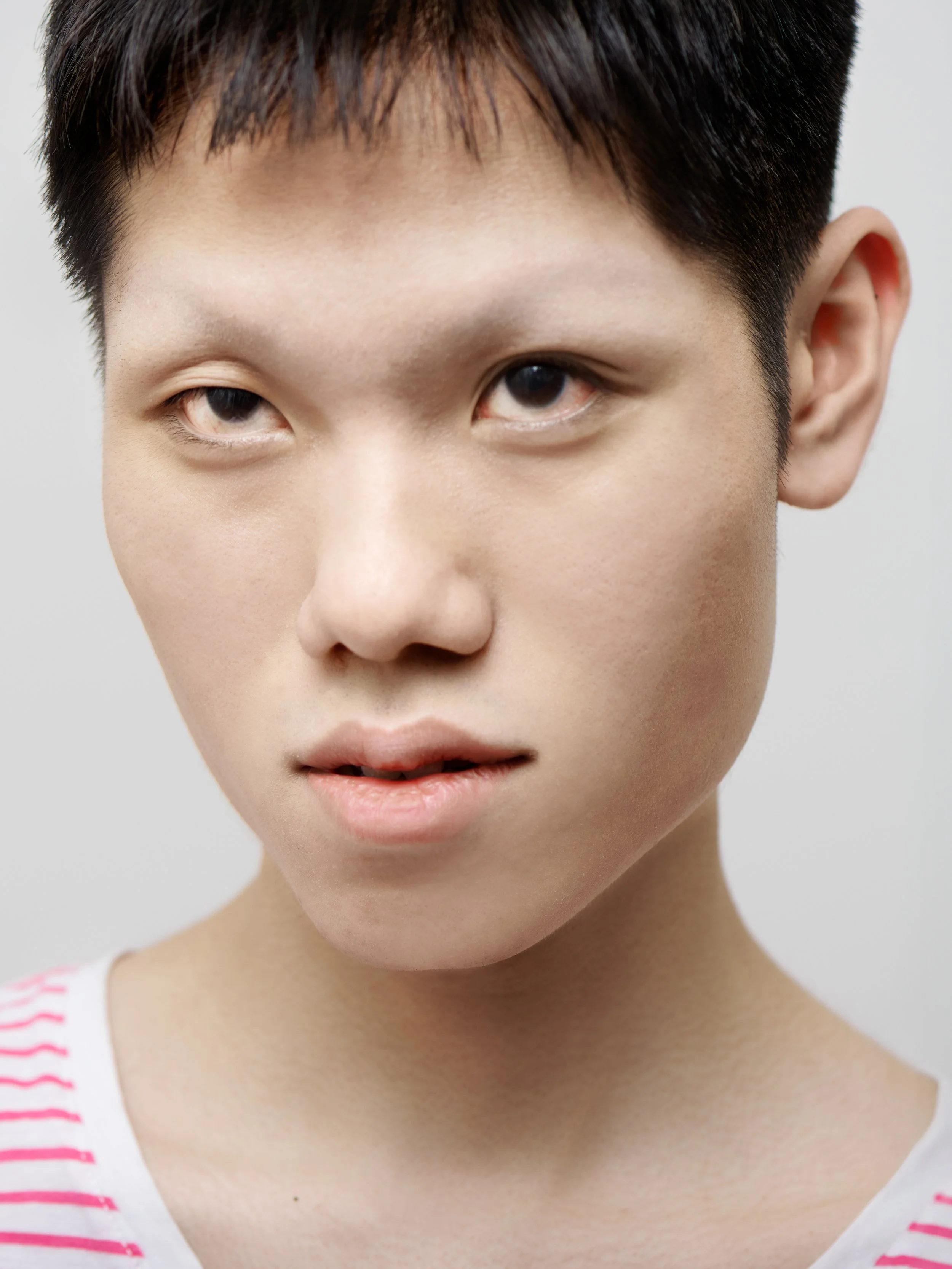
We’re on a hill between Leonberg, Gerlingen, and Stuttgart, on the premises of Schloss Solitude. A Rococo castle built by Carl Eugen, Duke of Württemberg, in the 1760s. In the semicircle surrounding the castle are the buildings of the Akademie. For five months, the Japanese composer Yuri Umemoto will spend his days here composing new classical pieces, preparing his next DJ set, reading books about irony and photography, chatting a lot with friends online, cooking pasta, and eating Mozartkugeln.
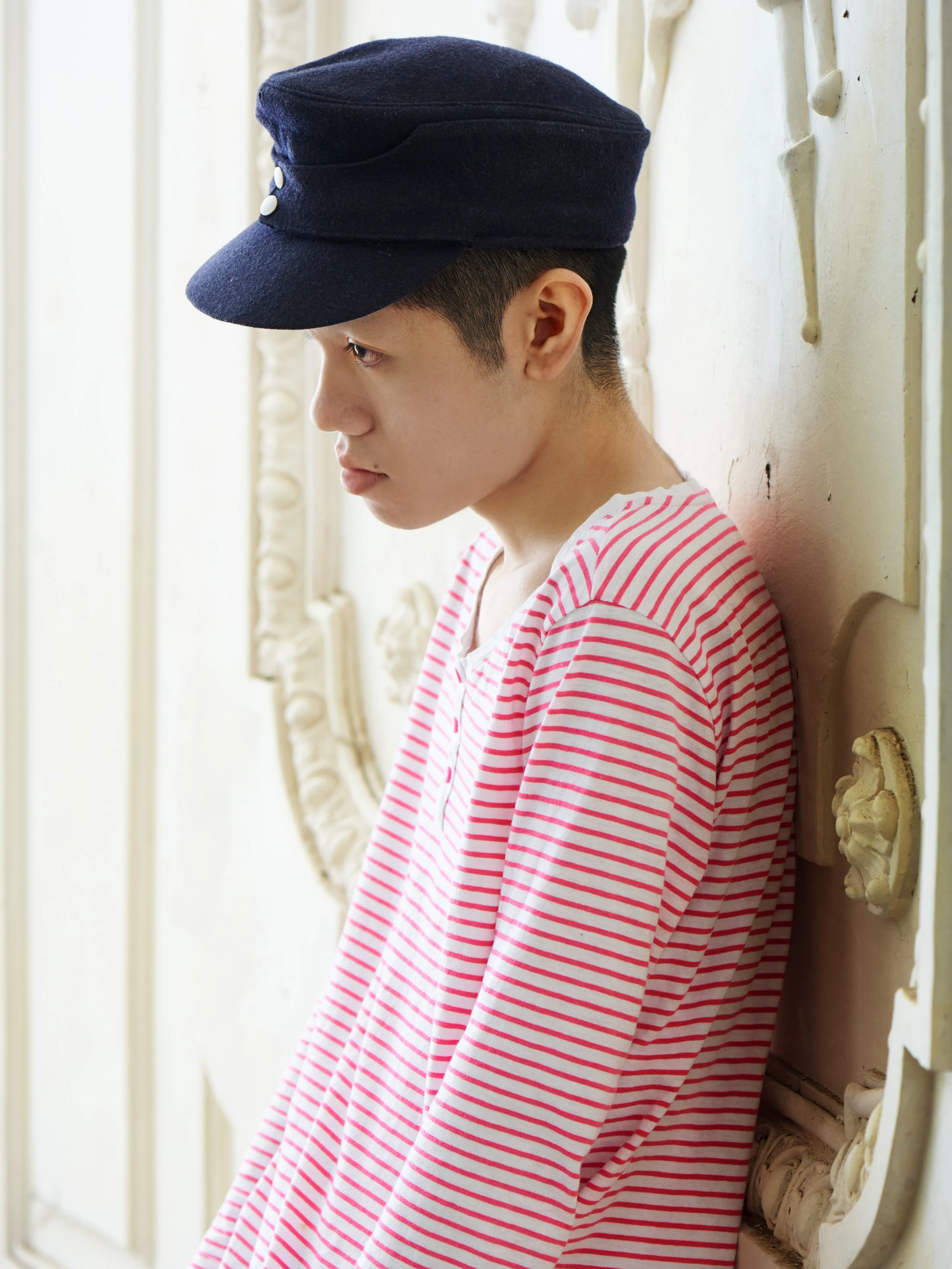
As we enter Yuri’s studio, Mai Kawano, an old friend, pianist, and collaborator, is playing on the grand piano right in front of the door. To the right, next to the window, sits Yuri in an armchair dressed in stripes and low-waist tight jeans, DJing hastily on a small deck, while Mai is practicing his compositions for a competition.
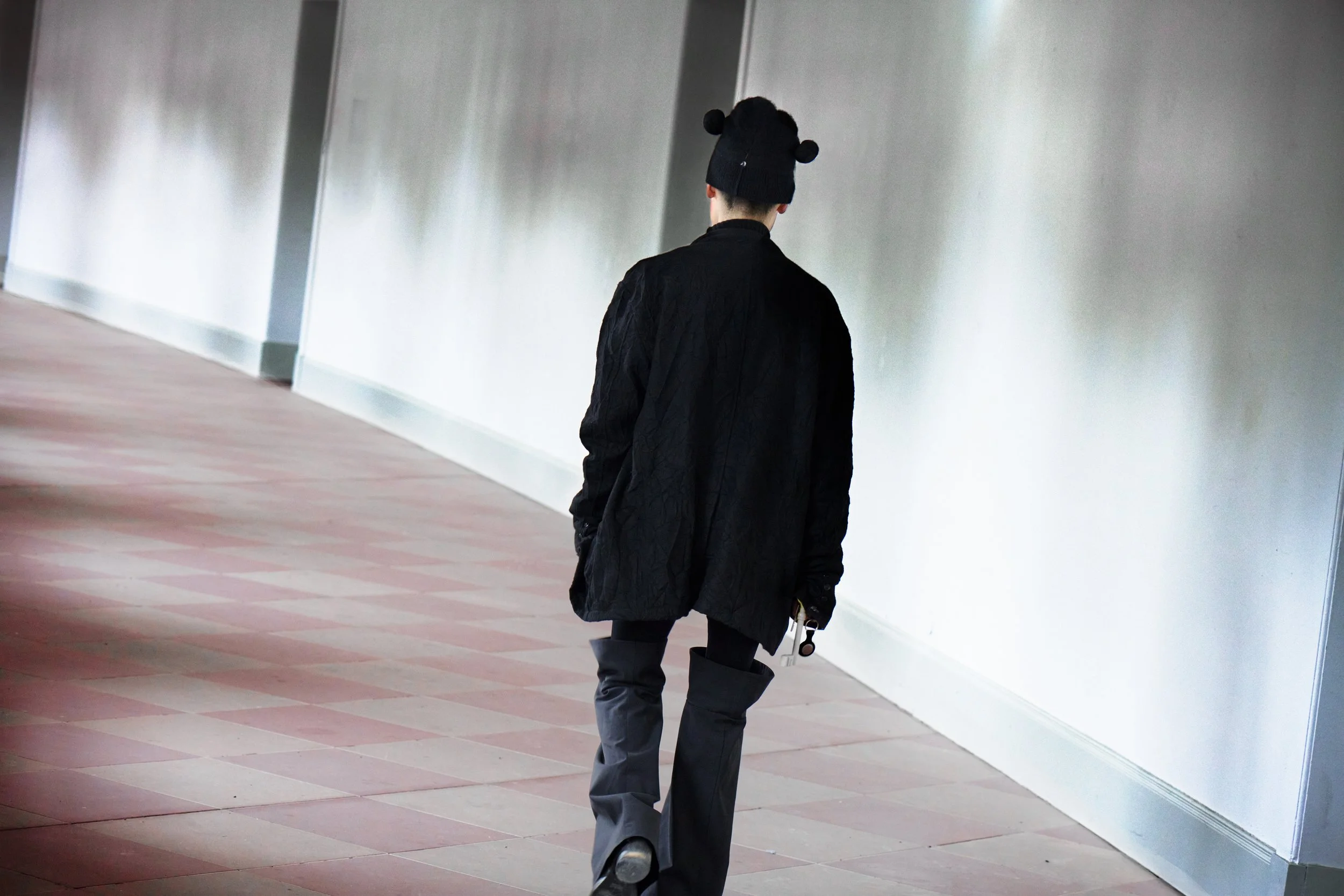
Minutes before, Yuri and Mai greeted us in the ridiculously long and curved hallway; now they are both sunken in their practice. It’s hard to tell if they are playing together, assimilating the rhythms and styles, or if they are just bound to the spatial limitations of the room. When taking a look behind Yuri, there is a little piece of printer paper pinned to the wall saying:
Make money by making songs
Win awards by making songs
Fuck by making songs
Yuri later tells us this was the basis for one of his pieces. There are a lot of these kinds of sketches, in either words or images, surrounding the table in the studio, either loosely lying around on the floor or furniture or pinned to the wall within eye level.
In Yuri’s compositional practices, Yuri combines elements of classical music with anime or internet culture, being strongly inspired by his Christian upbringing, Japanese pop culture and fashion. There is almost always a female voice speaking—as it seems, representatively for Yuri. She talks about his parents who broke up when he was small, how his girlfriend is so different from him, about his plans and worries. Sceneries and thoughts of daily life with a bit of an absurd or extreme take on them. As funny as the music seems on first listen,, there is a lot of thought—and at times a lot of sadness—behind it. He uses irony to veil his inner self, fears of loneliness, intimate pondering about himself, his family or his friends, adding another layer, making it appear more rigid and objective.
Most of his work is originally meant to be performed live. Through this intended character of the music, the materiality of the media he uses becomes a central defining element. While the pre-recorded looped voice remains the same throughout the songs and between the performances, the instrumental parts that accompany and surround the verbal parts, played by different performers, evolve and change and add layers to the music. The text gives us a certain context. Some naïve words inveigling us to wanting to consume an easy, relatable summary of thoughts. Interestingly, the abstracted emotions expressed within the instrumental parts are also tuned to complexity through this addition becoming more discernible.
After our two days at the castle, Yuri needs to quickly fly to Oslo to meet the performers of his next big thing waiting — “crypt_”, his own opera commissioned by the Münchener Biennale. The libretto — the script of the opera — tells the story of a composer “in search of more”, who meets up with three aristocratic ghosts. This is just one of the upcoming projects Yuri is working on. Apart from planned sessions with the underground ensemble of the moment, Felicity J. Lord, NOVAGANG Member prblm, or Italian musician edeF., he will release an album on the belgian label Isengard and his work will be performed in Stuttgart, Tokyo, Esslingen and Berlin.
Before connecting with the European underground, Yuri grew up in the very center of Tokyo, in Kanda, Chiyoda Ward. During his composition studies his music started to get some international attention, and he paused his studies and started to travel, mostly to Denmark and Germany. He tells us he still is on it to finish his studies back in Japan, though if he doesn’t graduate in the next semester when getting back, he will drop out and just move to London.
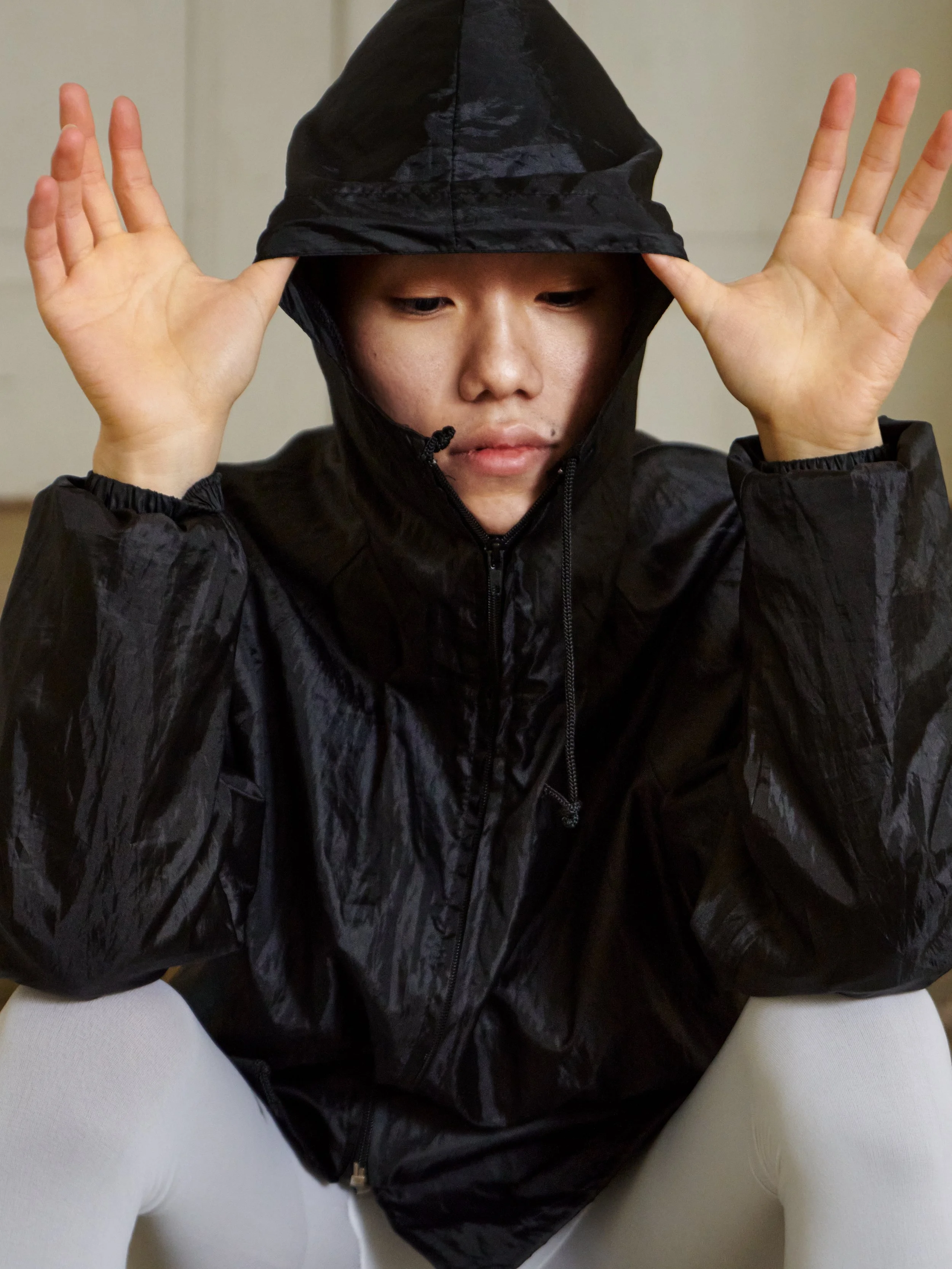
A central element of how Yuri appears as a person and how he copes with his current state of his life are his ironic takes on capitalistic, consumption and performance-oriented culture. At some point, he compared himself to a generic archetype of a famous rapper, again dismantling this by adding “But I’m very broke—in Germany, and I only eat kebab.” At another, he says that after this interview he will be world famous, not really declaring if he wishes this to come true. In general, his personality and how he presents himself always turns to a certain goofiness, but with a lot of thought and precision behind it. It seems like Yuri has a very strong concept of who he is, though not really who he wants to be.
There’s a kind of restless love in Yuri’s expression and perspective, love for music, objects, theory, fashion, and people. He observes the world through this lens, always very antsy to reach outward. On the dining table in his apartment on the top floor of the studio lays a little CD he made, called "I love my friends.” He talks a lot about how people inspire him, how he loves the exchange. Another defining thing about Yuri is his uncontrollable uprearing excitement for art and music. During our night there, we get locked outside of his apartment, just because — in a stream of enthusiasm — we rushed to the fake Genelecs in his studio to listen to Petite Feet’s covers of Scott Joplin’s ragtime songs “in a proper way.”
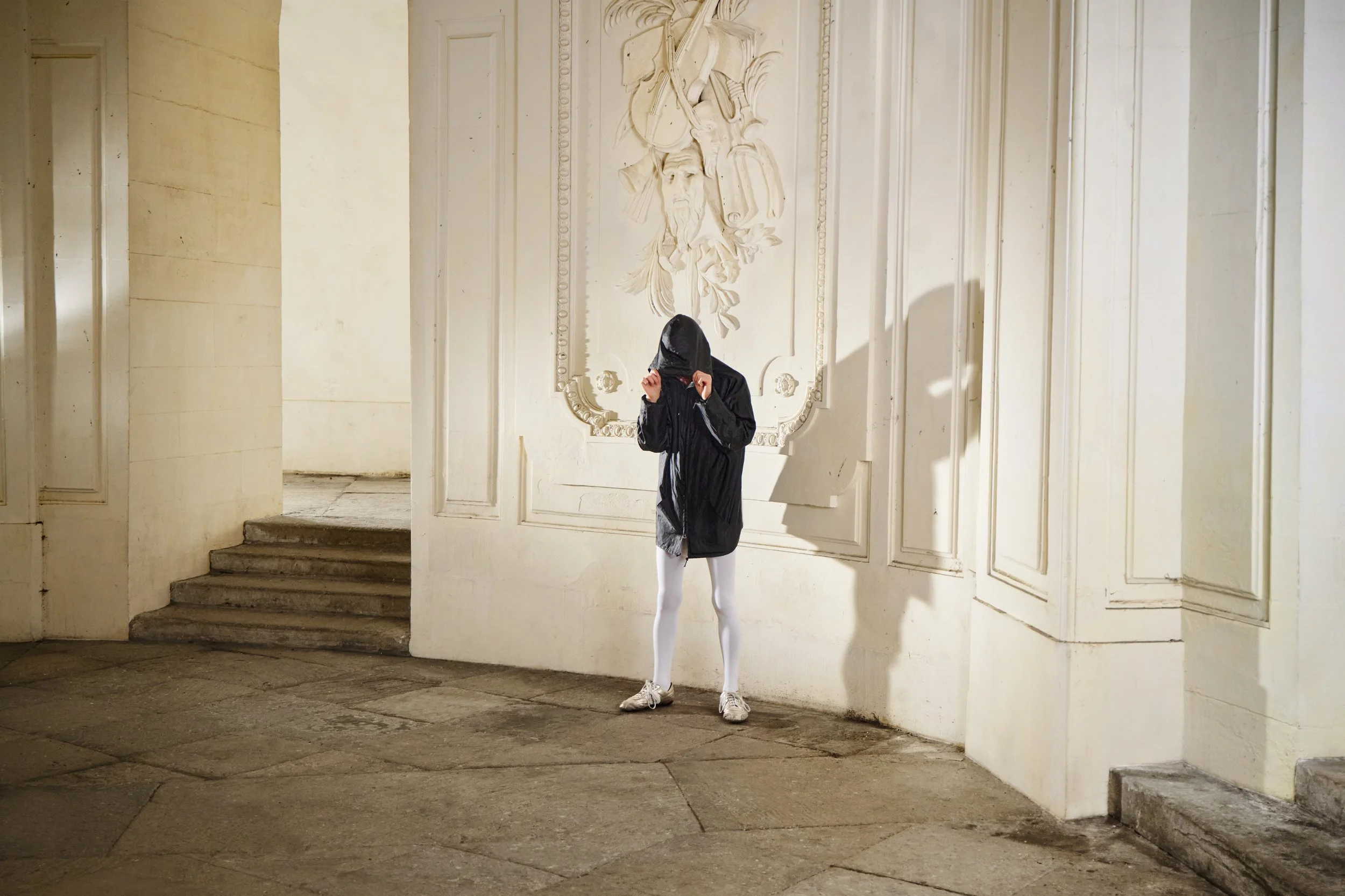
When we met at the castle, he played “I'll Never Smile Again” by Frank Sinatra & Tommy Dorsey on his Emerson Radio for us. He showed us books about irony or photography lying next to a stack of CDs and some hand-cut cardboard logos of luxury brands. We talked about internet culture and anime, about essentialsism and about his upcoming opera in Munich. Parts of those conversations have been edited and combined with text messages held both in English and Japanese and translated with the help of AI tools into a full interview:
This interview has been edited for length and clarity.
How would you introduce yourself to the sabukaru readers?
My name is Yuri Umemoto. I’m a Japanese composer.
What music did you listen to as a child?
The first pop songs I remember hearing, around age eight, were The Carpenters’ “Sing” and The Beatles’ “Hello, Goodbye.” We sang them in English class at school. I loved them then and still love them now. I like The Carpenters because they explore deep emotions with a simple language. But more than listening, I mostly sang music at school or in choir. Then, between the ages of 13 and 18, I listened very intensely to all kinds of classical and contemporary music.
How did you start making music?
My family is Christian and the elementary school I attended was Catholic. When I was ten, there was a Christmas play with a scene of the shepherds of Bethlehem. All forty boys in the grade had to audition, and one was chosen to sing a solo. When I was chosen, I thought I must be better at singing than anyone else. I must have musical talent. So, through this and also the praise of my parents, I gained confidence in my singing.
Also, during the last two years of elementary school, everyone around me was incredibly smart. And even though we were only about ten years old, most of the classes were geared toward the elite path: go to the University of Tokyo, become a bureaucrat, or join a large corporation and aim for an annual salary of tens of millions of yen. But since I was always very bad at studying and doing homework, my options were going to an art or music school. At the time in Tokyo, art school was only accepting girls, so I chose music school instead.
So, then you started to study singing?
Yes, at junior high.After about six months,I couldn’t imagine my future as an opera singer. Ever since I was a child, I’ve had this tendency of giving up on things very quickly.My singing ended in this way—like abandoning a Lego structure halfway through and knocking it down.
For the remaining two and a half years, I had nothing to do, so I spent my time figuring out what to do with my boredom. And without telling my parents, I bought an Android smartphone from a junk shop and spent every day and night playing mobile versions of Minecraft and GTA San Andreas.
And how did you start composing?
At some point, I was so bored I listened to every CD in the library like complete box sets of classical music. I was reading all kinds of sheet music. I tried playing the piano for the first time, writing short novels, making things, and showing them to people around me.
No matter what I made, my friends and teachers rarely reacted much. But the one thing I began doing casually to pass the time—making up compositions on the spot—was praised excessively. So again, I continued doing it.
Eventually I entered a music high school (Tokyo College of Music High School) in the composition department. But at the time my academic musical skills—solfège and composition theory—were so weak that my exam scores weren’t sufficient. I was admitted from the waiting list.
And now you’re going to present your Opera “crypt_” at the Münchener Biennale in May, how do those collaborations come about? Do you apply or are they contacting you?
I never apply for things myself. I simply behave as I normally do, and then someone wants something and I respond. I value those gradual relationships.
Why do you think your work has become popular?
Popularity emerges from a combination of the times. People’s ideologies, trends, desires, suffering, innovation, necessity, and coincidence. Describing it would be like describing the complexity of contemporary society itself.
What is your process when composing?
It varies. Often composition functions as a way of organizing things inside myself—things that aren’t going well, problems in daily life, joy, sadness, expectation, and disappointment. When I use simple words like *naruhodo* (“I see”), *hee* (“uh-huh”), or *sayonara* (“goodbye”), I find openings for narratives in the way those sounds can be interpreted. Words I initially choose without meaning might, through beautiful music and physical expression, reach a kind of non-physical beauty. Actions become words. Words become music. Music becomes words. And then they become actions again.
My concrete way of living becomes narrative through poetic and musical structures. Recently I’ve been thinking about how comfort and discomfort coexist in these narrative processes. I can make an example. I have someone I love now. The more I think about her, worry about her, talk about her, and write about her in music or text, the more she might feel defined or confined by my narrative. At the same time, she might feel meaning, happiness, or beauty in it.
So, I ask myself, how can I create narratives that are beautiful and powerful without becoming self-centered or controlling? How can loneliness, pain, and love be expressed and resolved together? Sometimes I also think about this balance in pragmatic human relationships.
Even something ambiguous and poetic—like the stain left by blueberries on a dessert plate, or an antique necklace she wore—can transform an obvious bodily beauty into a more complex and non-physical beauty. But I think this transformation is meaningful. It’s necessary for living.
The voice that appears in your works — who is she?
She’s anonymous, but the voice belongs to a classmate from my high school. When we were teenagers, I recorded hundreds of samples of her voice and catalogued them individually. Some of those recordings contain words I would only need years later. Sometimes we meet again to update the archive or record new songs.
You once said, your upcoming album was based on photographs. What does that mean?
Originally, I wanted to create photographic works, unrelated to music. While I was doing that, the Brussels label Isengard asked me to make an album. That led to the idea of turning seven photographs into poems, and then into music. The seven pieces titled *Concerts* revolve around the theme of people not listening to their own music, and fragments of everyday emotions appear as material, symbols, and motifs.
And what kind of music are you listening to right now? Share a few songs with us and what they mean to you
Prefab Sprout - Technique
When I listen to it on the way home from university symposia or uncomfortable academic meetings, everything begins to sound like a beautiful drama, and everyone involved is an important character.
Felicity J Lord — Royal Ballet School 2012 and Remove Yourself
I’m composing for their next album. Recently we performed an unreleased new piece together in London. I’m really excited about it.
Emahoy Tsege Mariam Gebru — Ballad of the Spirits
Her music blends European classical music with the liturgical traditions of the Ethiopian church, which are a part of her roots. Hearing her play it herself on piano is wonderful but listening to someone else perform it on a different instrument can reveal something interesting. Notation—information that has been simplified into a score—can sometimes highlight the composer’s musicality even more. For example, when I heard this piece performed on string instruments, the way Western musical theory exists inside her music became more emphasized. But in her own recordings the opposite impression can appear.
What is your relationship to internet culture and anime culture?
When I use pop culture—anime or character voices—it’s partly to give my work a consumable, product-like package. This also prevents my own story from becoming self-absorbed and closed. It’s a way of observing the mysterious value of things whose price we don’t know within capitalist production. It’s like walking into an avant-garde gallery or luxury boutique and seeing a glossy object whose price is unknown. That sensation gives the work a kind of contemporary, practical mystery.
But is contrast important in your work?
In European traditional art and philosophy—and also in the classical music I reference, especially after Beethoven—the Hegelian dialectical worldview is very influential. It’s the idea that two opposing things coexist and create a higher level. But sometimes I feel that using dialectics too much can become a kind of moral pressure. For example, if someone you care about says “I’m a terrible person,” and you insist dialectically that they are actually wonderful, it can become a kind of violence—an argument that leaves no room for response.
To create real contrast, there must be freedom to choose both dialectical and non-dialectical approaches. I’m afraid of being disliked, so I tend to talk too much. I also have a tendency to try to appear perfect. I dislike that about myself.
For the shooting you are wearing some pieces made by P.L.N. Why are you so tapped in with the Copenhagen scene?
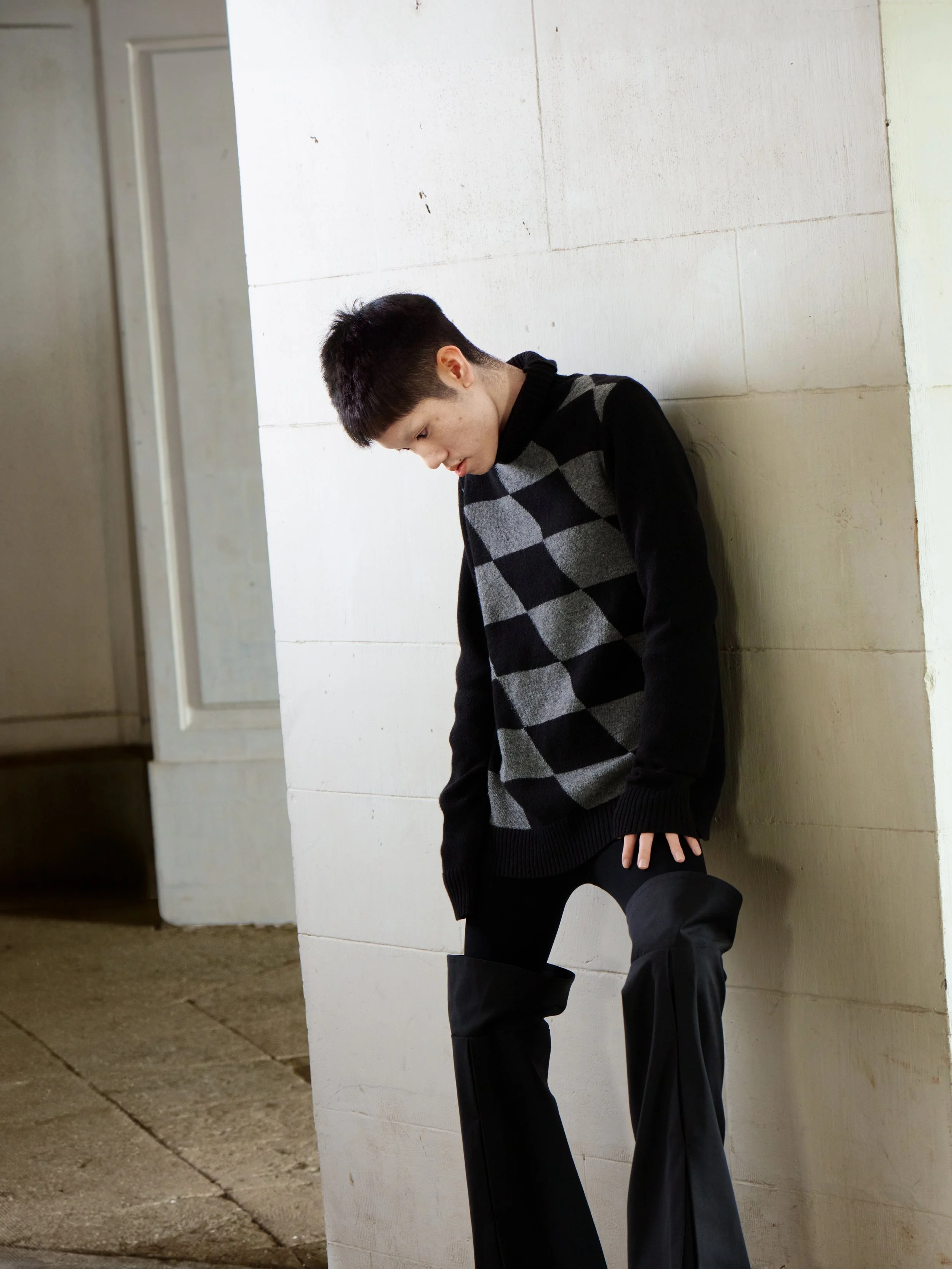
In 2023 a Danish guy named Harald—someone I had never met—sent me an email saying he wanted to meet me in Tokyo. He wore a cute tie. We talked briefly in the cafeteria of my old music high school, and then went to Saizeriya with a classmate. He handed over a 5000-yen bill—too much for fast food—and left almost immediately. It’s a very strange memory. At the time he hadn’t released music yet, but later he began making truly wonderful music under the name Soli City. He eventually became my closest friend in Europe and introduced me to many key people in the Copenhagen scene. Fashion designer Peter Lundvald Nielsen of P.L.N., people around the legendary label Posh Isolation, the new label REAL LIVE, and many artists of my generation whom I deeply respect. All of them are very important to my work.
How do you feel about the institutions and structures surrounding contemporary classical music?
Personally, I don’t really like them too much. Compared to pop culture, it often feels like a very conservative world. People involved in academic art tend to be politically left-leaning, and many of them have a strong aversion to traditional or conservative things—although the fact that classical music itself is a tradition makes this somewhat contradictory.
For example, in recent years classical music festivals in Germany often present curatorial programs centered around themes like anti-nationalism or anti-colonialism. But the actual social practices, organizational structures, and institutional frameworks they operate within are often extremely conservative compared to other worlds. In some cases that may be inevitable, given the history of traditional arts. Often, they don’t seem to be aware of this contradiction, and their excessive identity politics can sometimes appear sterile.
But why don’t you break out of this world if you don’t like living in it?
Because I am a fuckboy. I’m everywhere, I fuck musically with everyone—with people from every genre and every world. I want to fuck with everyone.
So also what is interesting is whether something looks conservative or innovative depends on which world or community you belong to. Because of that, I think we need a kind of social objectivity when thinking about communities. One interesting thing is that right-wing club DJs who voted for Trump sometimes simply enjoy music made by left-leaning musicians as pure sound, without context. I think that’s one of the fascinating aspects of music and art.
Both on the left and the right, and within any ideology, people often pursue what they believe to be “truth,” and think that anything incompatible with that truth should be eliminated. But that makes it difficult to have dialogue with people who think differently; it becomes self-contained and narrow.
About forty years ago, the philosopher Richard Rorty defined liberalism as “minimizing cruelty,” and suggested that avoiding claims of absolute truth might sometimes help build solidarity among people. I had been thinking about something similar. Language is constantly updated, and dialogue between imperfect people plays an important role in that process. Academia values context, but sometimes ideology ends up denying bodily responses like simply feeling something is “fun” or “beautiful.” A kind of purism can also cause a loss of empathy. For me that feels restrictive and closed. Still, I respect them, and they have a strong role and significance in society.
Your upcoming opera “crypt_” is about the search for more money, more fame, about excess and abundance—what does wealth mean to you?
My father changed jobs many times. He came from a poor background, but before I was born he chose a profession out of necessity in order to attend university. Around the time I was born, when he was in his master’s program, he began taking out student loans so that he could choose a freer kind of work.
When I was a child, he worked in a high-rise office building in Marunouchi, Tokyo’s main business district, at one of the world’s leading American law firms. At that time he could certainly be called a high-income earner. But American law firms tend to demand far more work than European or Japanese ones. He worked so much that there were periods when he barely had time to see me.
Eventually he became exhausted and chose to prioritize having time for himself. Now he runs his own company and lives with an unstable income—though it’s still impressive that he supports me. I am also a director in his company, and I pay the income from my compositions into the company. We are not wealthy, but through composing I have sometimes received significant sums of money. For an opera or orchestral piece, I may receive tens of thousands of euros for a single work. When I look back on all this, I think money is not more important than having time for oneself. My father and I both chose to live our lives that way. On the other hand, if you can obtain money through freedom, as we do now, then you can also obtain free time. You gain money through freedom, and then convert it back into freedom.
Do you see composition as your job?
Not really. Right now I’m staying at a very famous artist residency in Europe. But in the more than two months since I arrived, I haven’t composed anything—not for a single day, minute, or second. That’s because at the moment I feel there is absolutely no need to. Instead, I might study difficult recipes in order to cook for someone I love, stop by a flower shop for my roommate, read books to understand something I’m struggling with, or simply look into the eyes of someone important who is right in front of me. For me, those things deserve priority above anything else at that moment.
I make music when I want to. I never make music for money or for advantage. Music is created as the result of freedom in the present moment—like compression and explosion. When that moment comes, I finish a piece in a day or a few days.
Creation is the result of freedom taken to its extreme.
Words by Elia Brülhart
Images by: Johanna Bommer