The sabukaru Guide to Niche Alternative Manga
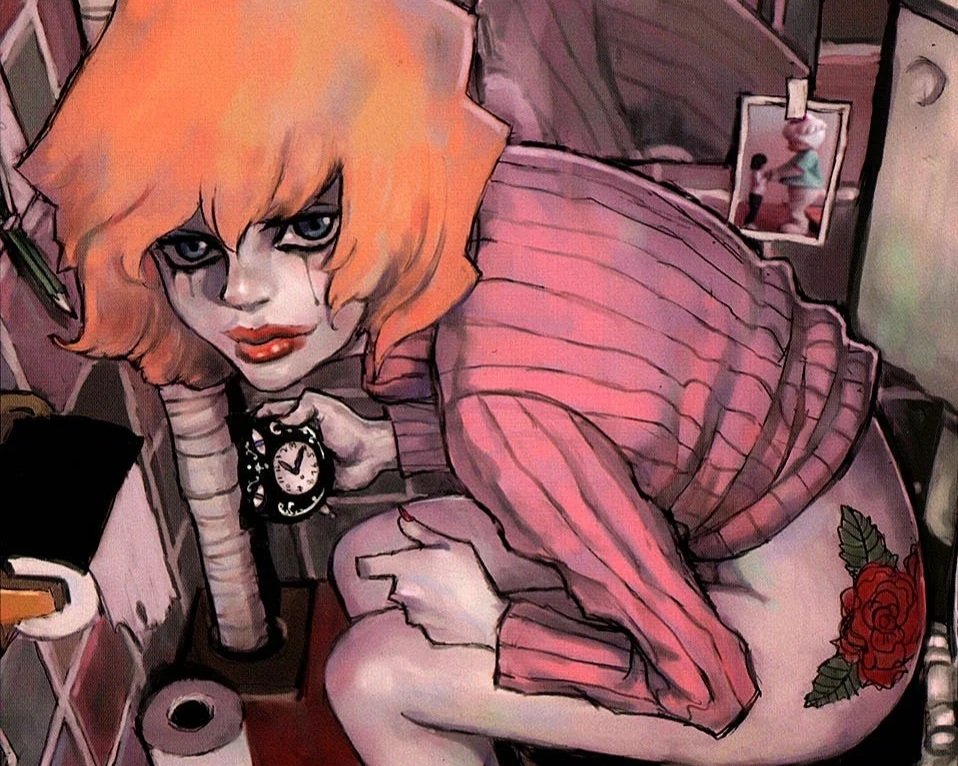
At some point every manga reader runs into a wall where the big titles stop hitting the same and Google searches start chasing something else. Before long we’re deep in forum archives reading scans that were never even finished, and while they aren’t valuable in the usual sense, they stay with the reader because the connection feels personal in a way mainstream fiction rarely does.
What people now call alternative manga refers to works that exist outside the weekly magazine system and its commercial expectations. In Japan the closest term is garo-kei, a loose category shaped by independent authorship and artistic autonomy. The artists involved treated manga as a personal medium as opposed to how the mainstream treated it as entertainment. Most stories turned inward and paid attention to daily observation, memory, and uneasy emotional states that never cleanly resolve. Across decades this approach came to define a method of working where drawing, pacing, and narrative structure reflected how a creator actually experienced the world.
Many of these works appeared when artists stepped away from editorial standards and used the page as a record of thought. Postwar lending libraries and small neighborhood rental shops gave them a place to publish without the restrictions placed on children’s entertainment by large publishers. Readers who found them were not searching for escapism but for something that understood their own uncertainty. Students, young workers, and cultural outsiders became the audience, and the stories spoke to adult anxieties and quiet psychological tension.
In this guide, sabukaru compiles 10 niche alternative manga, drawn from works that circulate among smaller readerships and independent circles. Moving from unsettling and introspective to quiet and tender, these comics trace a parallel current within the medium as interest in author-driven storytelling continues to grow.
1- God’s Child by Nishioka Kyoudai
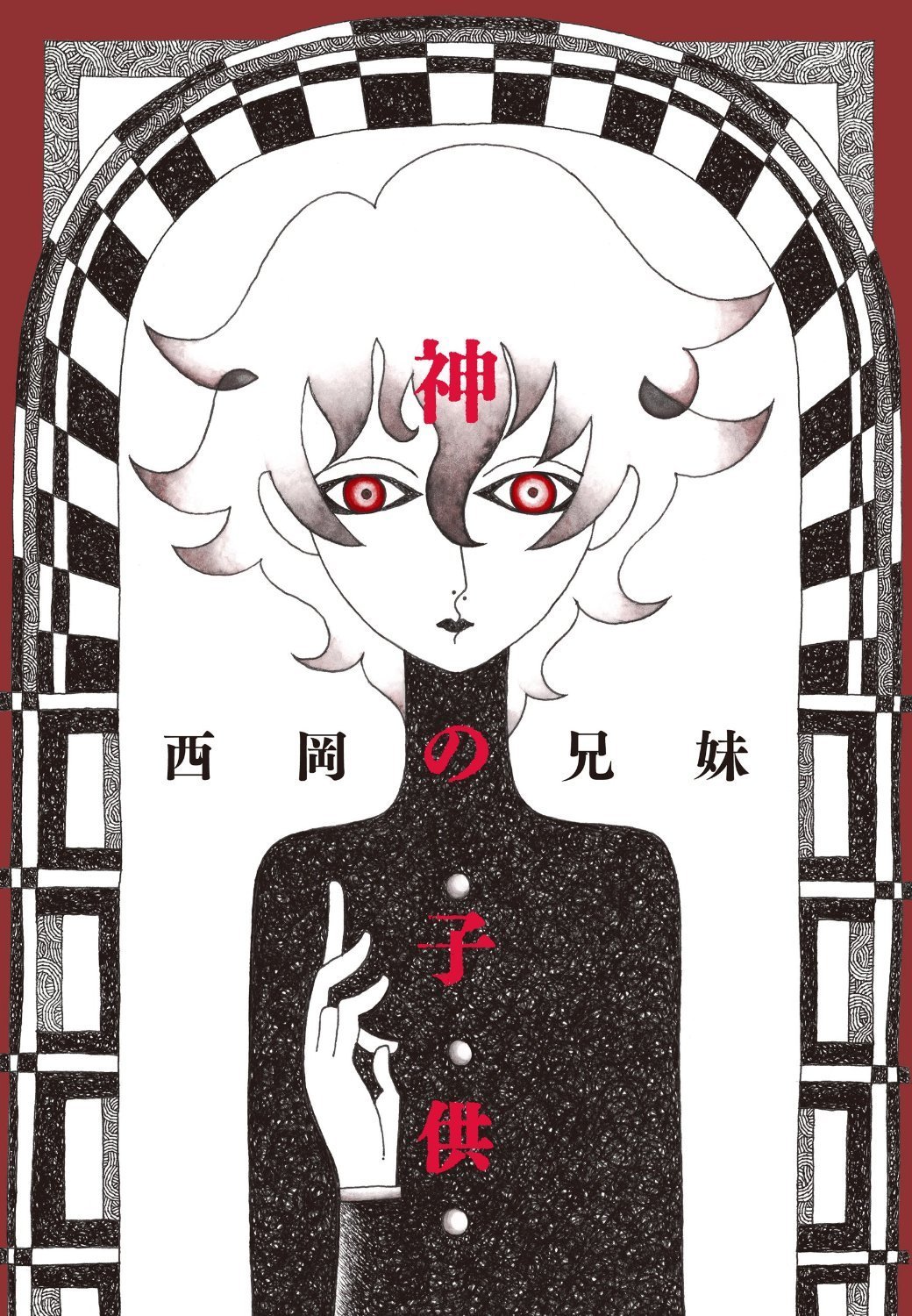
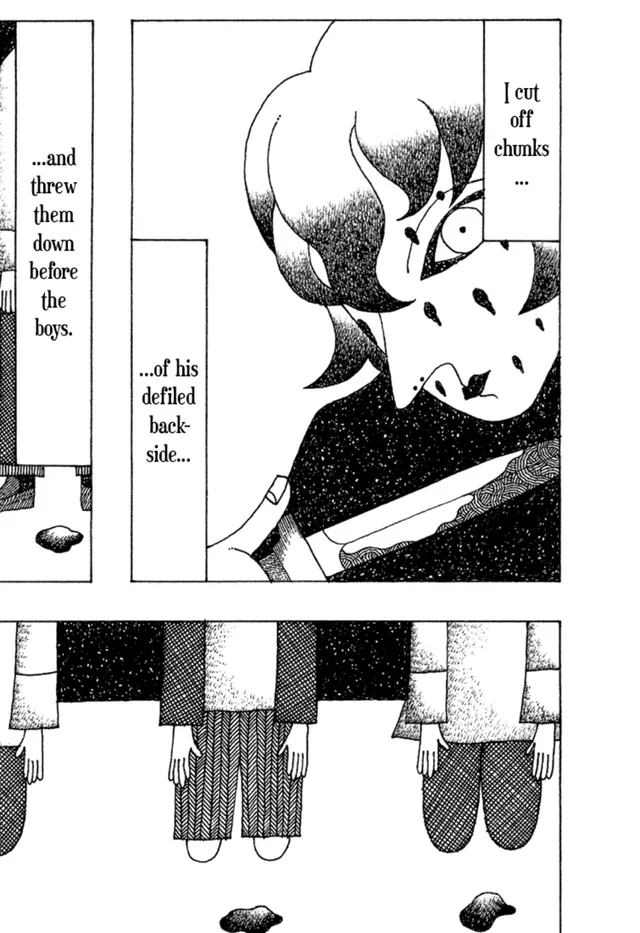
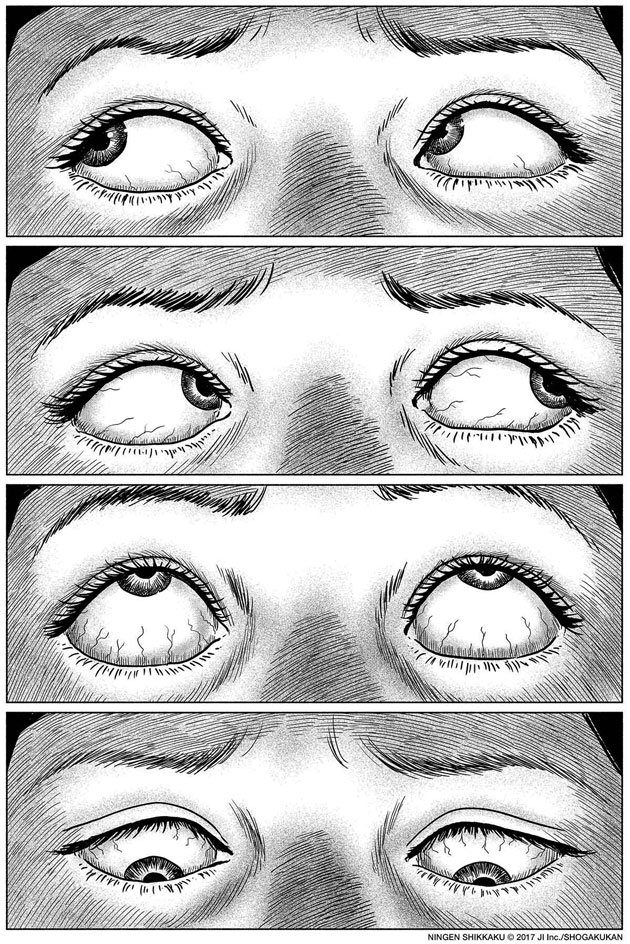
“God’s Child” by the sibling duo Nishioka Kyoudai, also credited as Nishioka Brosis, is a pretty underground find. It originally ran in Horror M and mostly spreads through word of mouth, forum posts, and Reddit threads where readers keep calling it one of the most f**ked up manga they’ve ever read. Even people who are used to horror say this one stays with them in a bad way.
The story follows a serial killer from childhood into adulthood, showing how a detached kid grows into someone who sees himself as almost messianic, with much of the manga being told through his inner monologue, so the reader sits inside his thoughts the whole time. The violence within this manga is presented right in our faces and directly, which makes it harder to distance ourselves from and gives the work its disturbing reputation.
God’s Child narrative moves back and forth between clear psychological scenes and strange, surreal passages. Some chapters feel grounded and coherent, then suddenly drift into dreamlike logic that can be hard to decipher. The simple art makes everything feel even colder because of its tone and limited circulation. “God’s Child” remains an underground manga that people usually discover through recommendations rather than stores.
2- Palepoli by Usamaru Furuya
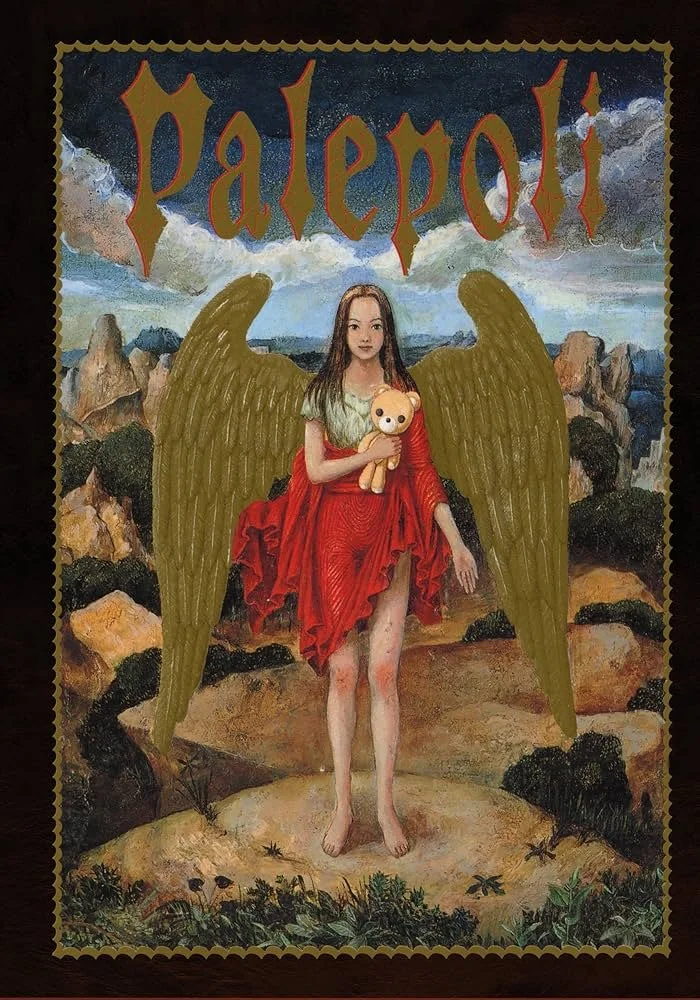
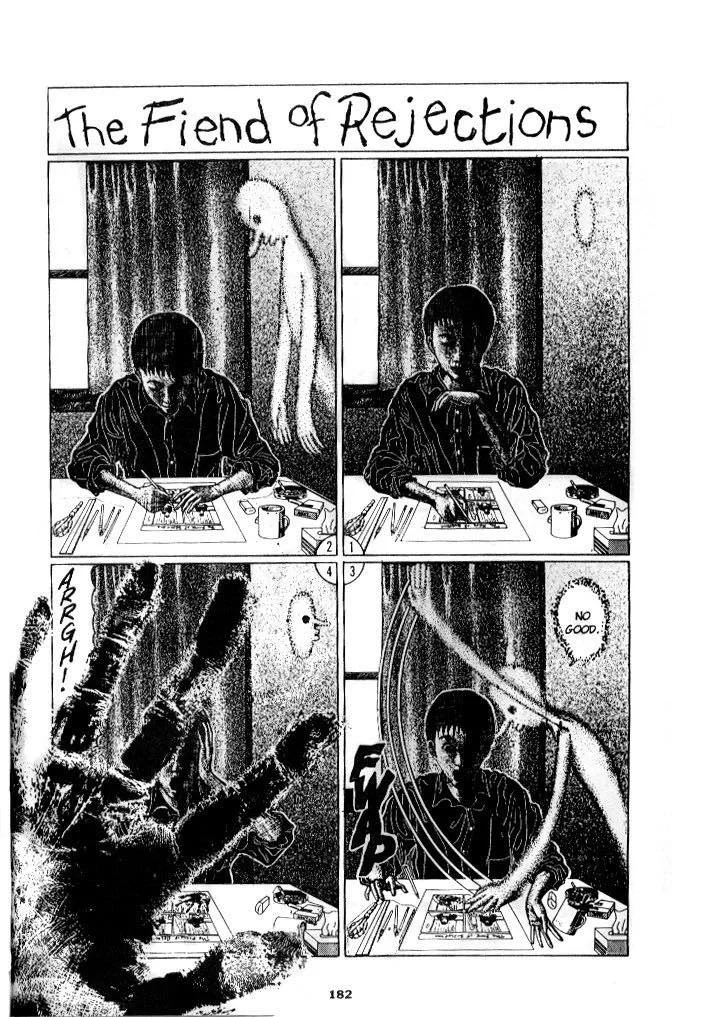
You’ve probably seen the artist’s name on sabukaru before, since we’ve featured him, and Palepoli makes it clear why. A pretty art-heavy one, Palepoli already shows a strong command of the medium this early on, which makes it interesting knowing the creator’s later work moved closer to mainstream readers. When Palepoli began, it wasn’t really following standard manga rules, and it shows. The panels feel like a playground where timing, pacing, and random ideas get tested instead of just delivering punchlines.
Technically, it’s a 4-koma series, so every page is four panels, but it doesn’t read like normal gag manga at all. Each page is a tiny story, then certain characters or ideas come back later and quietly connect the volumes together. The tone jumps around a lot too, sometimes silly, sometimes dark, sometimes leaning into taboo jokes or religious references. The art style changes constantly, going from careful drawings to messy sketches without warning.
Because of that, Palepoli really splits readers. Some people find it hilarious, others just confusing, but that’s part of the appeal, and almost everyone agrees the artwork is incredible. It feels like Furuya is figuring out what manga can do in real time, using a super simple format to play with pacing and structure in ways most artists wouldn’t even attempt.
3- Moon-eating-insect by Koutarou Ookoshi
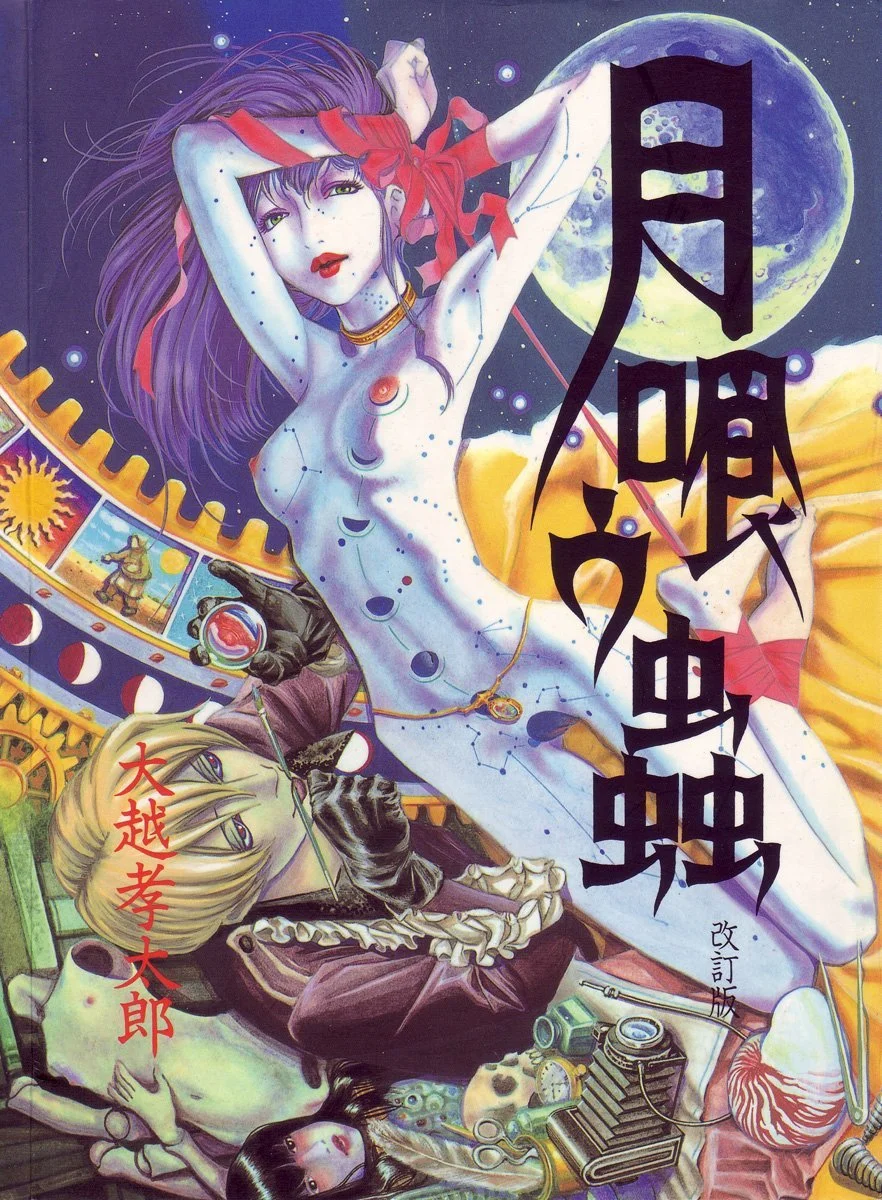
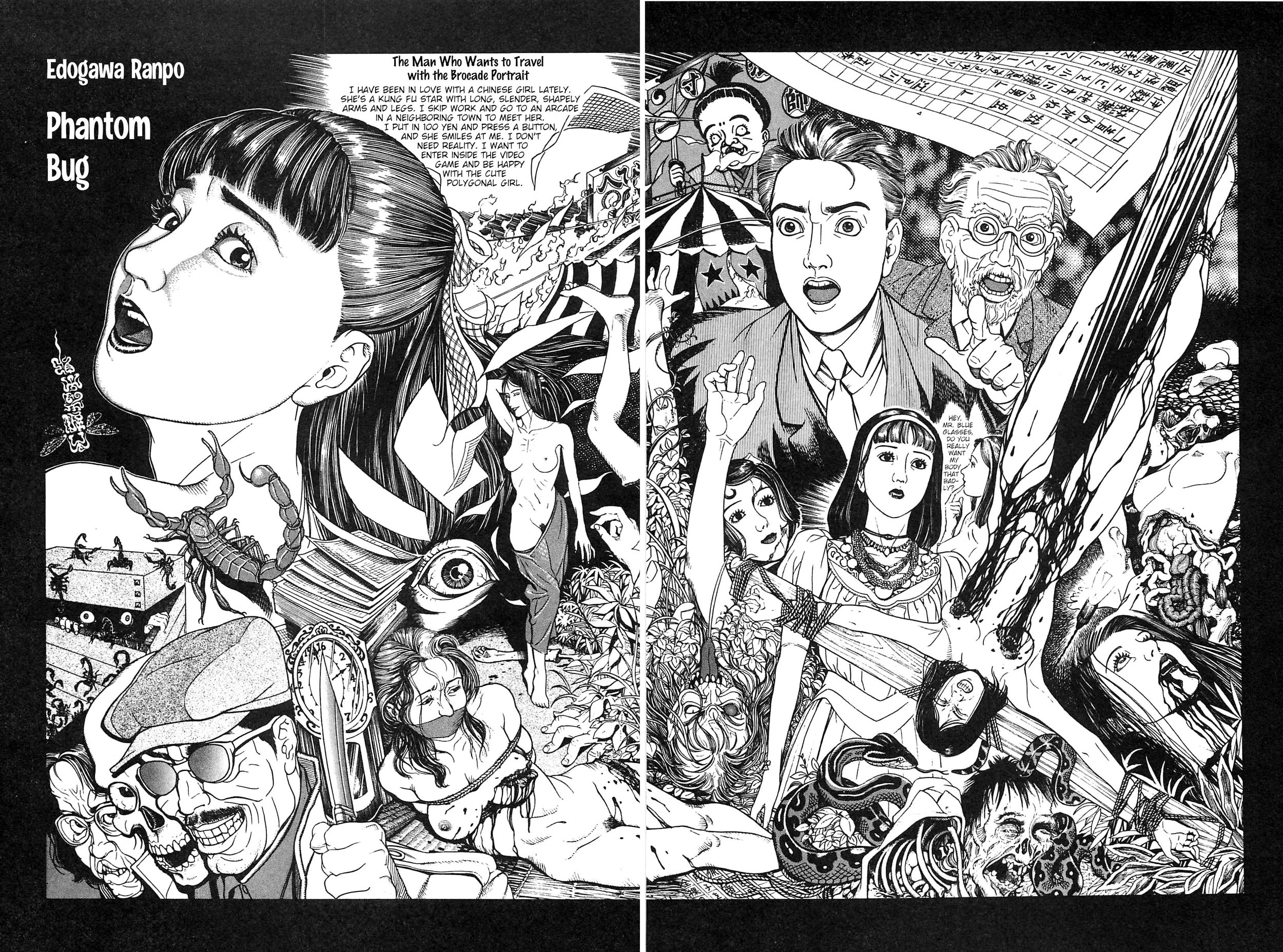
A lot of manga never makes it out of its original language, but if you dig enough you can find fragments of this one floating around. Koutarou Ookoshi sits in that space, a strong artist whose work still feels hidden.
Moon-Eating Insect is structured as an anthology of short pieces tied together by a shared surreal mood. Each chapter centers on a different character driven by a private urge that grows into something obsessive. Their attempts to act on it usually unravel and turn back on them.
The stories stay readable even as events grow strange because brief backstories keep the characters grounded. The focus remains on their behavior and motivations, with discomfort coming from the situation itself. The artwork stands out right away, detailed and carefully drawn, giving the figures weight on the page and making the surreal scenes feel convincing.
4- Kakumeika no Gogo by Jirô Matsumoto
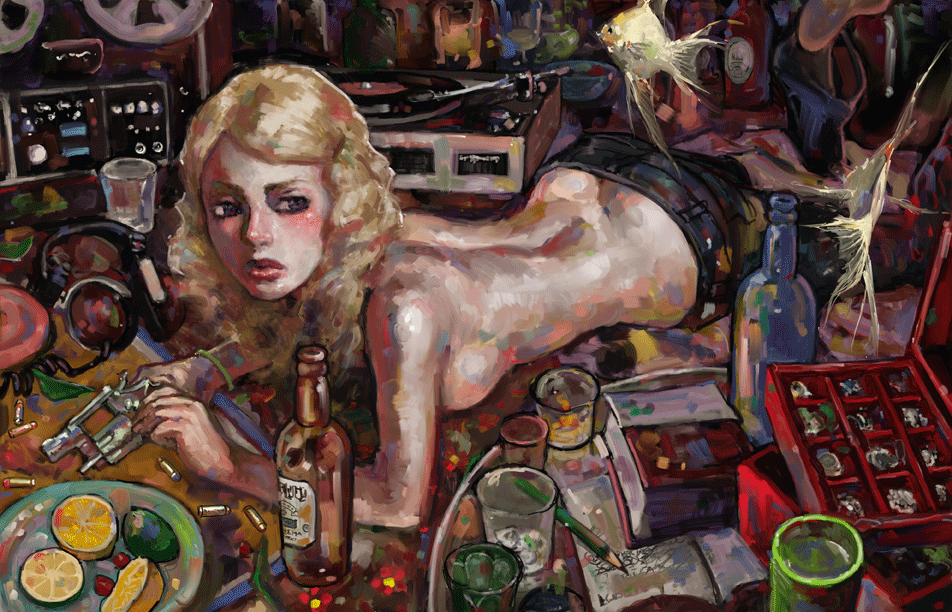
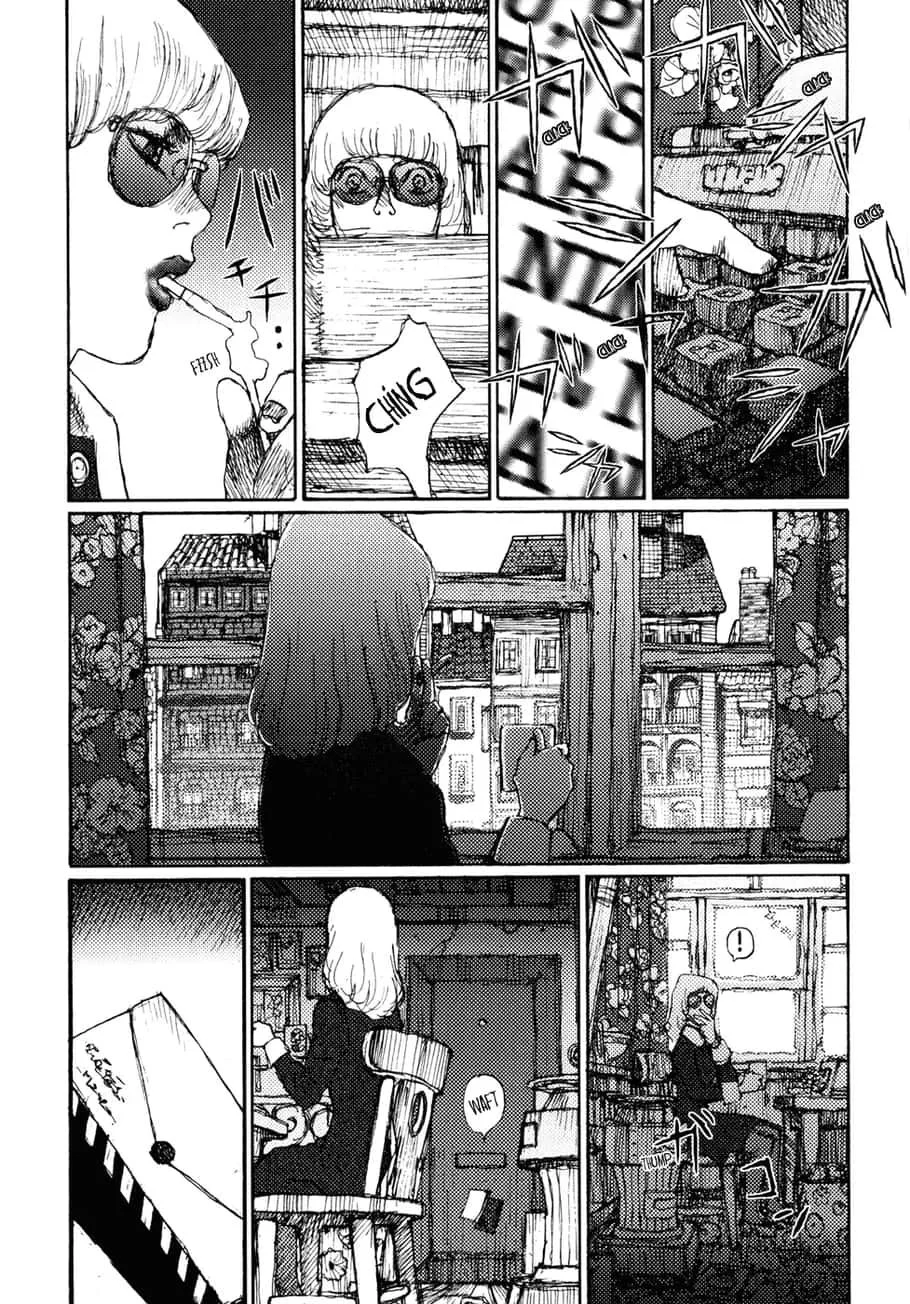
A Revolutionary in the Afternoon by Jirô Matsumoto, known for the psychological series Freesia, approaches the idea of revolution from a strange angle. Instead of crowds or uprisings, the book keeps asking what a “revolutionary” even means and whether the word still has a clear shape. The stories play with the fantasy of rebellion while also quietly dismantling it, suggesting that the concept changes depending on who is looking at it.
The manga is an anthology of five self-contained chapters that never fully explain themselves. Two stories share the same title yet follow different people: one a writer accidentally pulled into conspiracies and secret romance, the other a lonely bureaucrat devoted to a political party whose life shifts after two women enter it. Both encounter change in ways far removed from heroic revolution. Matsumoto frames their lives in settings that echo old images of dictatorship and ideology, but the characters react with hesitation, confusion, and exhaustion instead of conviction.
Other chapters push the idea further, including the everyday life of a vampire struggling with ordinary routines and social isolation. Espionage, humor, and surreal turns appear without clear connection, leaving the reader to search for meaning across the volume. The book never settles on a single definition of rebellion. Instead, it treats revolution as something personal and unstable, showing people trying to reshape their place in the world while questioning the identities they inherit.
5- The Love That Binds Us To Heaven - Koutarou Ookoshi
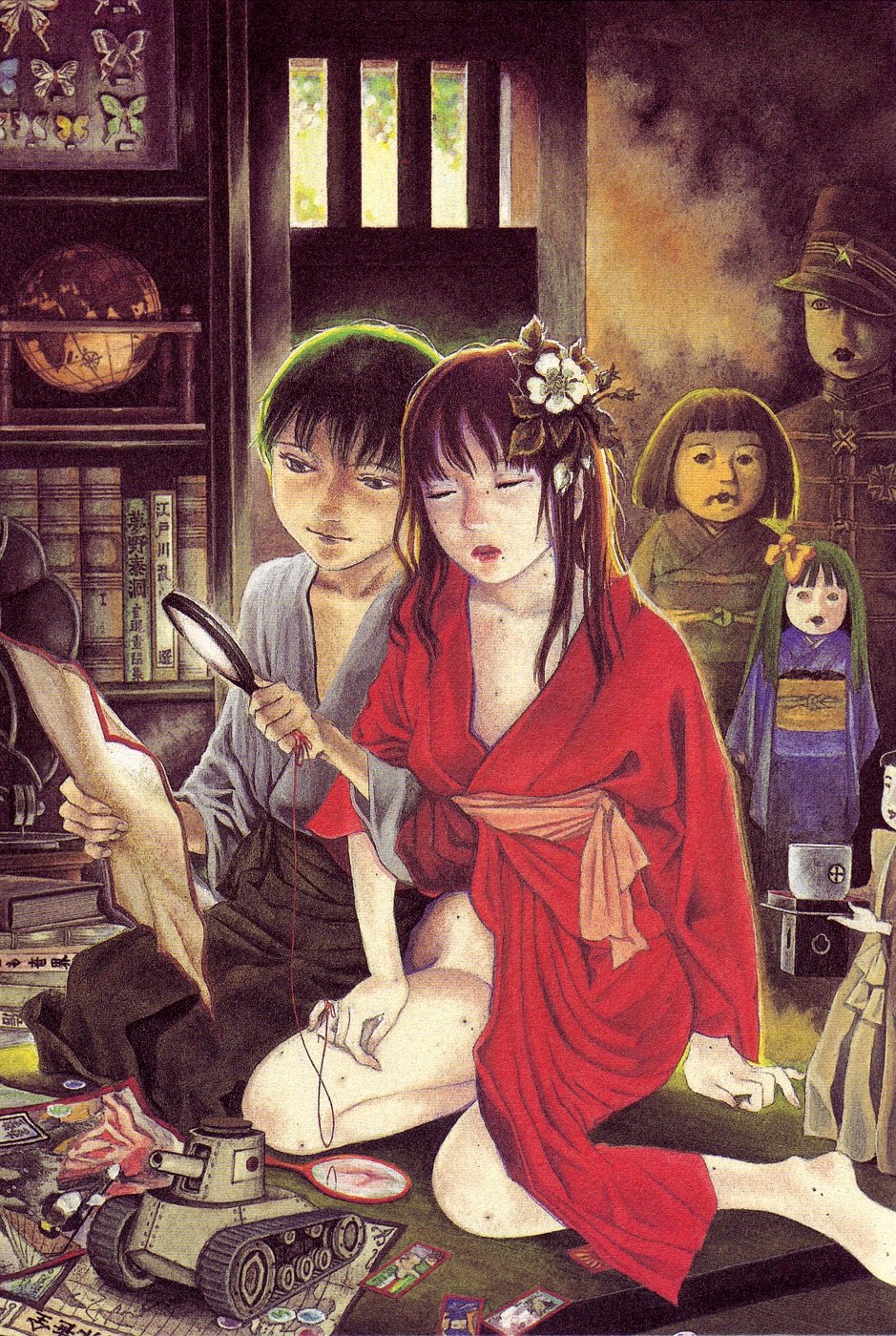
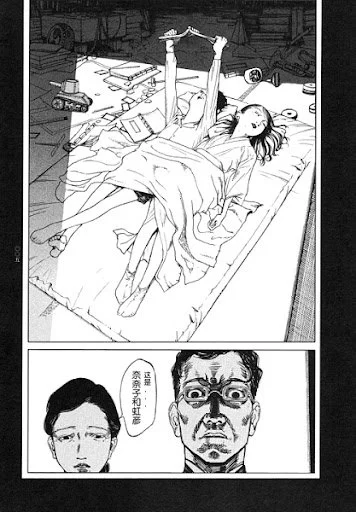
Another work by Koutarou Ookoshi, Tengoku ni Musubu Koi, centers on conjoined twins, a boy and a girl. In the aftermath of the 1923 Great Kantō Earthquake,e they came to live with a traveling circus. The story follows their lives among the troupe and the difficulties they face, including war and betrayal among friends.
The manga presents the twins as two inseparable souls sharing the same life and the same fate. Their bond defines their experiences and shapes their path forward.
This is the second part of Tengoku ni Musubu Koi. Its first chapter appeared in the July 2002 issue of Garo, but the serialization was later suspended, contributing to its obscurity.
6- Gold Pollen and Other Stories by Seiichi Hayashi
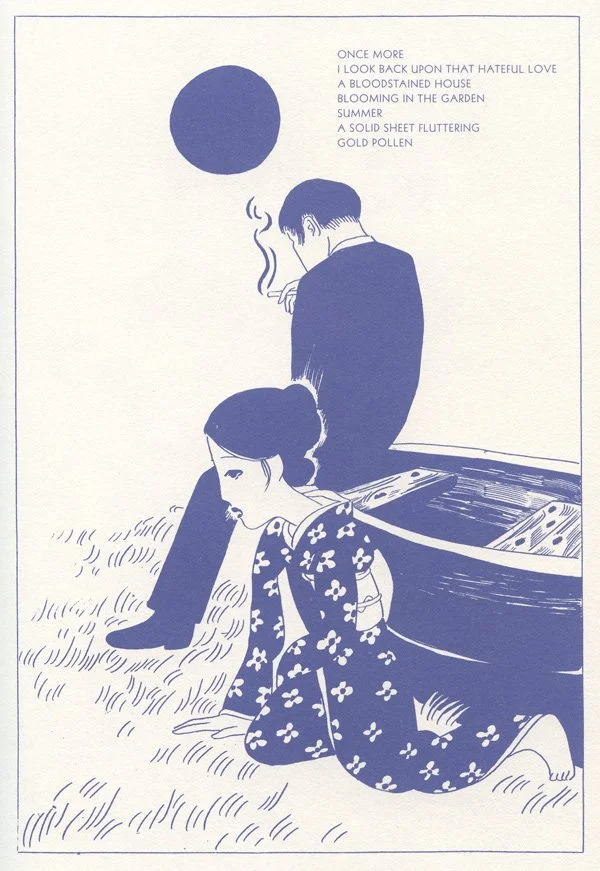
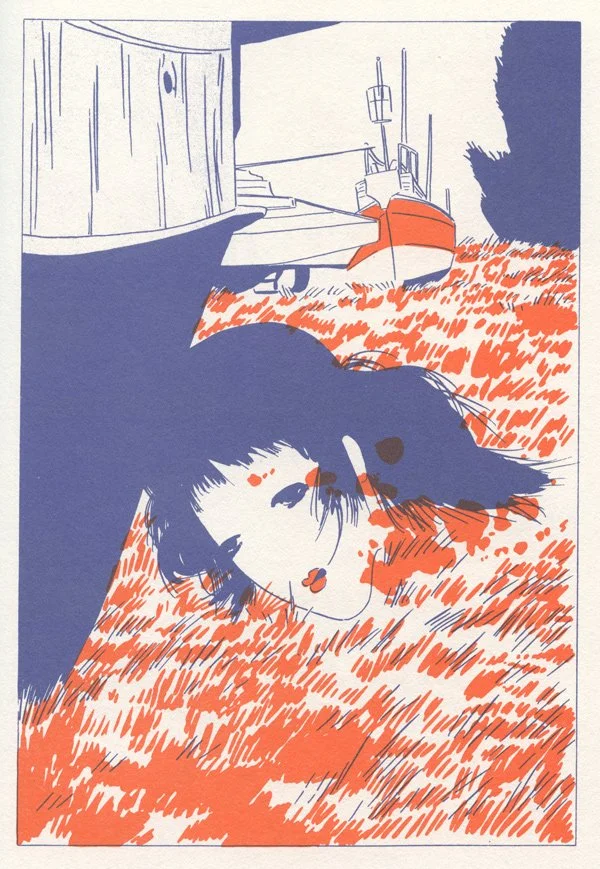
A collection of manga created during the late 1960s and early 1970s, this work comes from a moment when comics in Japan started intersecting with contemporary art circles. Seiichi Hayashi is closely tied to Garo, the influential monthly magazine often associated with alternative manga, and the pages reflect that atmosphere of experimentation.
The collection gathers pieces like Red Dragonfly (1968), Yamauba’s Lullaby (1968), and Gold Pollen (1971) in full color. Traditional Japanese imagery sits beside pop art influences, and the stories touch on memories of World War II, right-wing nationalism, and the growing presence of American culture among Japanese youth.
It also includes a translated autobiographical essay from 1972 about Hayashi’s early years as an artist, along with commentary by art historian Ryan Holmberg discussing his place in postwar art and the Tokyo avant-garde, including his work in design and experimental animation.
7- Blue by Kiriko Nananan
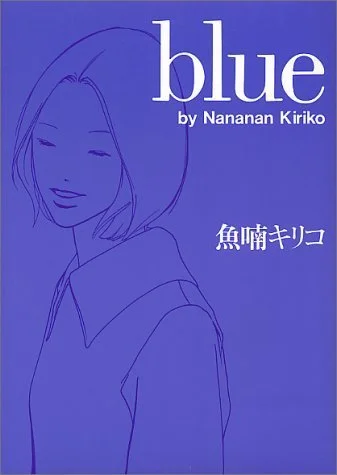
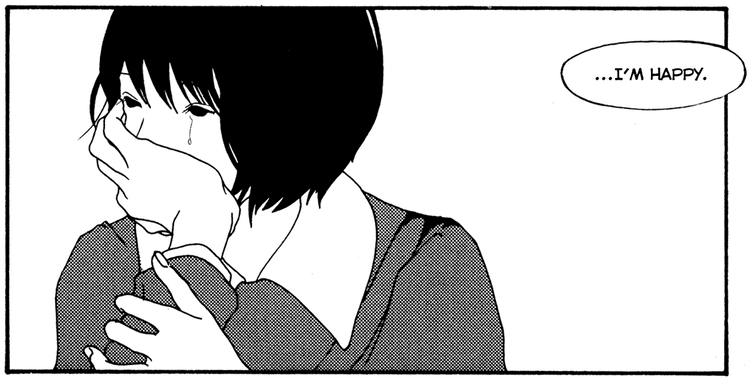
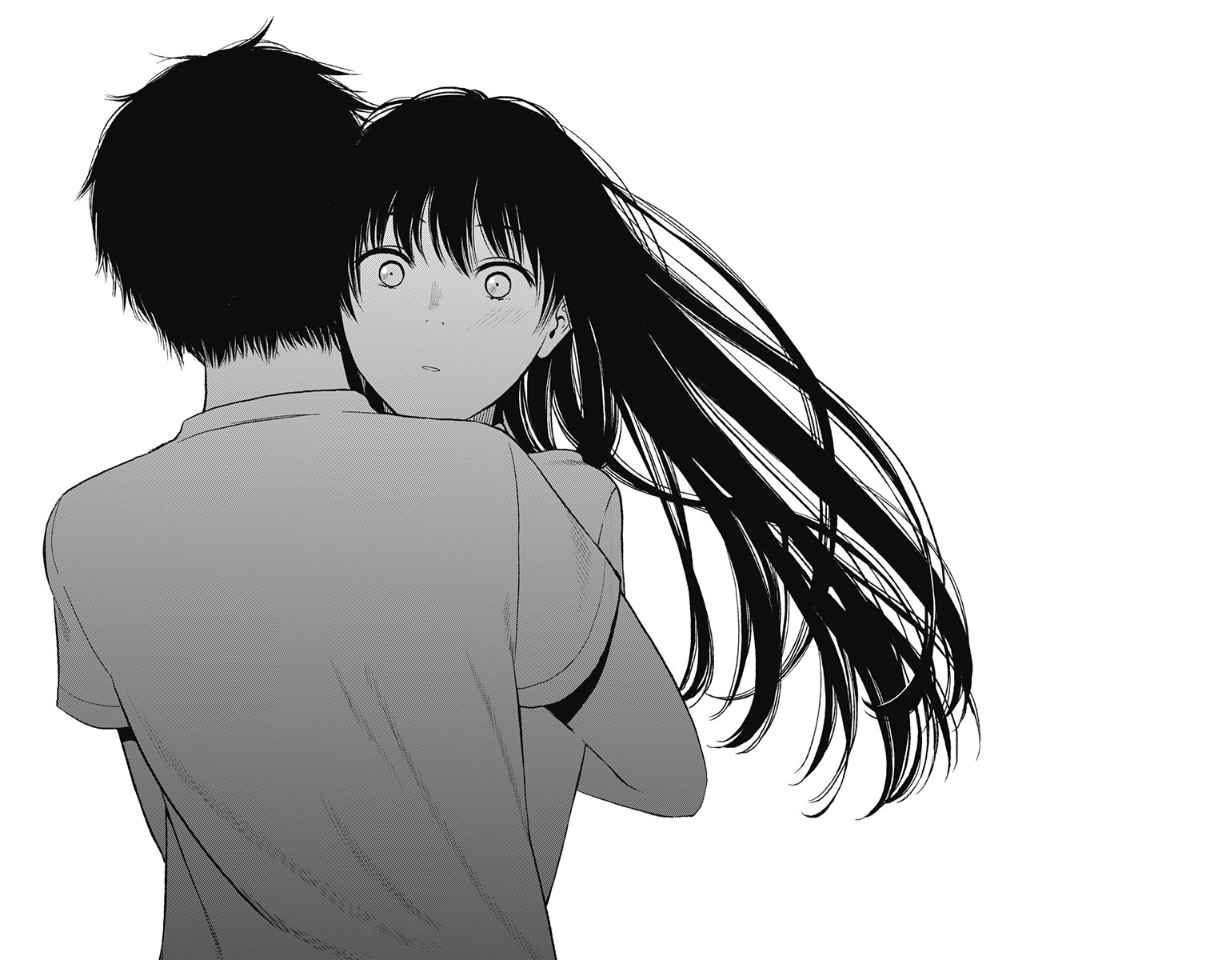
A queer-friendly manga that also received a live-action film adaptation in 2001. Kayako Kirishima and Masami Endô slowly realize their new friendship is turning into an intense and consuming love as both stand on the edge of graduation and feel unsure about the future.
The story reads quietly and closely. Kayako drifts through school feeling isolated, while Masami carries the weight of being pushed out by her classmates. Their connection builds through small shared moments, and those simple interactions end up meaning more than any big confession.
The artwork stays minimal and restrained, focusing on faces, pauses, and empty space. Tiny movements between panels carry the emotion, so everyday scenes linger and feel personal long after finishing a chapter.
8- Travel by Yuichi Yokoyama
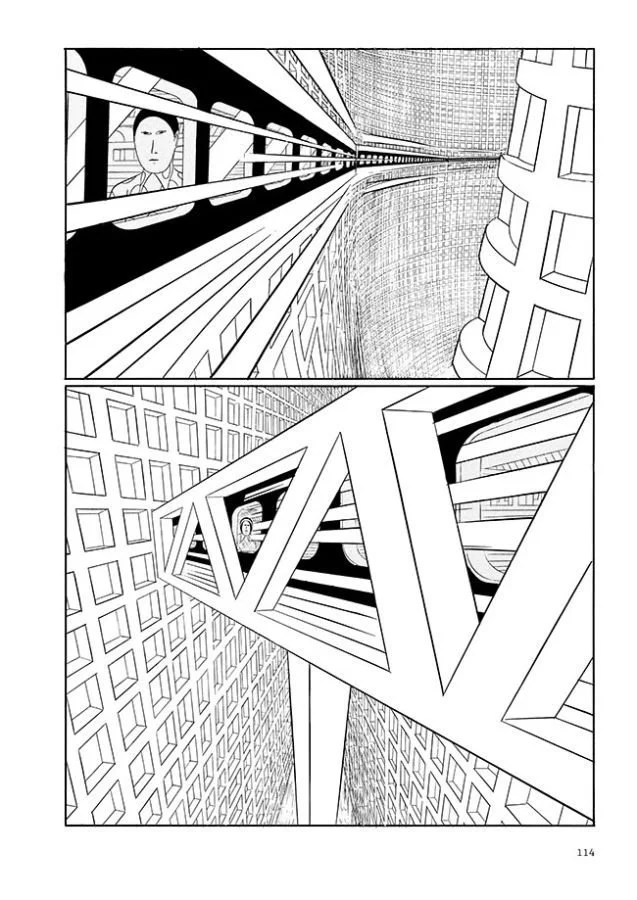
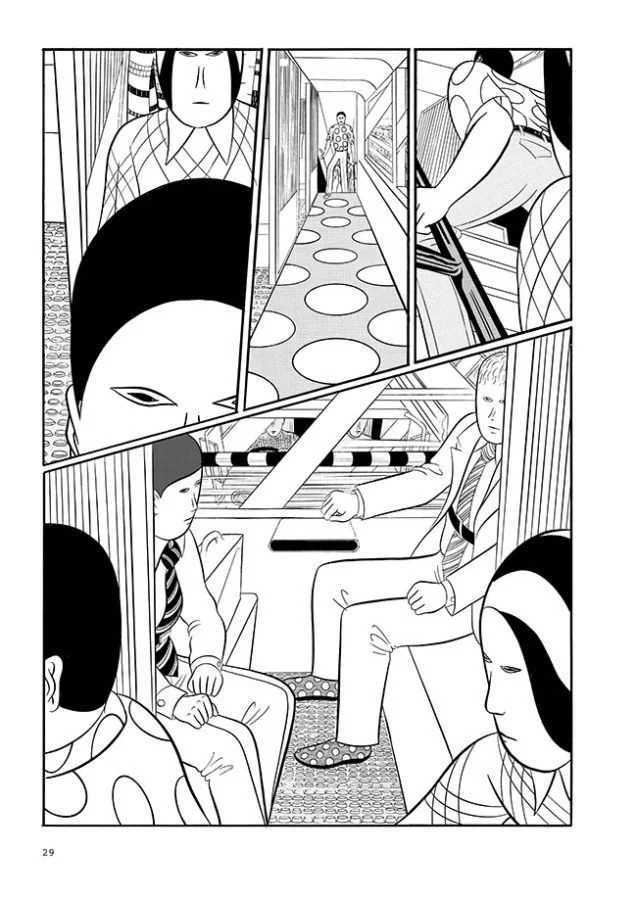
A group of men rides a train, and that is almost the only stable fact in the entire manga. The journey moves through cities, open land, rain, snow, and spaces that feel unreal, at times almost underwater or suspended in the clouds. The passengers sit and watch the scenery pass, their expressions fixed and distant, giving the trip a quiet and uncanny mood.
The manga unfolds without dialogue for those reading this guide with tired eyes. Movement, architecture, and repeated actions carry the experience instead of story beats. Small changes in posture, perspective, and speed hold the reader’s attention, and the ordinary act of travel becomes a strange visual meditation.
Created by Yuichi Yokoyama, Travel relies entirely on images and occasional sound effects. Originally drawn in ink and later published internationally, the work stands out for how it replaces narrative with observation, asking the reader to focus on motion, space, and atmosphere rather than plot.
9- Towards the Darkness by Takato Yamamoto
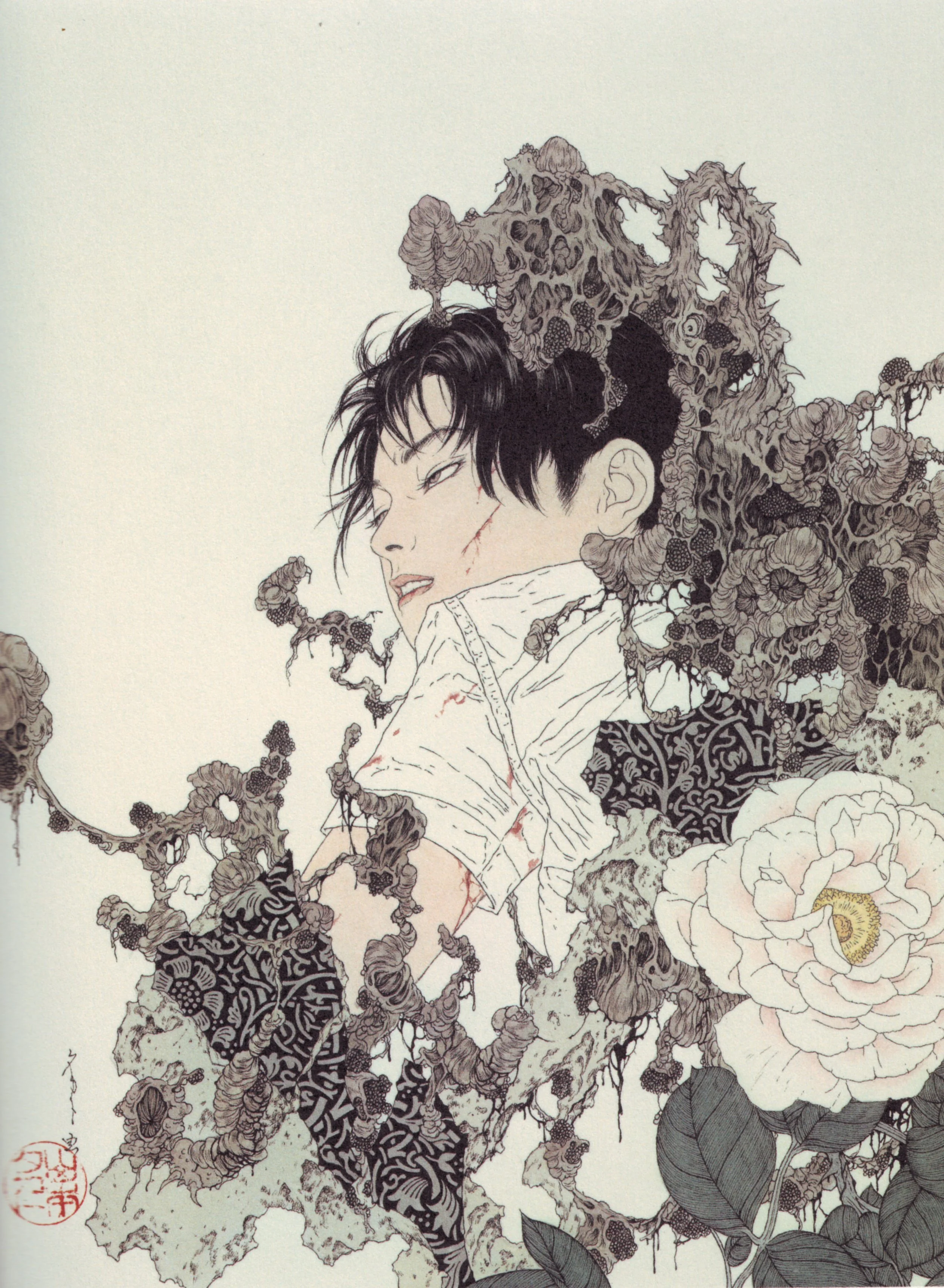
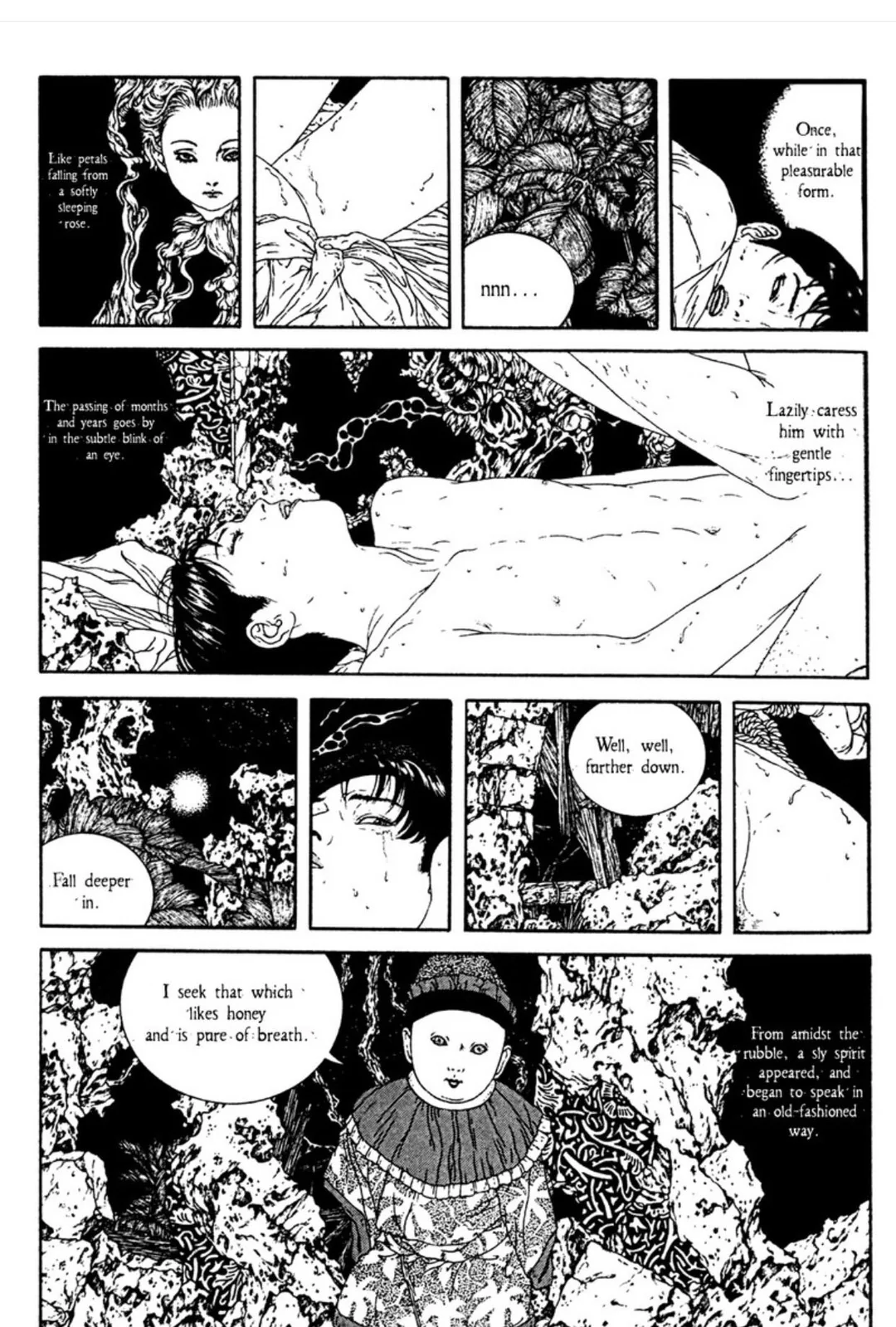
A bizarre one-shot by Takato Yamamoto, an artist known for his “ukiyo-e pop” style and what he calls Heisei aestheticism. The imagery sits close to ero guro, touching on darkness, restraint, and transformation, but everything stays oddly calm. Nothing is graphic. The discomfort comes from the mood hanging over the pages.
The drawings feel gentle even when they’re unsettling. The figures look delicate and still, and the tension comes from the poses and setting more than anything actually happening. Familiar ideas, including Alice in Wonderland imagery, show up in a way that feels off, turning something recognizable into something quietly eerie.
Fine lines and soft colors hold the atmosphere together. The story works through suggestion and lingering impressions, letting the feeling build slowly instead of trying to shock.
10- Mada Tabidattemo Inai Noni by Shigeyuki Fukumitsu
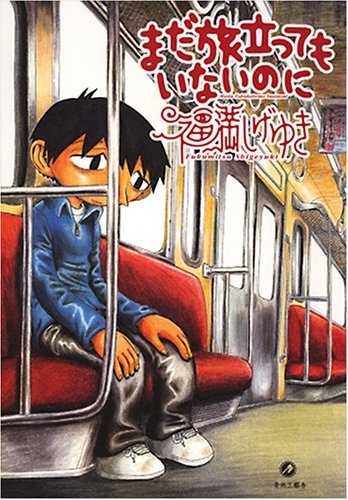
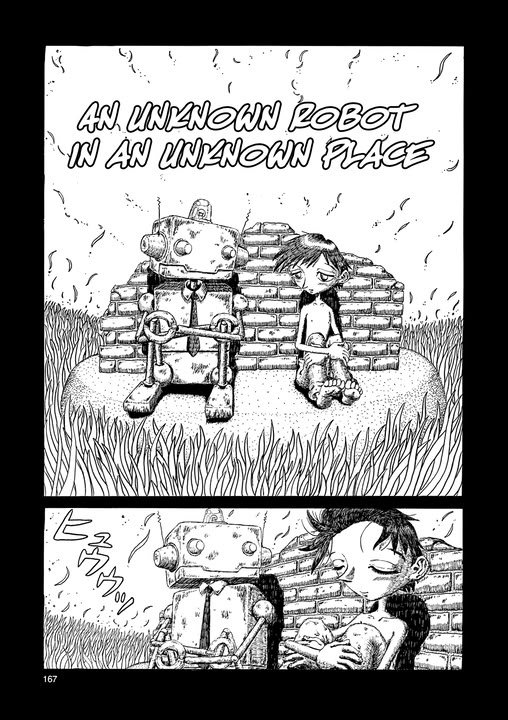
This one is a strange little collection built from short stories that sometimes share the same main character. Each chapter follows ordinary people drifting into situations that slowly turn unusual. The world stays recognizable, but something always slips slightly off.
The standout episodes revolve around an anonymous office worker, older, balding, and wearing glasses, whose quiet routine keeps breaking apart. In one story, he spirals into violent fantasy, in anothe,r he becomes a boxer, and in another, he ends up stuck in a sad attempt at romance. The shifts are abrupt, but the tone stays oddly convincing.
Shigeyuki pulls the reader into plots that sound ridiculous at first and somehow makes them feel coherent. What begins as awkward or absurd gradually forms its own logic, and the stories hold attention through that uneasy balance between normal life and sudden disruption.
About the Author:
Abeer Salah is a Seoul-based editor, writer, and cultural curator exploring emerging scenes, underground culture, and internet-born subcultures. She is the founder of the collective P.T.S.D.