The Sound of Being Online: Sabukaru Meets Ninajirachi
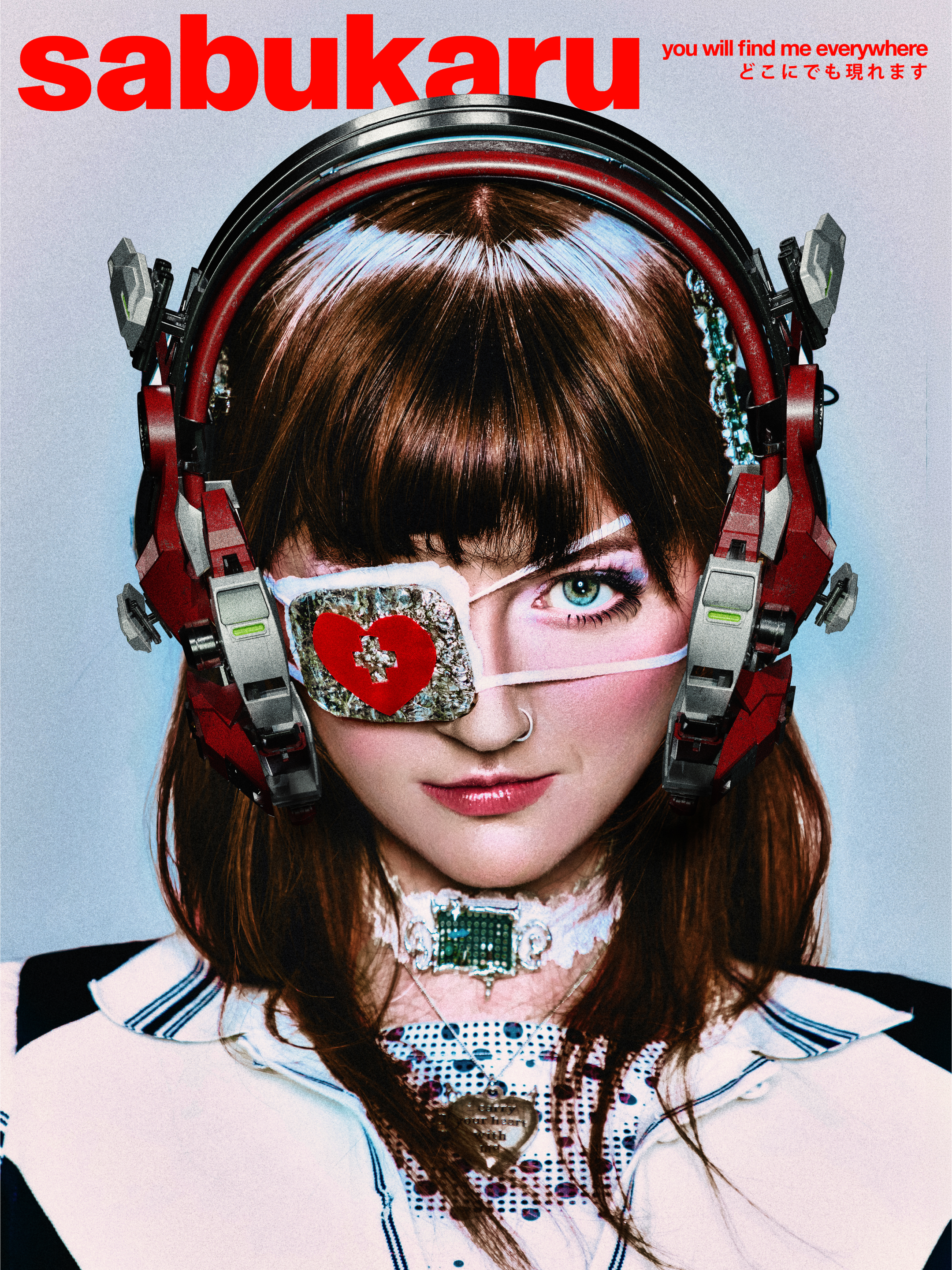
sabukaru caught up with Ninajirachi mid-tour across North America; our conversation moved across gaming, otaku culture, the architecture of a perfect drop, and what it means to build something genuinely personal inside a music world that rewards surface-level spectacle. Nina has built one of the more distinct positions in Australian electronic music, starting from FL Studio sessions in her Central Coast bedroom and arriving at Coachella and sold-out nights across Japan through a sound that has stayed consistent. Her music sits somewhere between maximalist EDM energy and something far more internet-native, grounded by songwriting that carries genuine emotional weight alongside the production. Her studio album I Love My Computer brings that together most directly, a record that is precise in its production and personal in its writing, moving between high energy and genuine emotional openness in a way that has connected with listeners well beyond the electronic music world.
INTERVIEW
MIKE SUNDAY: Great, how's it going?
Nina: Going good. How are you?
MIKE SUNDAY: Yeah, really good. It's nice to meet you. We actually met once upon a time in Toronto at one of your shows. I stuck around. I don't know if it was at The Drake or the Velvet Underground. It was like a super small venue.
Nina: At the Drake? In 2024, was it?
MIKE SUNDAY: 2024, believe it or not. I think you had said it was your first tour in North America, but I'm not sure.
Nina: Yeah at the Velvet Underground! my god nice to see you!
MIKE SUNDAY: Yeah, nice to see you. A lot has changed for you since then. So I'm excited to get into it. Where are you calling in from, by the way? Are you in North America right now?
Nina: I'm in the green room in the venue in Dallas. We're playing a show here tonight.
MIKE SUNDAY: I know that for a lot of the things you're into, and the things I'm into, and the people who might be reading this, Japan is kind of the Mecca. I know it wasn't your first time, but you just went on tour in Japan. How was the reception? How are the crowds in Japan? Are there any sort of palpable differences between the crowds in Japan or North America per se?
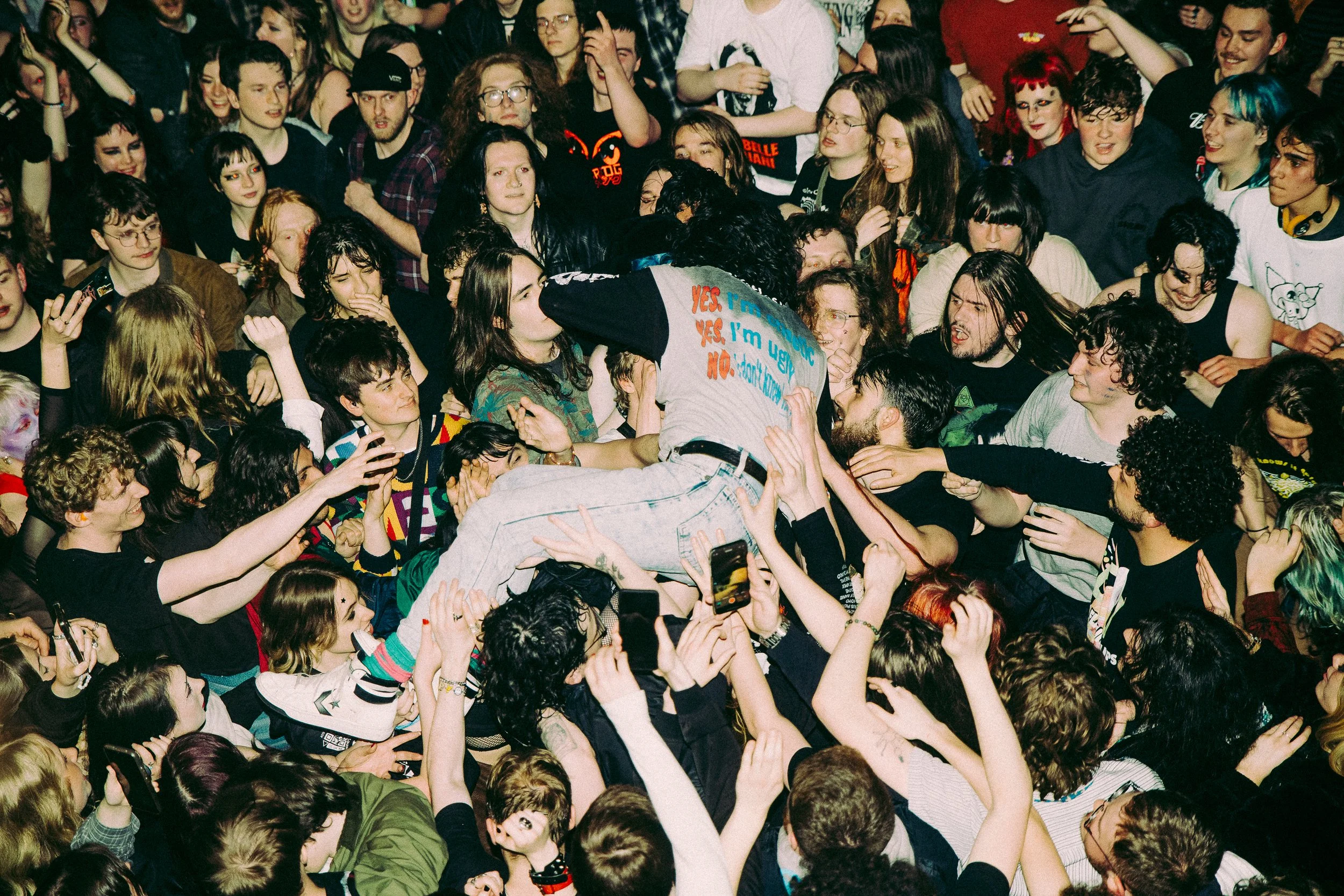
Nina: Yeah, it was an amazing tour. It was so awesome. It was really fun to do it with the Heaven's Gate crew and Ramon Pang as well. They curated such a cool lineup every night in every city. I also got to play at the Ghost in the Shell exhibition in Tokyo as well. Oh my god, it was so awesome. Like such an honour. Especially getting to go in early and check out the exhibition too. It was sick. The Japan crowd went hard. So there were two Tokyo shows and I noticed that there were a lot of the same people at both shows. The second show, they went a little harder, maybe because they felt like they were able to, or they were very polite and maybe the second night they felt like they had more permission to open the pit and stuff. It was awesome.
MIKE SUNDAY: That's great. Did you have a favorite bite there while you were there? I saw some of the photos that were being shared, especially by Ramon and it looks so fun. Were there any memorable meals?
Nina: My god, too many. Honestly, going out with the Heaven's Gate crew, all of those meals were the most special because it was very communal. We were also eating their favourite foods at their favourite spots that I wouldn't have known about as a tourist.
MIKE SUNDAY: I know it's one of those tricky things where even though English is pretty widely spoken, you still kind of need to be able to speak Japanese to kind of get into some of the lesser known spots. So you had talked about Ghost in the Shell. When I look at your lyrics and I hear your music, I definitely get Ghost in the Shell, I get Lain and even FLCL to a certain degree, but is there like an anime specifically that you could just go on about for like hours and hours on end? Do you have that special show?
Nina: I mean, maybe the ones that you mentioned, especially because they deal with some similar themes that I like to write about in my music. Simulations and representations of human experiences and stuff. But when I was little, the first anime I ever watched was either Sailor Moon or Yu-Gi-Oh! There was a lot of anime on TV before school. That was how I discovered it. Because there was an Australian TV channel that would also play the Bakugan anime and a bunch of others before school. So that was my breakfast time watching before I went to school when I was like five or six.
MIKE SUNDAY: That's a pretty formative experience. I actually hit up Ramon to see if there were any sort of insider questions I could maybe get you with. In interviews you often talk about your pop music references. You're [a popstar] level in my opinion and I think a lot of people would say so too. Whether you agree with that or not. But one thing we had chatted about is your love for all sorts of IDM. Maybe some of these artists that don't get enough shine like Igloo Ghost, X&G, Oli XL. Are there any artists you wanna just take the time to gush about and really give them some shine?
Nina: My god, well all of those artists you just mentioned are amazing and so famous to me, like my favourite artists. There's a lot of amazing Australian electronic music. For example, Laces and KAVARI, I just toured with them in the UK. Laces is Australian and we've been friends for like 10 years and his music is just amazing and so detailed. Kenta204 as well, who I've actually released a bunch of [music with] we've got a few songs out together. He's also Japanese Australian as well. There's a lot of really sick producers in Australia and in that scene in general. I remember Ramon and I talking about it. We had a lot of SoundCloud chats when we were on tour together as well. We didn't get enough time together. Really we had the shows and we had dinners, but we could talk about that all day long.
MIKE SUNDAY: Do you feel like there's really been a replacement for that sort of SoundCloud culture? It really does feel like what was happening at that time was really special. Have you found something, whether it's through Discord or anything, or was SoundCloud just a place and a time and you had to really be locked in there?
Nina: No, SoundCloud is alive and well. My god. I find so much music through my friends' SoundCloud likes or people's mixes that they upload to SoundCloud and even like Jane [Remover] with the Leroy music. That's a whole world in and of itself that exists on SoundCloud. A lot of artists have alt accounts as well that they upload to on there. I feel like the edit culture is definitely alive and well. Maybe it's a little more on Bandcamp now than it used to be. But I still spend a lot of time on SoundCloud and find heaps of music on there.
MIKE SUNDAY: I think that's a great segue into your insane Coachella run. Congrats on that! Even between Pinkpanthress, underscores all the sort of crazy cameos, perhaps most impactful for you was Porter Robinson? I actually read somewhere that you were involved in one of his fan communities early on, or did I make that up completely?
Nina: I've been a fan for a really long time since. The first song I heard by him was maybe, Language or Easy. And that was when I was like 12 or 13. I went to his show when I was 13 or 14 and that was my first live music experience.
MIKE SUNDAY: Whoa, that's crazy. It’s pretty wild to be a collaborator now or working with them. How does that feel?
Nina: Crazy, yeah. Yeah, it's awesome. I'm so stoked that he likes my music. I'm so happy that like, you know, he's, I'm trying to think of how to word this, especially without sounding weird. He has inspired me for a really long time and he's one of the reasons I got into electronic music. For him to like what I've done with the inspiration he's given me is all I could want to really. Yeah, I'm super flattered by it.
MIKE SUNDAY: Yeah, that's evident, that's awesome! Comparing Japan versus Coachella and the bigger festivals, are there different levels of trust? I know some people prefer the smaller rooms because you can get a little bit more experimental, but how do you approach those different sets? What's the mode of mixing there?
Nina: It's a good question. Do you mean like to like a bigger crowd versus like one where people are closer to you and stuff like that? I guess, you know, in a festival setting, perhaps not everyone's there for you. They might be there for a number of reasons, or they only want to hear the hits. Whereas someone who might have gone out and saw you at a smaller venue is looking to hear more deep cuts, or maybe they're there for your taste as opposed to just hearing the hits. I'm curious, do you feel like the pressure to only play hits when you're at Coachella or is that something you can kind of thread the needle with?
Nina: I tried to thread the needle but another consideration is the time because festival sets are a little shorter so when I'm touring around at the moment doing headline shows I'm usually playing like kind of an hour 20-ish long sets. Then at a festival like Coachella for example it is 50 minutes so I was trying to really cram. I was cramming for sure so like at my shows there's some songs that I would usually let breathe a lot more or have longer peaks and valleys perhaps. At Coachella I was really trying to speed run my discography so I made a lot of edits to fit as many songs as I could.
MIKE SUNDAY: Yeah, just freak the energy. Speaking of speed, a lot of music’s success nowadays is really propagated by TikTok and these sort of like TikTok edits. You and I obviously know it as nightcore and this sort of culture of pitching up the vocals and stuff like that. Why do you think it's so appealing? Like, what is it about it that people just like? Especially mixed with sort of the anime aesthetic?
Nina: It's a good question. I'm not sure. I feel like I was born into Nightcore existing. When I got into electronic music, Nightcore already existed. So I just accepted what I saw at face value. I don't have a very good read on why that became a thing because I wasn't there before it. For me personally, I've pitched up my voice in a lot of songs because I'm not a strong or confident singer so pitching my vocals allows me to feel some distance from my natural singing voice and it gives me something to hide behind. I've been consciously trying to do it less and less as a confidence exercise. I'm just getting more comfortable in general. I guess originally it occured naturally when you speed up an audio file the pitch goes up as well because you're raising the frequency of the waveform which also raises the pitch so if you like physically do that on like a turn table it naturally pitches up. That was an artifact of that technology that people liked and then implemented even when the technology advanced beyond.
MIKE SUNDAY: Yeah, sometimes you get those kinds of crunchy weird artifacts as well, which I think can sometimes be a happy accident when you're sampling. It's funny you bring that up because I know specifically Porter had talked about in some of his earlier albums how he felt like he had to pitch up his vocals or add a glitch effect almost as a mode of self-defense. When I think about a song like “Sing Good”, it feels really raw and honest. I've tried writing my own songs before in a past life, but it's almost embarrassing in a way to try and conceptualize those raw lyrics. In your most recent work, I've seen the lyricism come such a far way. How did you start to make that leap into these really emotional lyrics? Do you have any tips for someone who might be trying to write a more raw honest song?
Nina: Yeah, I mean for me I've written songs and lyrics since I was really young, like primary school age, but I just didn't show them to people and especially when I first got into music production I was trying to make instrumental music. I didn't even think to pair my voice with it. Singing was so far out of the realm of possibility in my mind of things that I was capable of. All of my first productions were kind of bootleg edits and stuff. First, I realized I could put my voice on songs when I started working with my friend Kota Banks because she was the first vocalist who I worked with. So before I started working with Kota, I'd only really made music by myself ever and then I started making music with her and that was my first experience of making music collaboratively with a vocalist in the room that's not just like an acapella. So I was learning so much from working with her and she's also very skilled and very convicted about how she wants her voice to sound and what kind of takes she likes. I learned so much from her being like, can you actually just make this sound like this and I'll be like okay “Yes boss I will!”. I was just learning so much from working with and over that time we also became best friends. This was like, my god like seven years ago now but yeah I learned and then from learning how to produce her voice the way that she wanted me to. Because even though Kota is also an amazing vocal producer and arranger. So I learned so much about that side of things from her then from learning that I was like, if I can treat her vocals this way, I could also just apply that to my own voice and then add a little bit more because I'm not as good of a singer. Her voice does not need all that. She sounds amazing. I learnt the tools from working with her that I then realised I could apply to my own voice. If there are people who write really vulnerable songs but feeling unconfident about putting them out there, the best thing for me was just learning how to make myself sound the way I wanted. You might have to do takes and comp it all together to get the take you like. But if you know how to pitch correct and do the effects, doubles and harmonies and all of those kinds of things, anyone who just records like a single one take vocal with no effects is going to sound less strong than if they put the effects and put the doubles and put the harmonies and zhuzh it all up. So that’s the best thing for it. Anyone who's writing songs who wants to put them out, but feels nervous, learning about vocal production will be a good skill to have.
MIKE SUNDAY: I love that. I think there's a certain confidence, even if it may not be how you want to sound, if someone else hears it and they're like, oh, there's a legitimacy to this since it sounds so polished. I know that obviously you work with a lot of other producers, whether it's underscores, 2Charm, or MGNA Crrrta. Are there any production quirks that you have, that someone else has noticed and they're like, “Why do you do it that way? That's so weird”? I'm a graphic designer and sometimes I see someone else do design. I think “I would never do that way.” Has anyone ever called you out for any weird production quirks?
Nina: That's a good question. Maybe! It's interesting seeing how different producers do vocal chops or vocal rearrangements because there's a few different ways to do it. I mean, it's like the tale as old as time, like audio versus MIDI war. But it's funny seeing different producers do vocal chops with MIDI. A lot of the time I'll see someone's session and they've done it with audio and then we'll talk about that and be like this is why I do it this way. I don't feel like anyone's called me out necessarily, but I've noticed most people I've worked with do audio chops. I am a big big MIDI fan. Well, it's like MIDI that's triggering audio. I'm not talking about a VST MIDI, more like the MIDI as a data trigger for audio samples and stuff. I love to do it that way.
MIKE SUNDAY: I feel like it's such a tribe. Some people love to see the waveforms and exactly how it's sort of being chopped up and other people are just “let me put it into a MIDI instrument.”
MIKE SUNDAY: Are there any no-nos when it comes to going back to back? Because I know a lot of the times you're probably DJing with all these other people. Are there any pet peeves? Like, I wish you didn't do that. Or, why did you cut that song off so early?
Nina: I think it's like with anything, good communication can solve any problem. So if I'm going back to back with someone and the song they're playing has this really epic second drop that I don't know about and I'll go to mix in my song and they're like “wait just like just wait, and then I'm like okay i got you!” Usually if we just kind of communicate then then that solves all the problems. All the people I've gone back to back with, at least in recent memory, have been my friends that have really similar tastes and sensibilities. We kind of know when something is good or bad. The biggest no-no would be like, don't pick a bad song, but that's totally subjective. And if you have the right B2B partner, that would never happen.
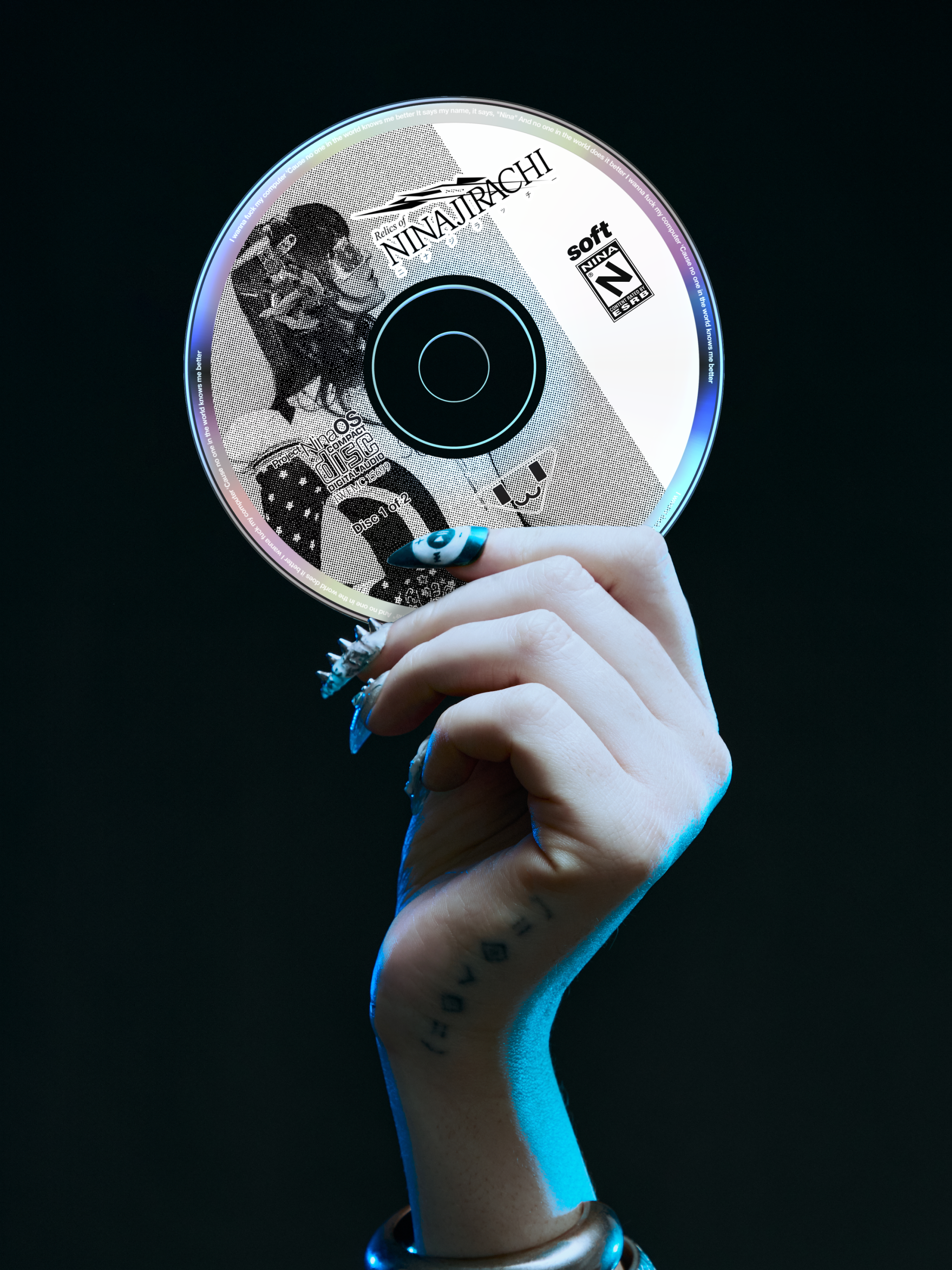
MIKE SUNDAY: Yeah, that makes a lot of sense. Speaking of [one of your] B2B partners, umru, he's a fantastic graphic designer. I think graphic design, it's such a massive part of your aesthetic, whether it's your avatars, your album covers. Can you talk a little bit about how you work with graphic design, even though your primary medium is audio? How do you think about visual design?
Nina: Yeah, I mean the designer I work with most closely is John You and he designed this *pulls out necklace of ninajirachi avatar I got this from a fan in Miami, this logo and this little guy that's on everything. The little widget guy, so that's John's design. It's collaborative so we go back and forth on stuff but he's the main guy behind my merch and flyers and vinyl, the inside of vinyl inserts and those kinds of assets. The show visuals are made by a bunch of different people, but a lot of the time they're interpreting his assets as well.
MIKE SUNDAY: So does John have a vision and then he sort of goes away and then he shows it to you or is it more of like a step-by-step sort of collaboration?
Nina: It's pretty step-by-step collaborative. At this point we've worked together for a couple of years so he knows what I like and I know how he works but when there's something coming up I might send him an idea of what I want and then he'll make an interpretation that incorporates things that he likes as well and then he'll send it back to me and then a lot of the time I'll just put it in Photoshop and do like a really janky, like janky as fuck, edit to be like, what if we actually move this here or we change this color and then I'll send him back this janky screenshot and he'll just then reinterpret that again. We go back and forth a bit but his greatest skill is interpreting and translating and finding the middle ground between what I want and what he knows is good. He's amazing.
MIKE SUNDAY: It's so nice when you're able to find that sort of collaborative partner that you can just really trust and help build out the world. It makes such a difference.
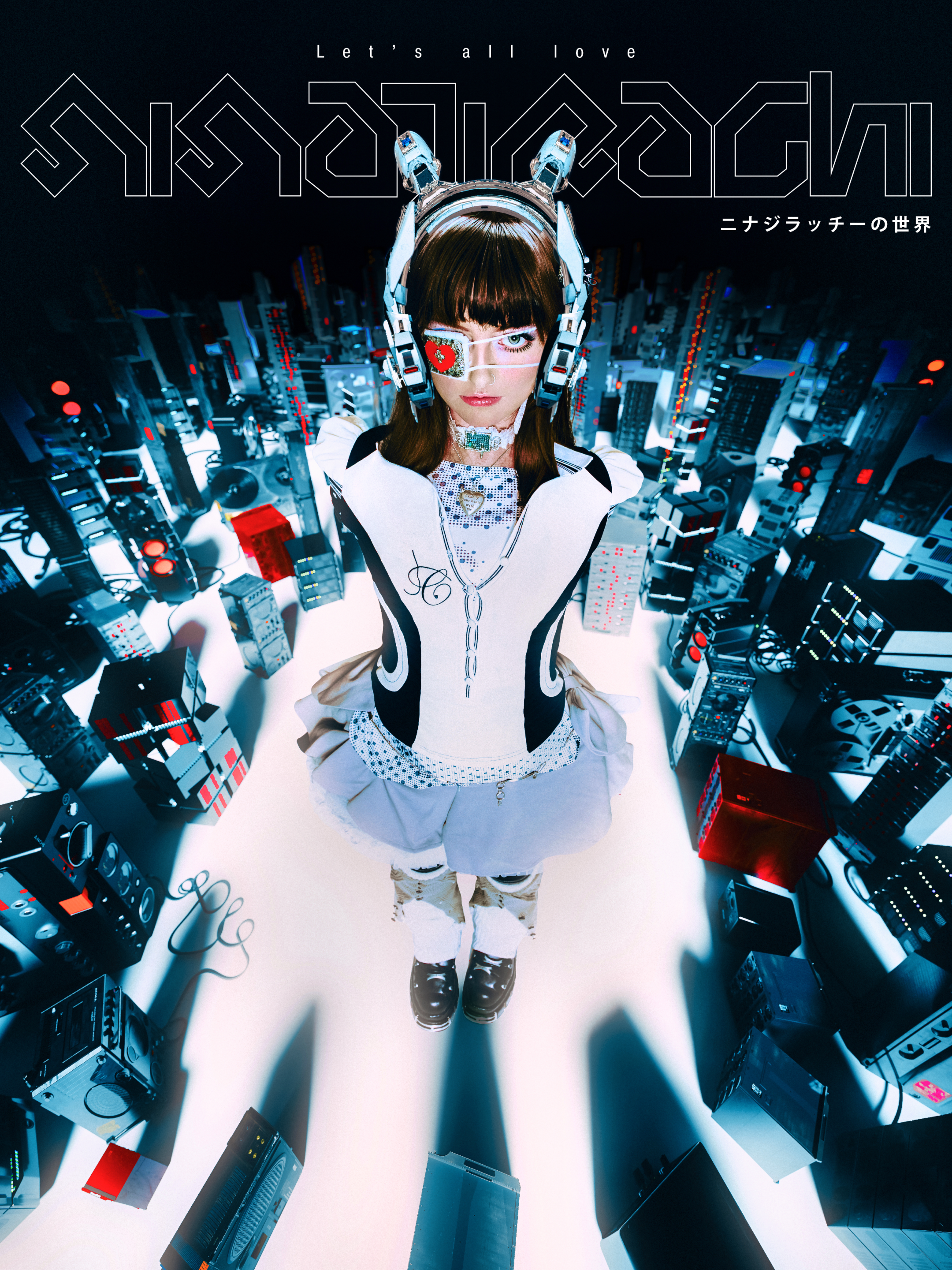
Nina: Totally. I should definitely mention Aria [Zarzycki] too who shot my album cover. She did the Info Hazard video and she also organizes a lot of my show visuals and stuff. It's a similar process with her but on different assets. More video based and photo and video based kind of assets. Those are the two main visual collaborators.
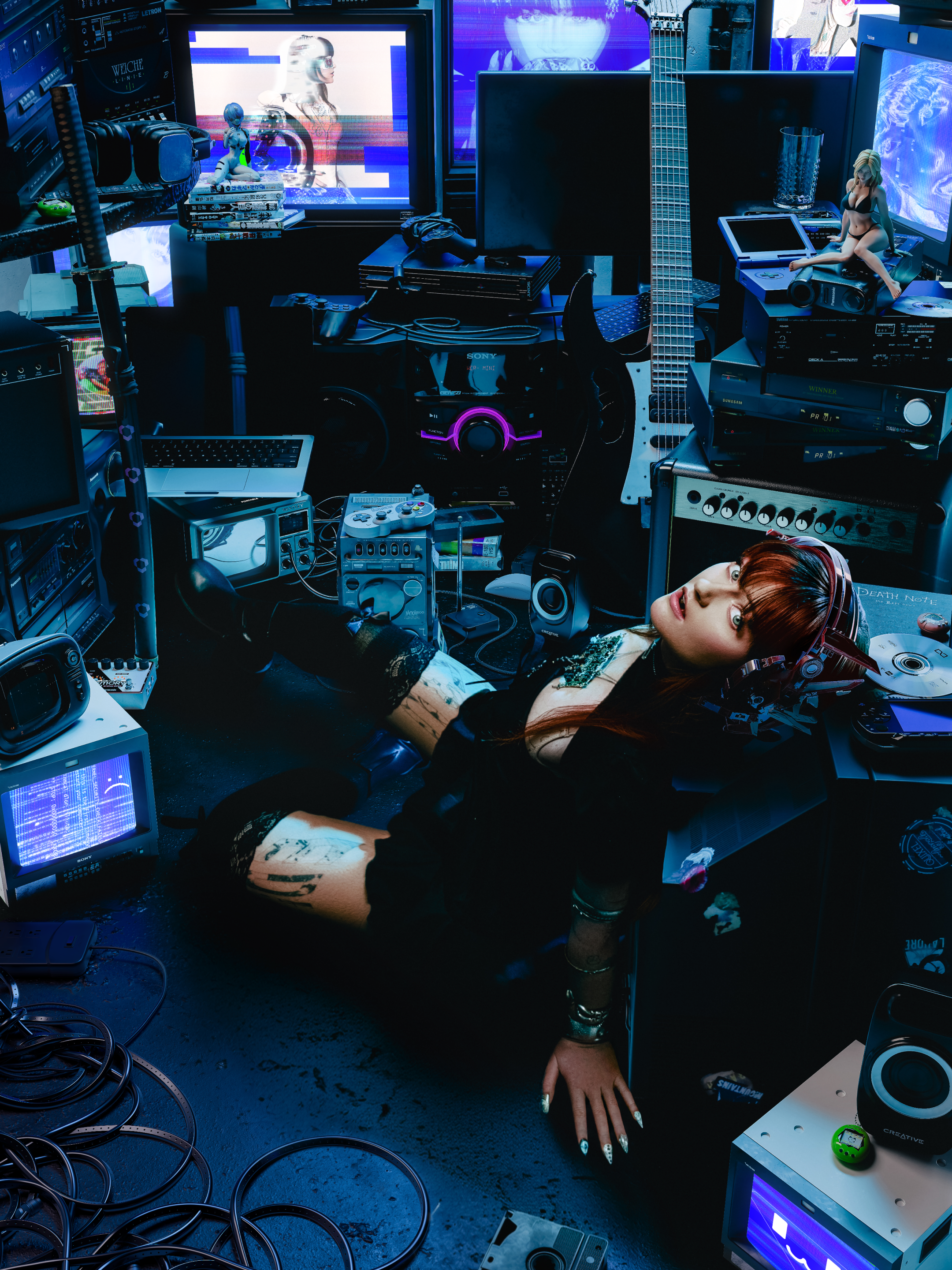
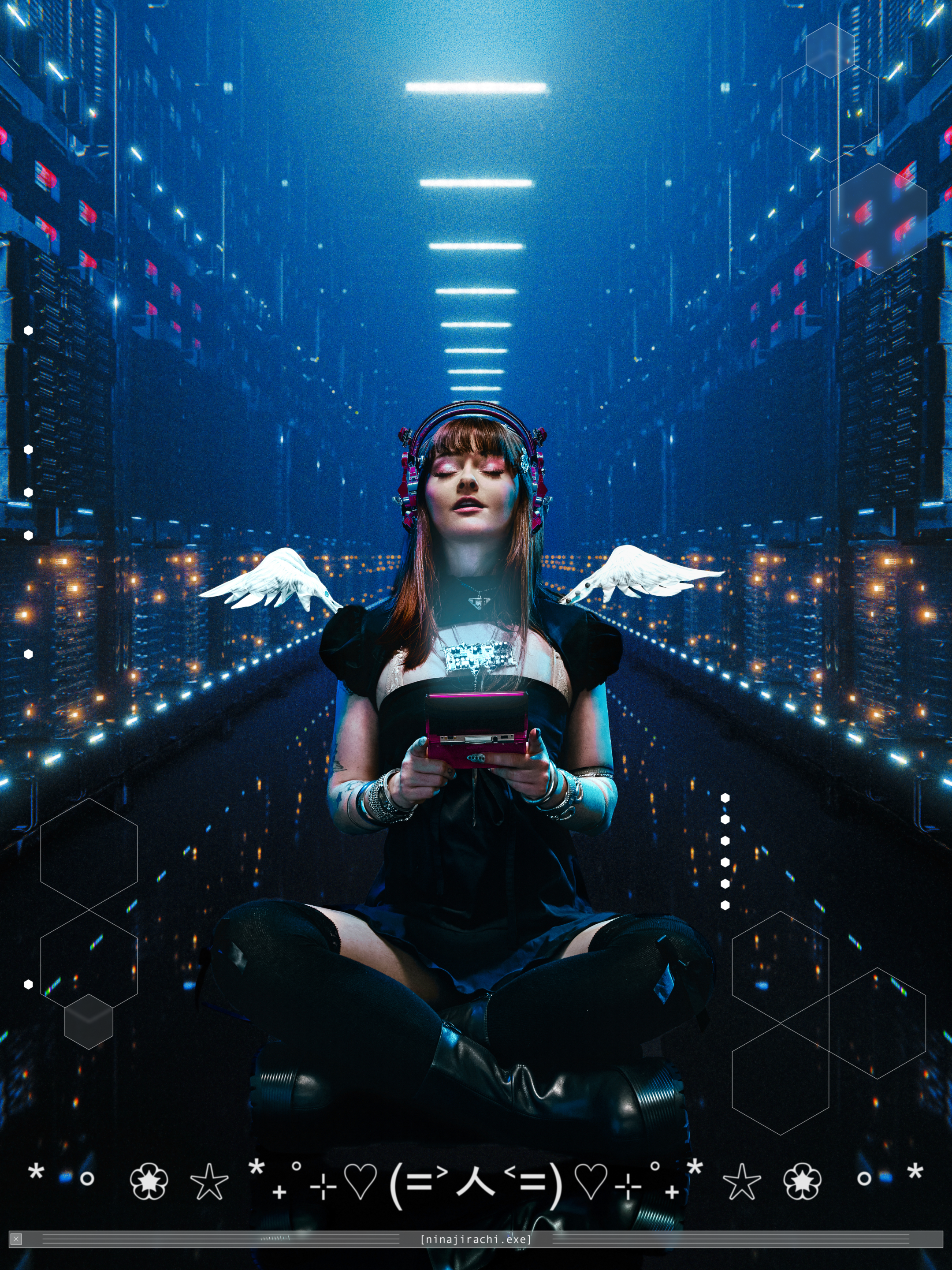
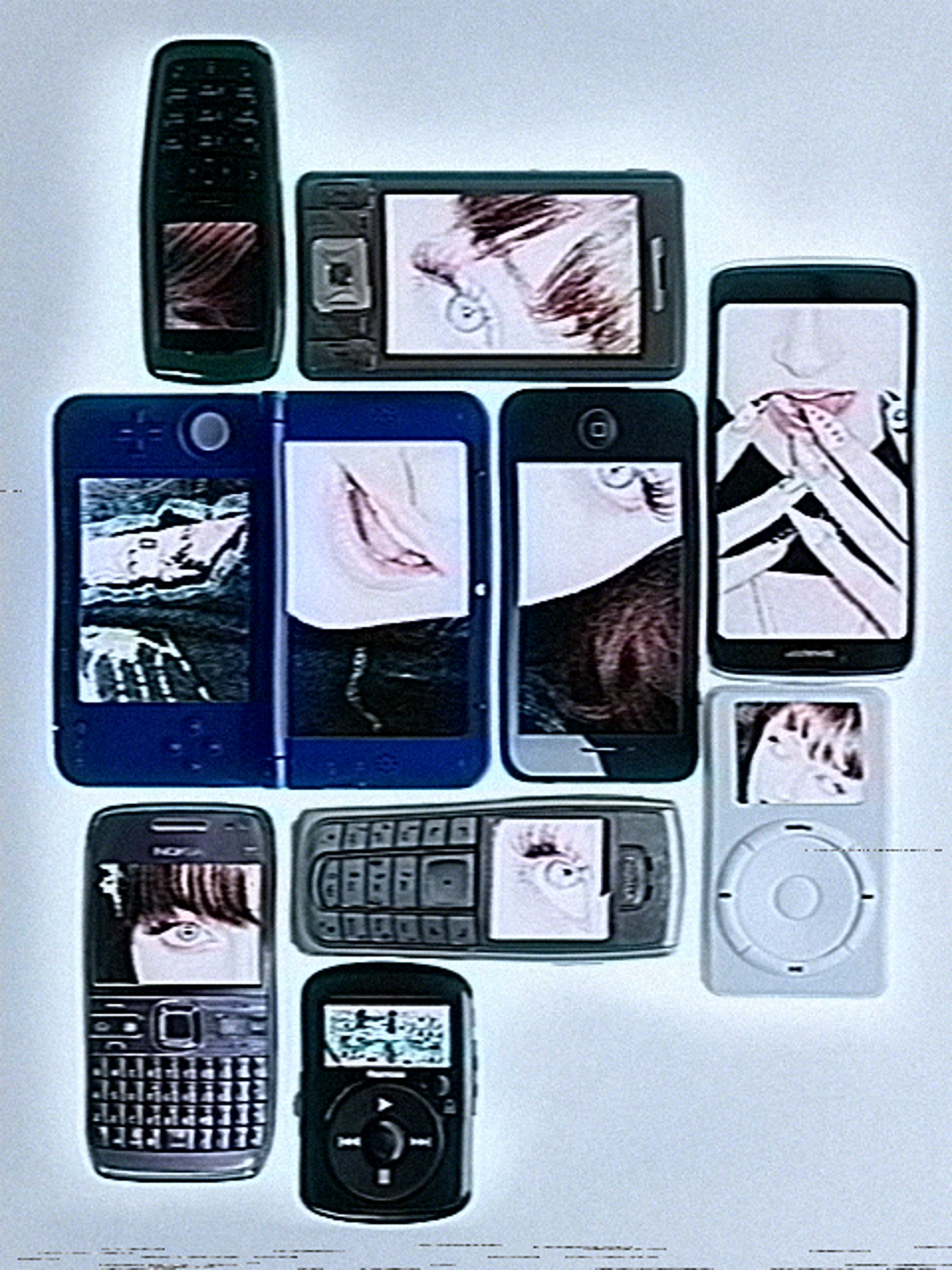
MIKE SUNDAY: That makes a lot of sense. Especially thinking of your album cover. Hardware is such a big part of [your aesthetic], and there's all these people nostalgia baiting and bringing Nintendo DSs to shows and stuff, and people are calling it performative. Does performative even exist, or what do you think about all that stuff? Has anyone brought a DS to your show?
Nina: My god, every single show. I signed a DS last night. Yeah, a lot of DSs. I think everything is a performance really, but not even in any kind of shady way. Even right now in this interview, I'm performing to you, a version of myself that is based on this kind of conversation. Everything is a performance, it just depends who you're performing for and what the intention is. So sometimes when people say that's performative as if it's a negative thing. I think what they actually mean is like that person is giving a performance for a reason that they think is bad. It's not that, because I think everything is performative really, but it doesn't mean it's good or bad. There can be good or bad intentions behind certain performances. If someone wants to film my show on a Nintendo DS because that makes them happy, that's cool. And they're not doing anything wrong. Some people think being performative is bad because they see someone performing a version of themselves that's maybe like inauthentic or they're giving a performance in order to obtain something or do you know what I mean?
MIKE SUNDAY: I think what's interesting too is people will go, “They're a LARPER!” But what's interesting to me is the performative thing has actually exposed things to a lot of people. Just because someone wasn't around for the peak era of DS or CDs or vinyl doesn't mean that they can't appreciate it anymore. So I think that even in being performative, you can gain a legitimate appreciation for whatever that is. It's just one of those internet things that people like to toss around. Speaking of DS, I know you've mentioned Ad Nauseam, Pokemon Mystery Dungeon. There's this inexplicable kind of energy, I even think MapleStory has it: these moods or these save point types of things. Would you ever be into scoring a game? Have you ever thought about that?
Nina: Yes! Absolutely, my whole life I have thought about that. It would be so awesome. I would be really interested to learn about the parameters of video game music scoring because there are limitations, especially with DS music. When I was younger and I learned about soundfonts, I started downloading a bunch and using them. I would be really interested to learn about the limitations of music production for games. I imagine as technology has progressed now, you can just have full whatever in the game because there's more storage on a card. But that 8-bit music came out of a technological limitation. Now it's like a whole thing so that's really interesting to me. I would love to learn more about it and be a part of that for a game someday!
MIKE SUNDAY: Yeah! Put it out into the universe! In music, graphics, I think a lot of the games that we like aren't necessarily what you would call the most technologically impressive thing, but there is something to be said about having those sorts of limitations and that's kind of where creativity is able to butt up where technology ends. Do you self-impose any limitations when you're in the studio, just as a creativity exercise?
Nina: Yes, I do actually and so many ideas and important... I'm trying to think of how to word this. For example, the whole idea of the rave stab would not exist without a technological limitation because that came from taking one slice of audio that's a chord: that has tonal information, it's not just one note. It's a minor chord or whatever and playing that back. So it gets that eerie out key feel to it because you couldn't play it across the 12 notes. Once the technology moved beyond the need, there was no longer that limitation. People were like, “But actually I like how that sounds.” And that would have never existed without the limitations. It's the same way now people want to film on a DS. They don't have to. They could bring a thousand dollar camera and take videos on that. Or an iPhone can film like 4K, but people lack the limitation.
MIKE SUNDAY: Yeah, there's beauty in it.
Nina: Yeah, 100 % like all people love VHS and digital artifacts. When I made my album, I did consciously try to, for the sake of cohesion. For instance, I had this song finished and then I was finishing this song over here, and this song was missing a bass. I'd be like okay, instead of trying to reinvent the wheel I'm actually just gonna take the bass from this song and adapt it for this song so it feels like the same band played the whole album if that makes sense. That was the only real main limitation I placed though.
MIKE SUNDAY: So are you someone that likes to try out new VSTs and new tools, or once you’ve figured out your tools, “Okay, these are my bass patches, and these are my stabs” do you just stick to those tools?
Nina: I like to rinse something to death before moving on from it and really get to a point, where I'm really struggling for any good ideas out of this thing I've used so much. And then I'll be like, okay, maybe it's time to download something else and for the sake of getting new inspiration and stuff. I like to really see a piece of software out before I download something new.
MIKE SUNDAY: Really push it to its limits. You know the instrument inside and out. You had mentioned the scene growing up in Australia. I think maybe less so now, but did you ever feel like EDM and the music you were into was more North American focused? There’s this kind of this “third spaces" idea for a lot of these internet kids. Their first time being connected with other people is through the internet. So where were you hanging out? Was it YouTube? You talked about SoundCloud and forums. What were those early internet third spaces for you?
Nina: YouTube and SoundCloud were the biggest ones for sure. For EDM, it was kind of a whole world thing. Even a lot of my favourite music when I was younger was Australian. For example, WaveRacer, who I now work with on mixing. I heard his music for the first time when I was about 13 or 14 and I was like, my God. He became one of my favourite artists very quickly and he was from Australia. But even still, the world of Australian music felt very far out of my reach especially because I wasn't from a big city or anything. A lot of the music I got into when I was younger was also European or British. PC music is a British label or Cashmere Cat is European, even Fractal Fantasy is like Canadian European. Flume for example? I can't believe I didn't think of Flume. Flume is Australian as well. Hudson Mohawk. [My favorite music] is from all over the world. SoundCloud and YouTube were my biggest entry points for sure. Those old algorithms would show me a lot of cool stuff.
MIKE SUNDAY: Let's go! Shout out Flume! Was there anything that you saw as a kid that you were definitely too young to see that you still have seared in your memory?
Nina: Yes, I have a little song about it! I don't know if it's very classy to describe what I saw but a lot of stuff that scarred me about the internet. A lot of it I actually didn't see first-person. It would be the boys on the bus talking about or watching it right next to me. I'd be like, “I'm not looking at that.”
MIKE SUNDAY: That's relatable! Someone always had an older brother that showed them a weird liveleak video that you definitely shouldn't have been seeing at that age. Technology right now is, it feels quite dystopic, especially with things like AI and just the way the world is going. It feels very much like The Wired in Serial Experiments Lain. But in your lyrics, you talk about these things like online and digital identity and sentient computers and even AI to a certain degree. Why was depicting this warmth and this intimacy so important to you? Versus this cold technology that everyone wants to believe?
Nina: Yeah, it's so funny. I never want people to think that I'm just looking back at the internet of the past and being like “oh life was so much better when I was 13” because it was not. It's definitely better now. For me I don't need to go back to being 13, but the reason I look back at it so fondly isn't because I want to go back in time. My high school friends are still my best friends, but all of my friends that I've made post high school, I've been connected to through music and the internet. I think about how, if my world was limited to the hometown I grew up in without the internet, I would have never discovered computer music or made the friends that I have through the shared love of computer music. I got to do that because I had internet access. Maybe the trade-off was seeing some fucked up video that I'll never forget, but for me that was a price I was happy to pay because I love electronic music so much. Even just earlier in our chat we were talking about the concept of like, me, I'm from Australia and Ramon is Filipino-American living in LA and we were doing a tour together in Japan with Heaven's Gate and we all grew up listening to the same music on SoundCloud and we all met through the internet and then we're there in person having an amazing Japanese dinner with the promoters and we're talking about Fractal Fantasy. And it's just like, wow, this is so cool that I get to have this experience and I would not get to have it if I didn't have a computer when I was younger and have access to the world outside of my hometown. That's why I look back at it so fondly because it's like, wow, those discoveries that I made on the internet when I was little really signposted my life. At the time it just felt electric. I was like “What is this music?” I had no idea what I was gonna do after school. I just went with what I liked. I know it's very like myopic. I wasn't trying to make an album that was a grand statement about the general state of technology. I have this gratitude. It was just about my experience.
Credits:
Talent: @ninajirachi
Photographer: @owen_devalk
Creative Director: @bryanhuynh
Stylist: @liannexcalvo
Stylist Assistant: @gracetzang
MUA: @jjulixtte
Digital Tech: @dantevelasquezjr
Lighting Tech: @jackthomasphotography
CG Artist: @tec1n
Graphic Designer and Interviewer: @mike_sunday
Writer: @disabeer