From a Table Tennis Club in Mitaka to an A24 Movie
Sometimes the best stories are the ones that happen without intention. Real, organic, unfolding quietly, until they suddenly connect across places, people, and time.
This is one of those stories:
It begins in a small table tennis club in Mitaka, Tokyo. A space that, over time, found itself linked to an A24 production, appearing alongside Timothée Chalamet. Not through a campaign, not through marketing strategies, but through a chain of events that feels almost unlikely in retrospect.
At the centre of it is the legacy of Ichiro Ogimura, one of the most important figures in the history of the sport. His influence extends far beyond competition. From shaping table tennis culture in Japan to contributing to international diplomacy, his story continues to resonate in unexpected ways.
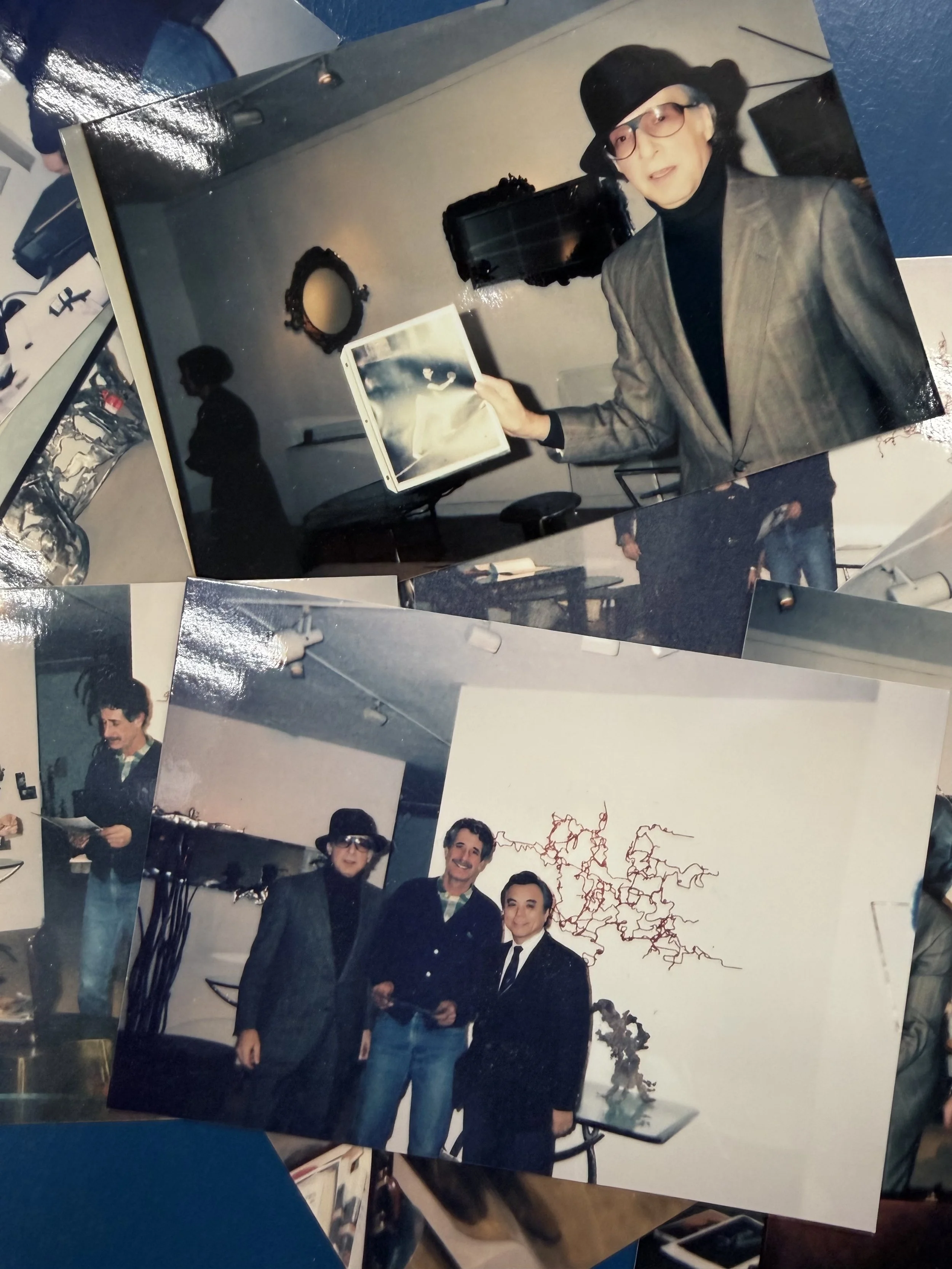
Ichiro Ogimura with Marty Reisman and friends, New York City, 1992.
A few years ago, sabukaru came across Koyo Bear. A brand with deep roots, once existing in the same conversation as global sportswear names, yet largely forgotten. What stood out was not only its history, but the quiet way it was beginning to re-emerge.
That discovery led us to Mitaka. We spent time at the club, spoke with Koji, and documented what remained. A place still active, still connected to Ogimura’s legacy, with real people continuing to train there today.
Some time later, that article [read it here] reached Josh Safdie. From there, things shifted. Koji, who had been part of that initial visit, became involved in the film. Alongside this, A24 revisited the Sharpman. A silhouette directly tied to Ogimura and Koyo Bear, brought back with care and context. Not positioned as merchandise, but as a continuation of something that already existed.
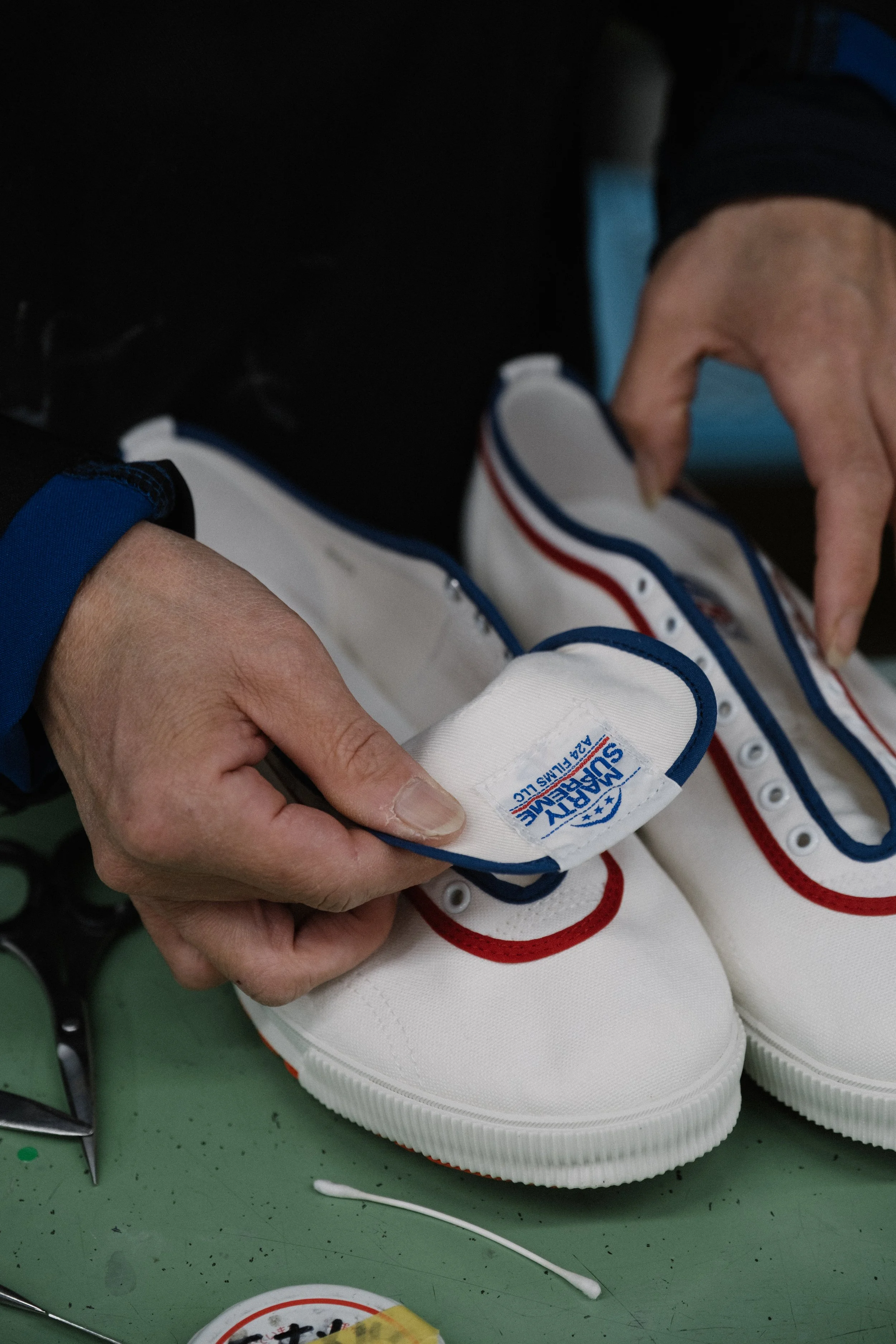
The A24 edition of the Sharpman, handmade in Japan.
In a moment where projects often come with marketing-heavy narratives and large-scale campaigns, this felt grounded and real. A product connected to real history. A story that didn’t need to be constructed or made up..
The Sharpman reflects more than design. It holds the legacy of a brand, a founder, and a period that shaped the identity of a sport. It also points to how legacies continue to move and impact generations to come, while finding new forms and new audiences.
sabukaru returned to Mitaka to speak with Koji. About what happened, about what remains, and about what it means to carry forward the spirit of Ogimura today.
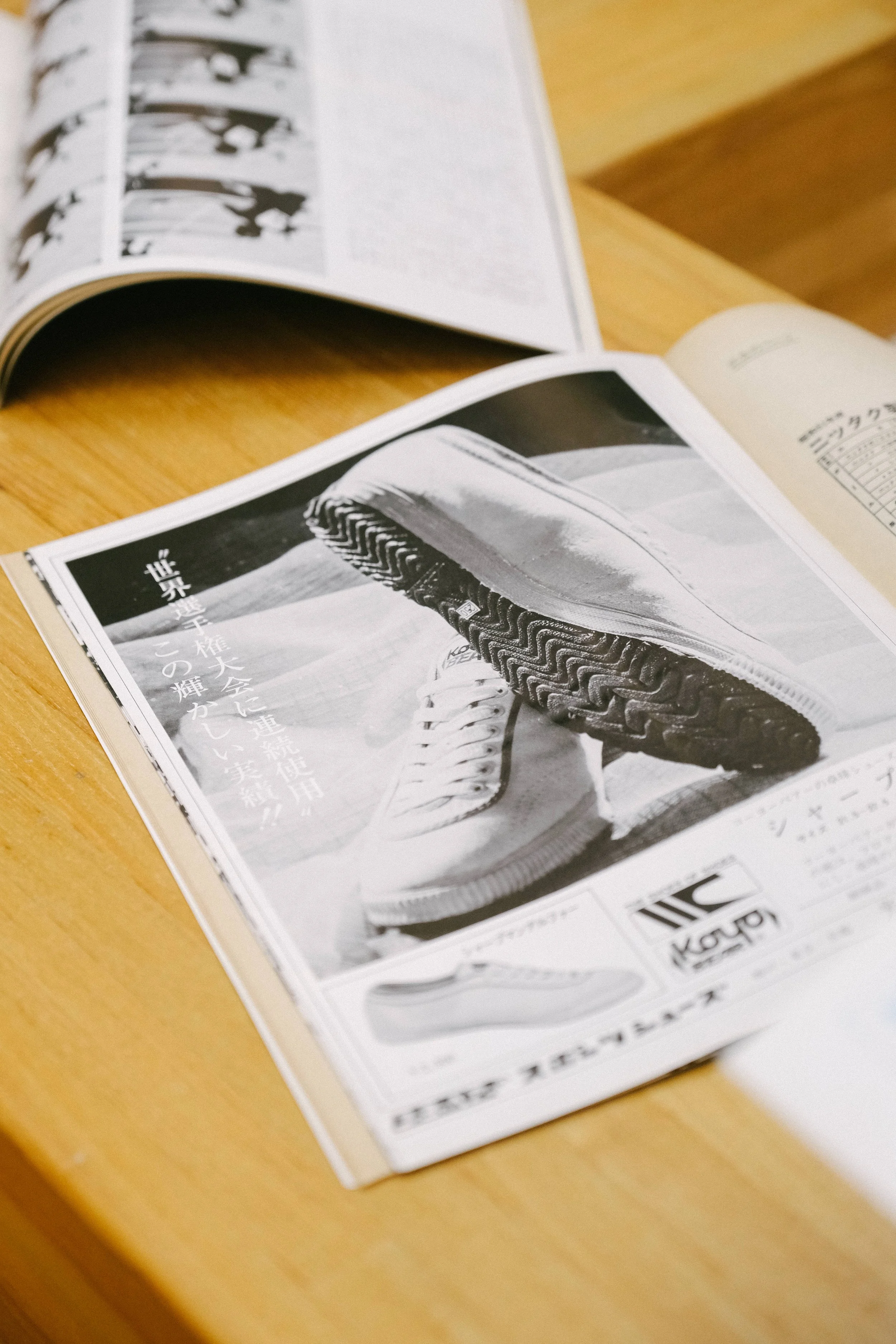
Vintage Koyo Bear Sharpman advertisement from the ITS archive in Mitaka, Tokyo
Please introduce yourself
I started table tennis when I was 10, and when I was 14 I met Ogimura-san for the first time. Since then, I have played table tennis here. He trained me as a player, and now I manage the ITS table tennis club.
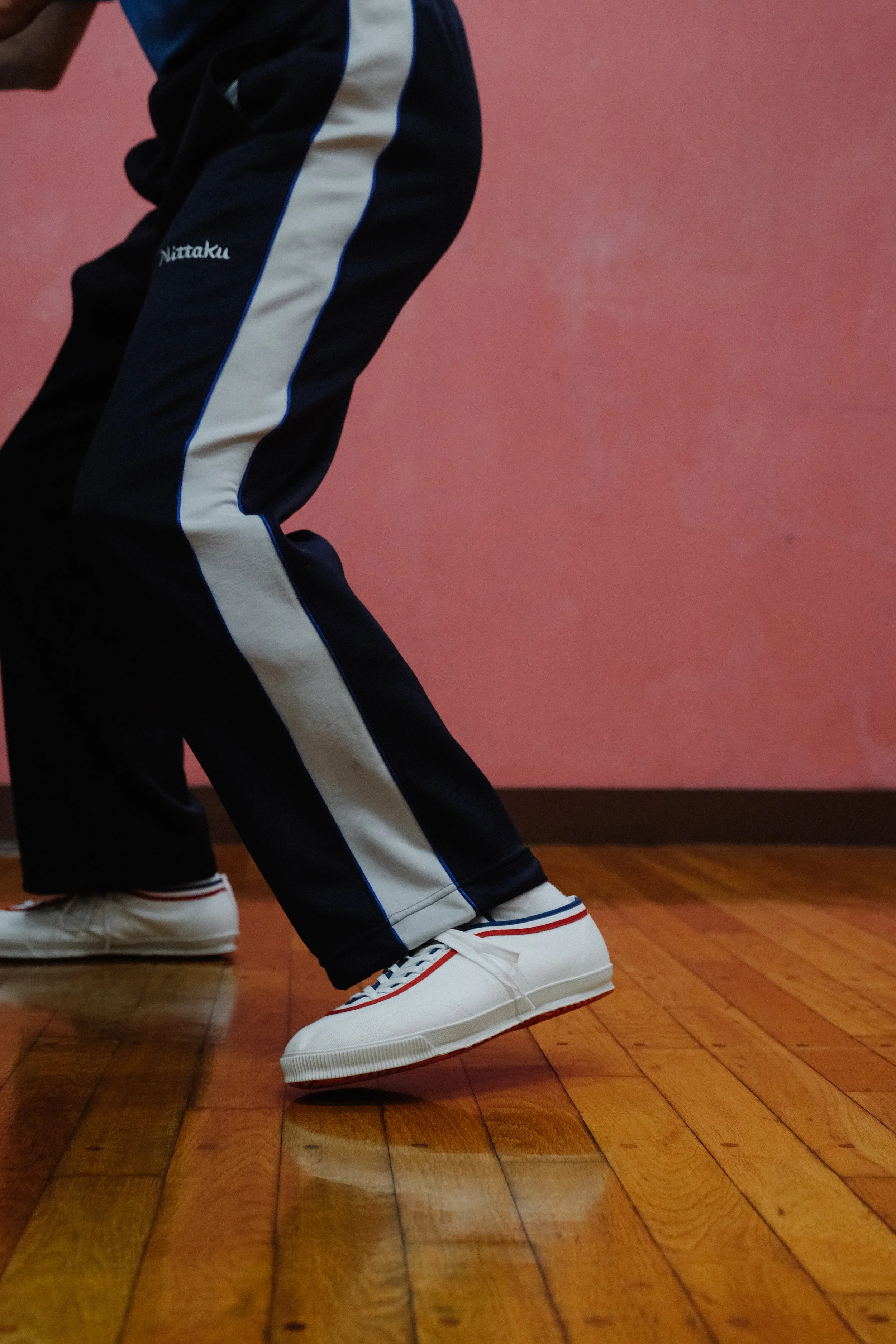
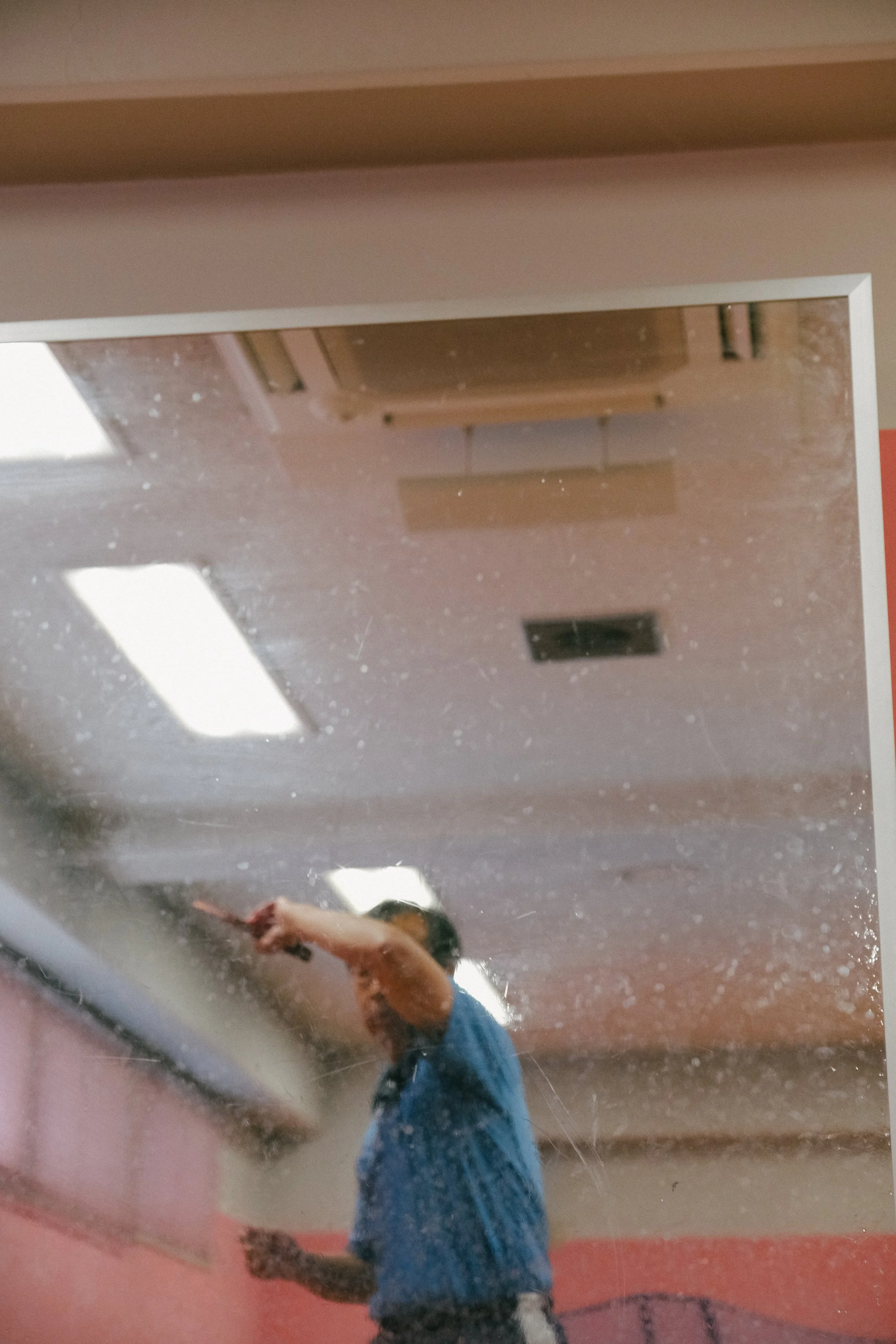
How did you and Etsuko ultimately come to appear in the film?
In December of 2024, people from Toho were trying to get in contact with us. They were making a movie about an American table tennis player from the 50s, so they wanted to learn about table tennis at the time. About five of them came here, and I thought that was it. But a few days later, they told me they wanted me to be in the movie, which I was really shocked about. I originally declined. I can play table tennis, but I can’t act. But then they told me that the director, Josh, would really love to have me in the film. If that’s what he said, then I thought, let’s do it.
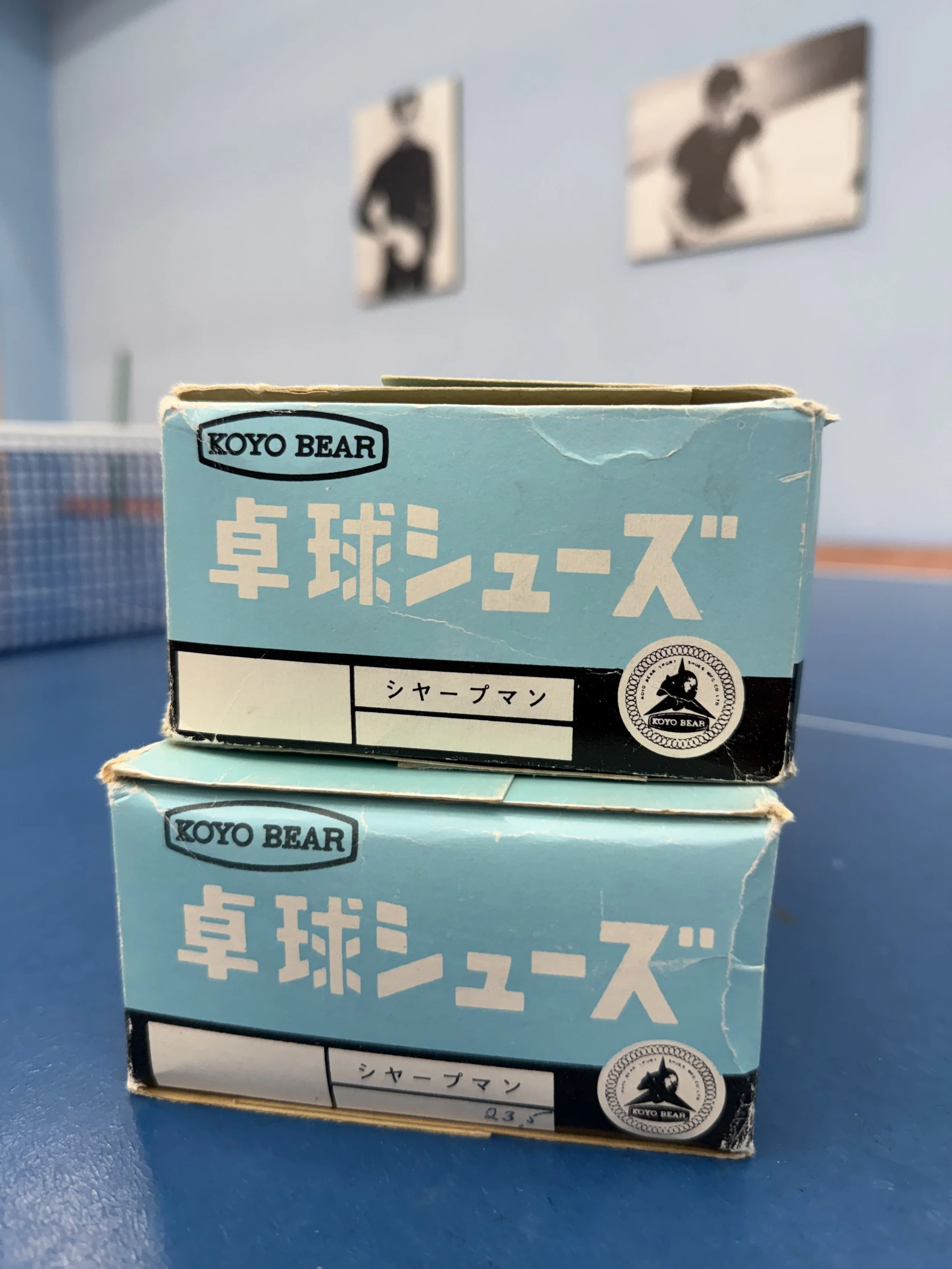
Vintage Koyo Bear Sharpmans with shoeboxes, found in the archive of ITS in Mitaka, Tokyo.
Can you tell us what it was like to be in the movie and be on set?
It was very interesting. Because it was set in the 50s, the clothes and hairstyles were done to match by the stylist. Hundreds of people were preparing for the filming, and I thought, “Wow, this is so impressive.” On the first day of the shoot, there was someone yelling “ITS! ITS!” and they were looking for us. I told them that I was from ITS, and they turned out to be Safdie and Timothée Chalamet.
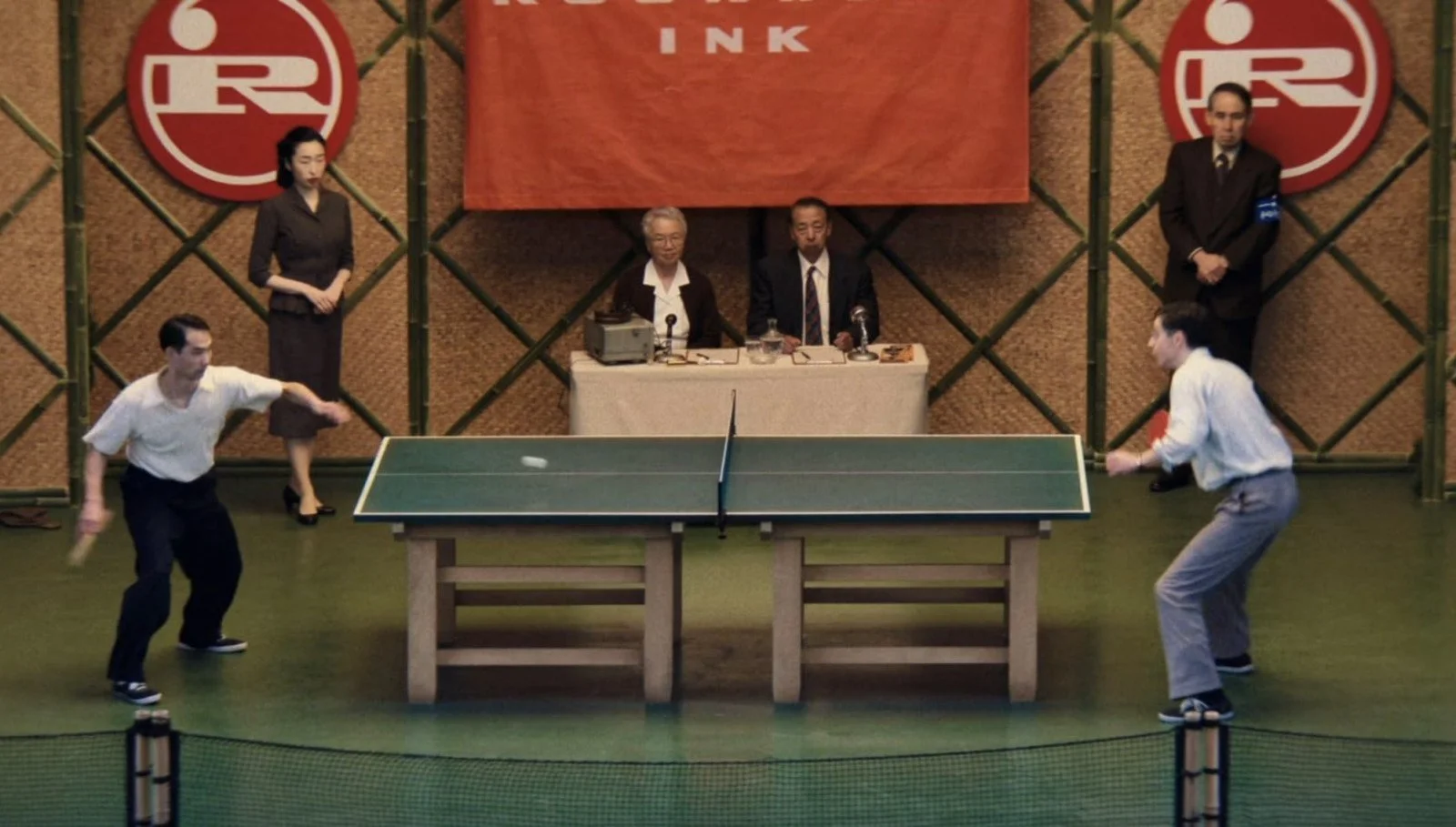
Climactic match scene from A24’s Marty Supreme, filmed in Japan, featuring Koji Oribe and Etsuko Enami of ITS Mitaka in cameo roles as umpire and scorekeeper alongside Timothée Chalamet.
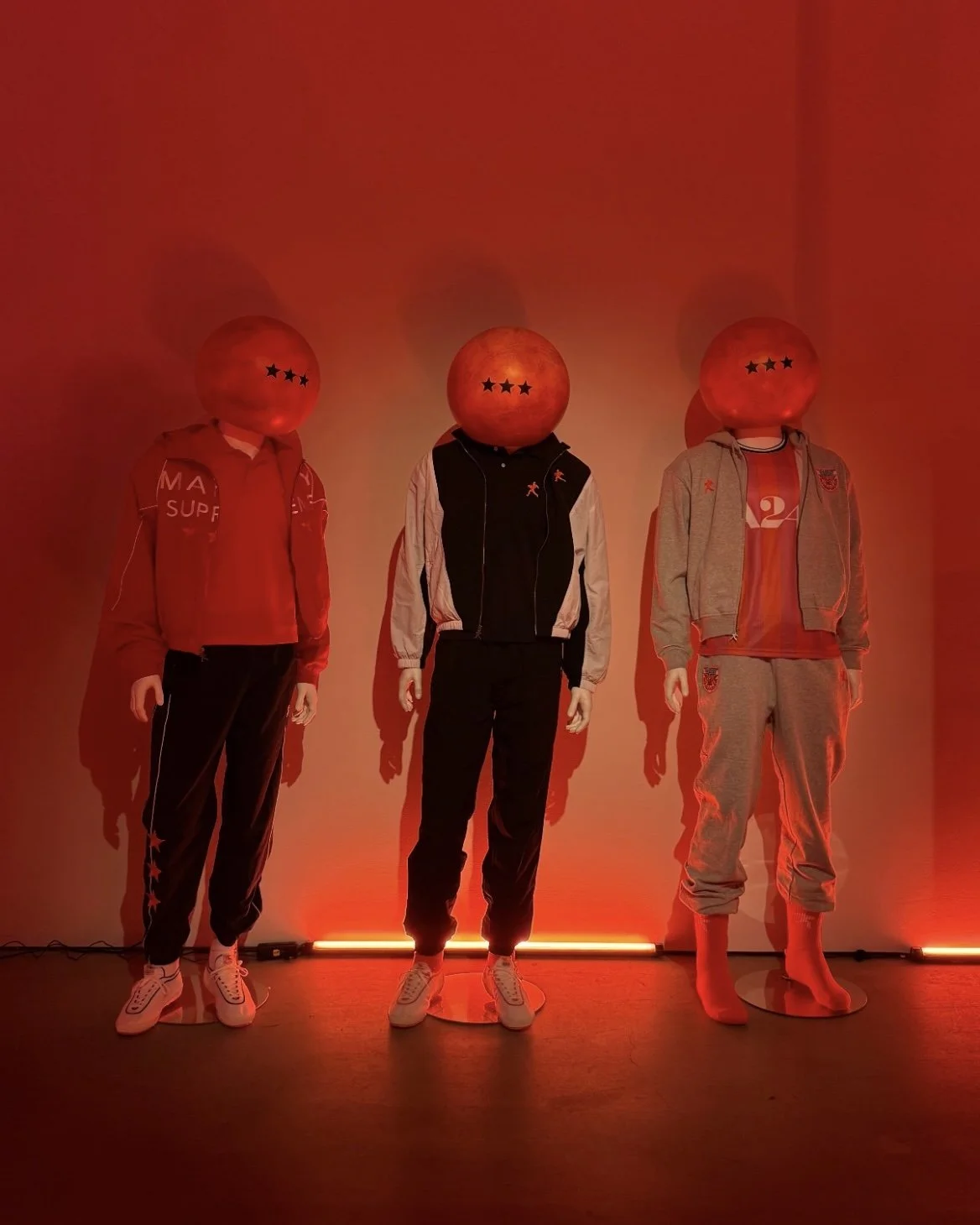
The Marty Supreme Edition Sharpman shoes on display at an A24 event in Los Angeles, December 2025.
How do you remember Ogimura-san?
Ogimura lost his father at a young age. He was raised by a single mother and experienced a lot of hardships. After the war, the world wasn’t kind to him, and that was when he discovered table tennis. In a way, he was made for playing table tennis. Even though he kept winning, he never thought that he would continue it forever. He later became a coach and created the first-ever national team for Japan. He eventually became an executive of the Japan Table Tennis Association and contributed to the advancement of table tennis.
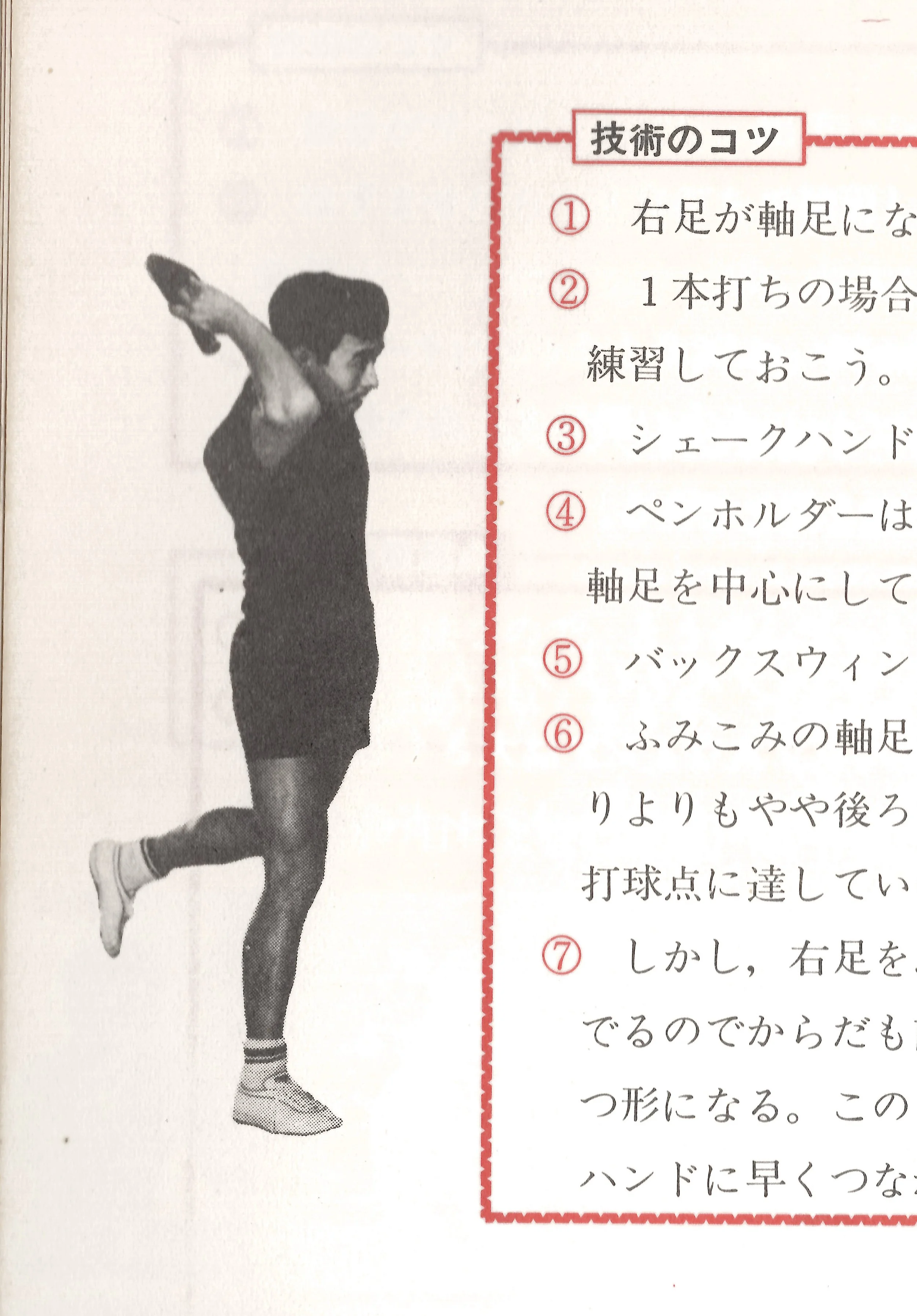
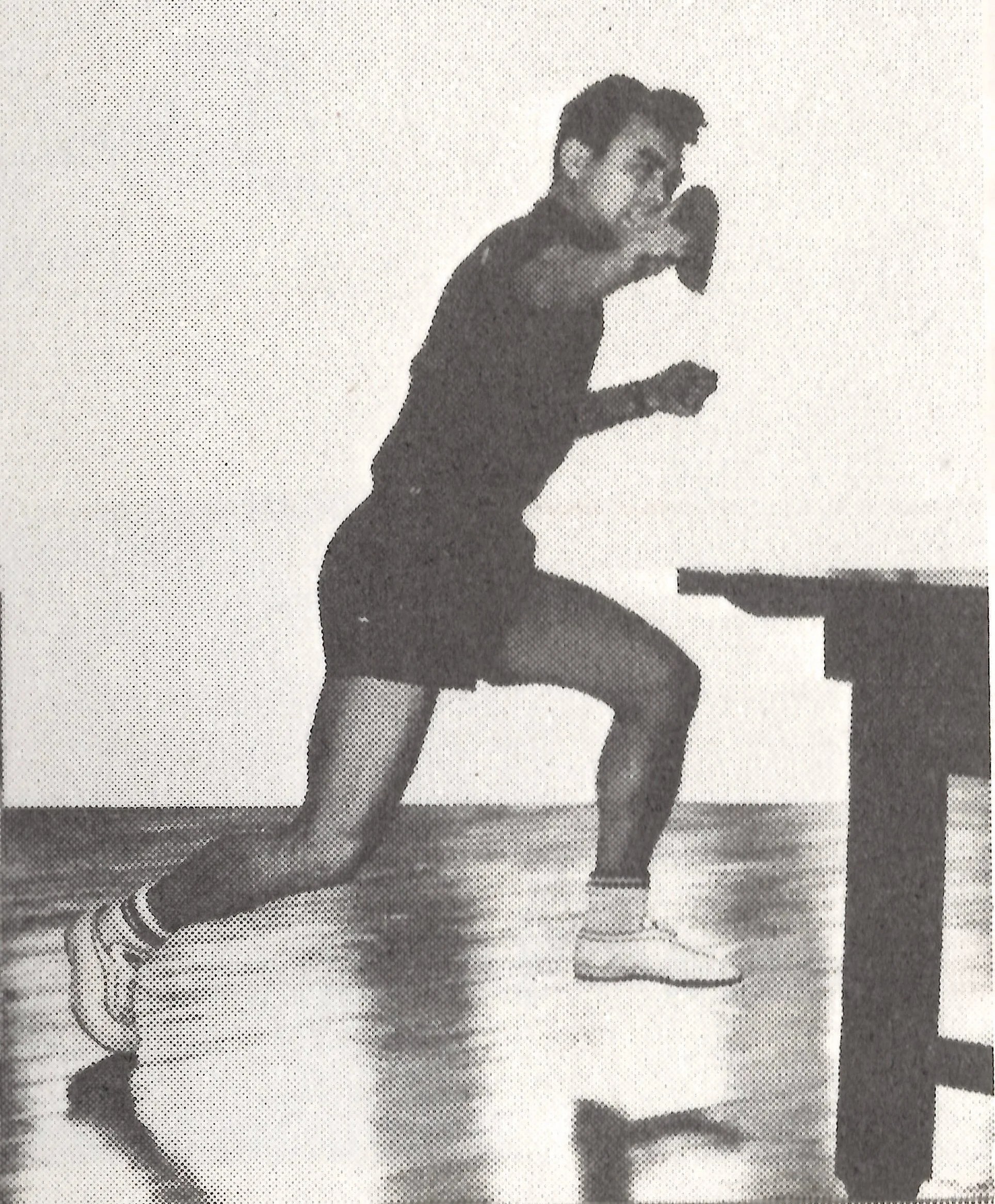
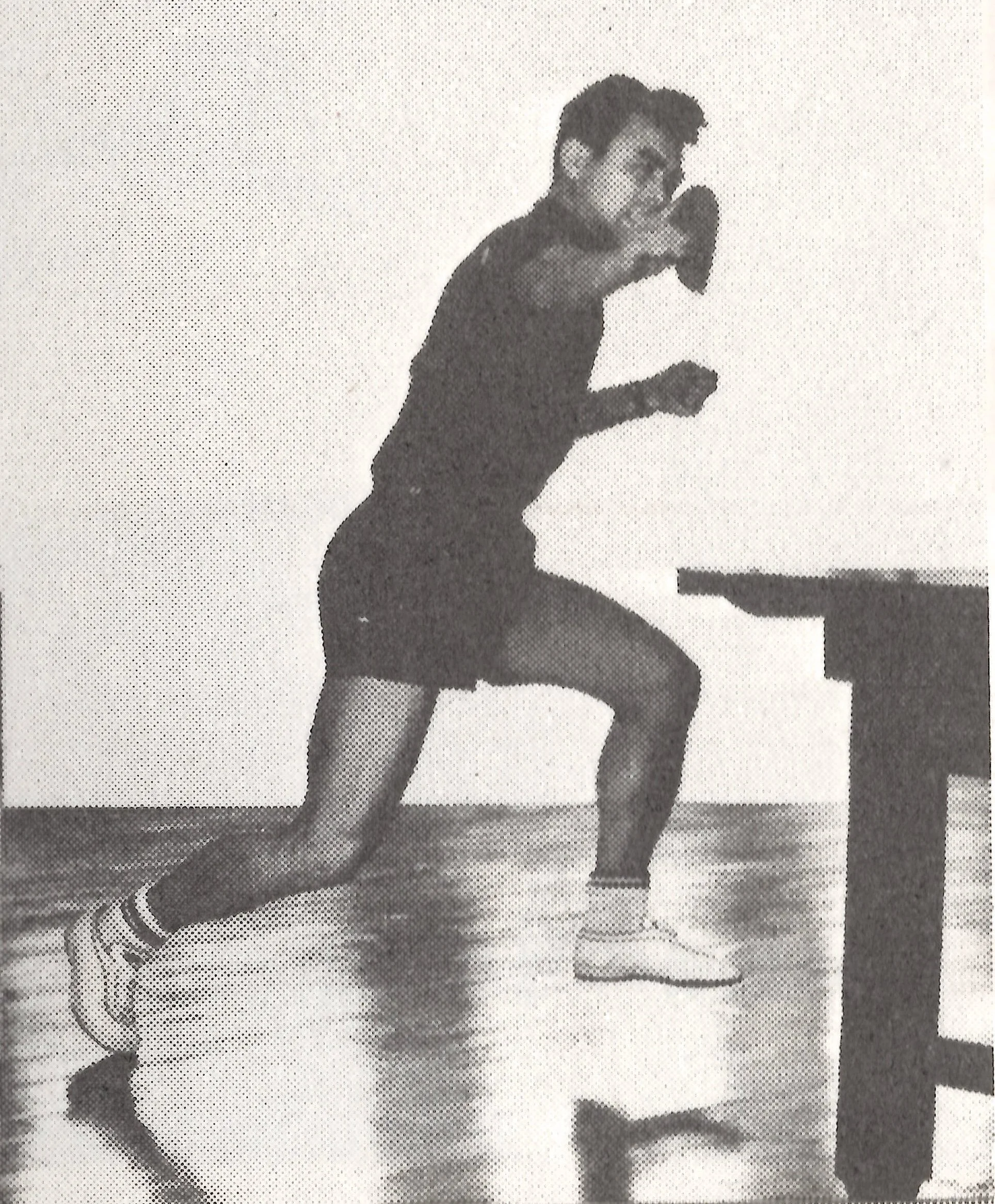
Ichiro Ogimura wearing the original Koyo Bear Sharpman, the first purpose-built sports shoe for table tennis, which he designed himself.
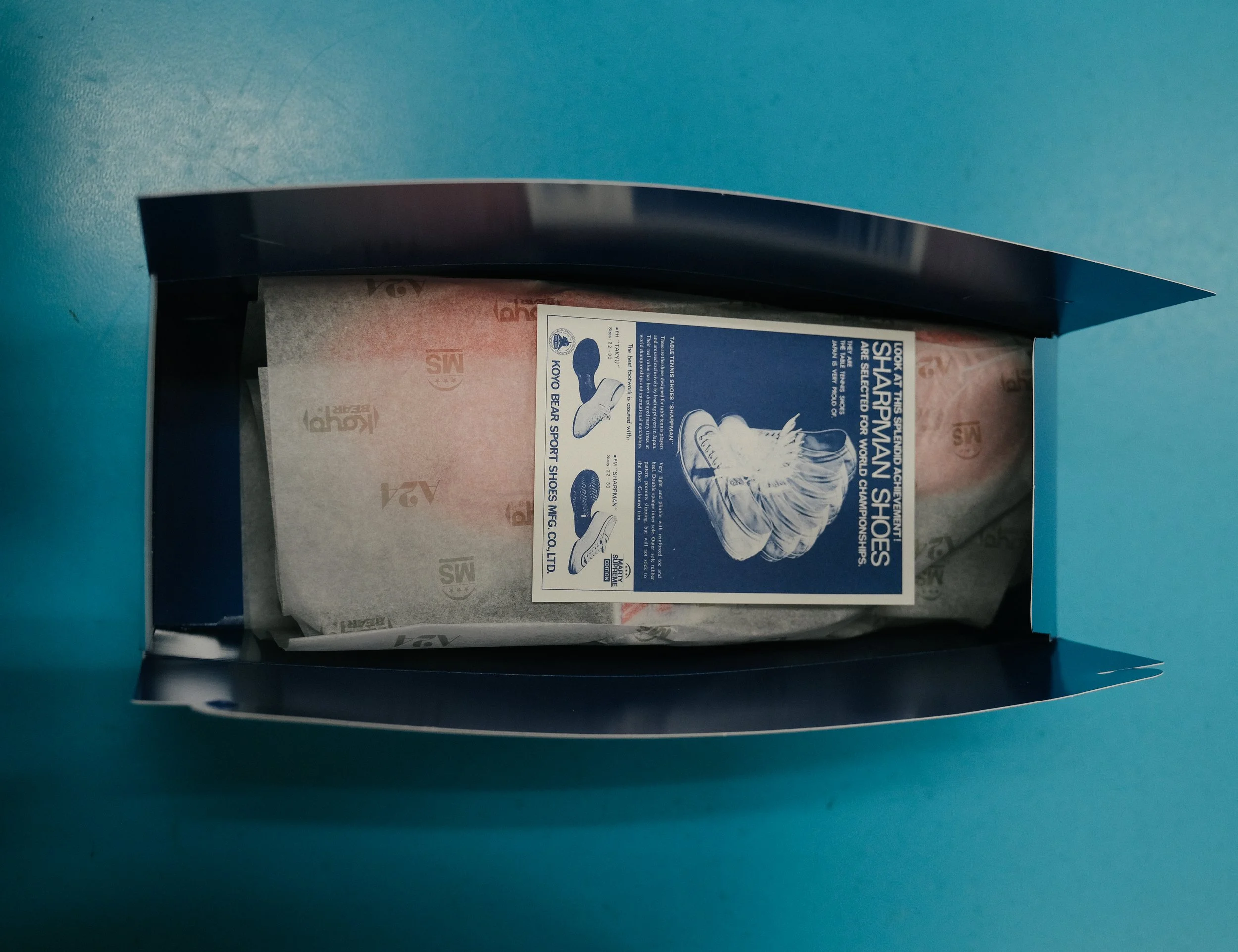
The Marty Supreme Edition Sharpman, featuring archive-inspired artwork, specially created for the A24 collaboration.
I heard that you recently found something really interesting in the ITS archive room. Can you tell us what you found and the story behind it?
I found this book on a bookshelf. I remember thinking, “The Money Player, huh.” It said it was written by Marty Reisman, and I was shocked. Inside, Reisman wrote a note to Fujimoto, who is Ogimura’s friend. He gifted this book with a special note, which I didn’t know about. Then I discovered these pictures as well. On the negatives, it said “Reisman,” and I thought, “We have photos of Reisman?” Before that, we found this letter. It said “Ms. Marty Reisman,” and I was like, “Wait, Ms. Marty Reisman?” Then I realized it was a letter from his wife. It was written on December 23rd, 1992.
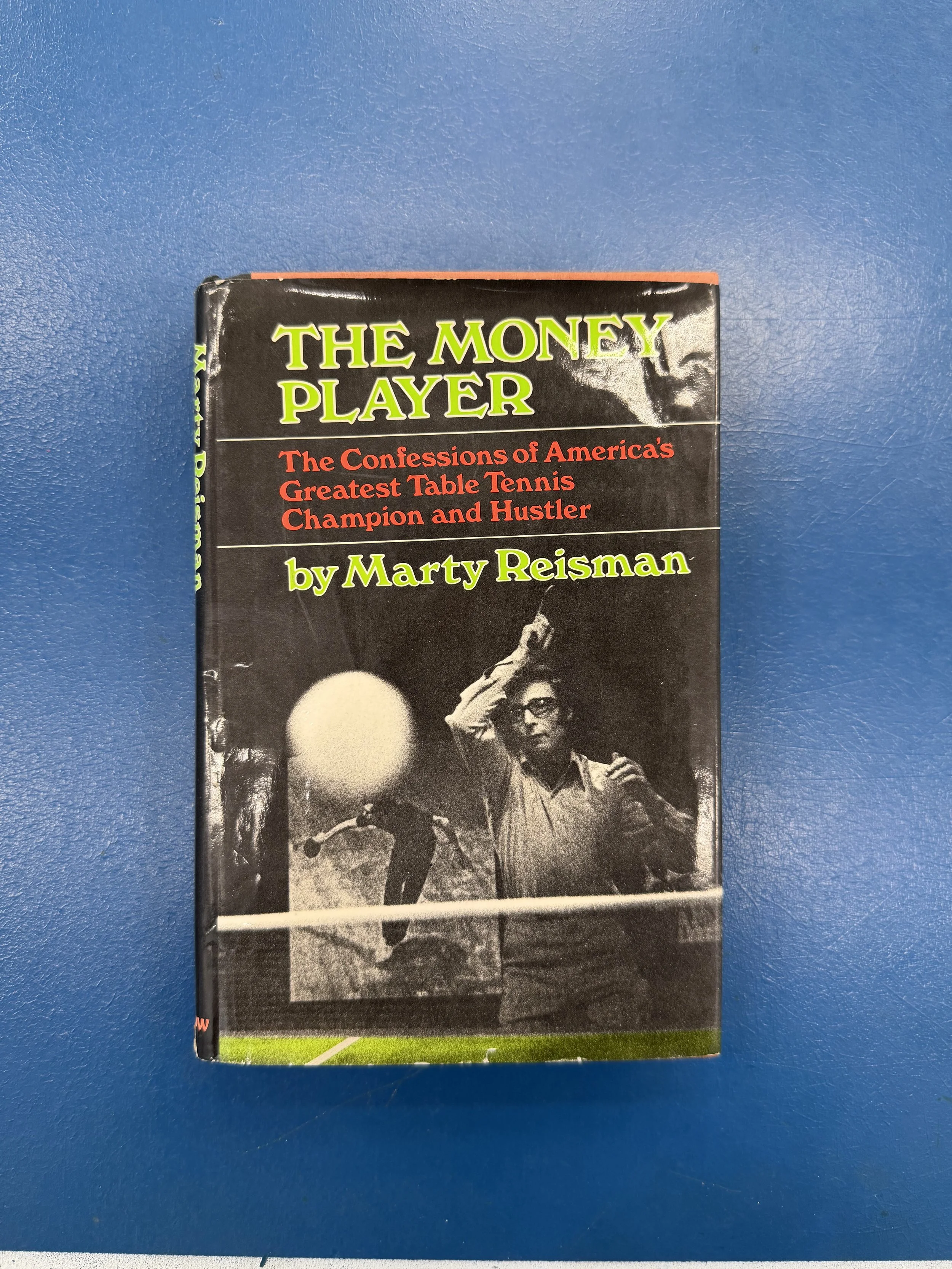
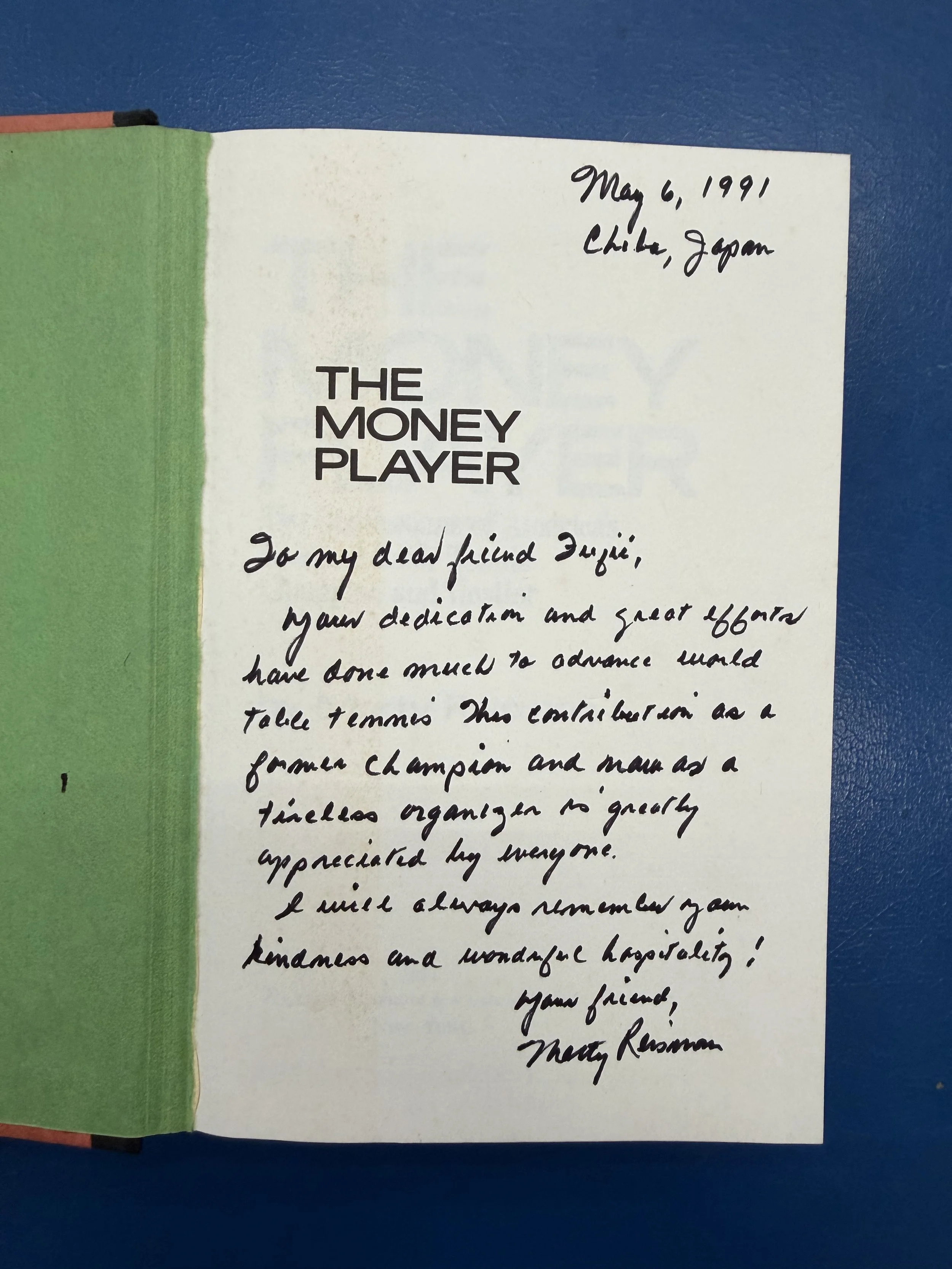
The book “The Money Player” by Marty Reisman, discovered in the ITS archives with a personal dedication to a friend of Ichiro Ogimura, tells the story of the flamboyant table tennis hustler whose life and memoir have been cited as an influence on Josh Safdie’s A24 film Marty Supreme.
Do you think Marty Supreme contributed to younger people becoming more interested in table tennis?
There might be some people who become interested in playing after seeing this movie. But more than that, I hope people realize that in order to chase your dreams, you can’t be naive and idealistic. I think this movie shows that. So I hope it can push people to chase their dreams, and that the story can inspire people to stay committed.
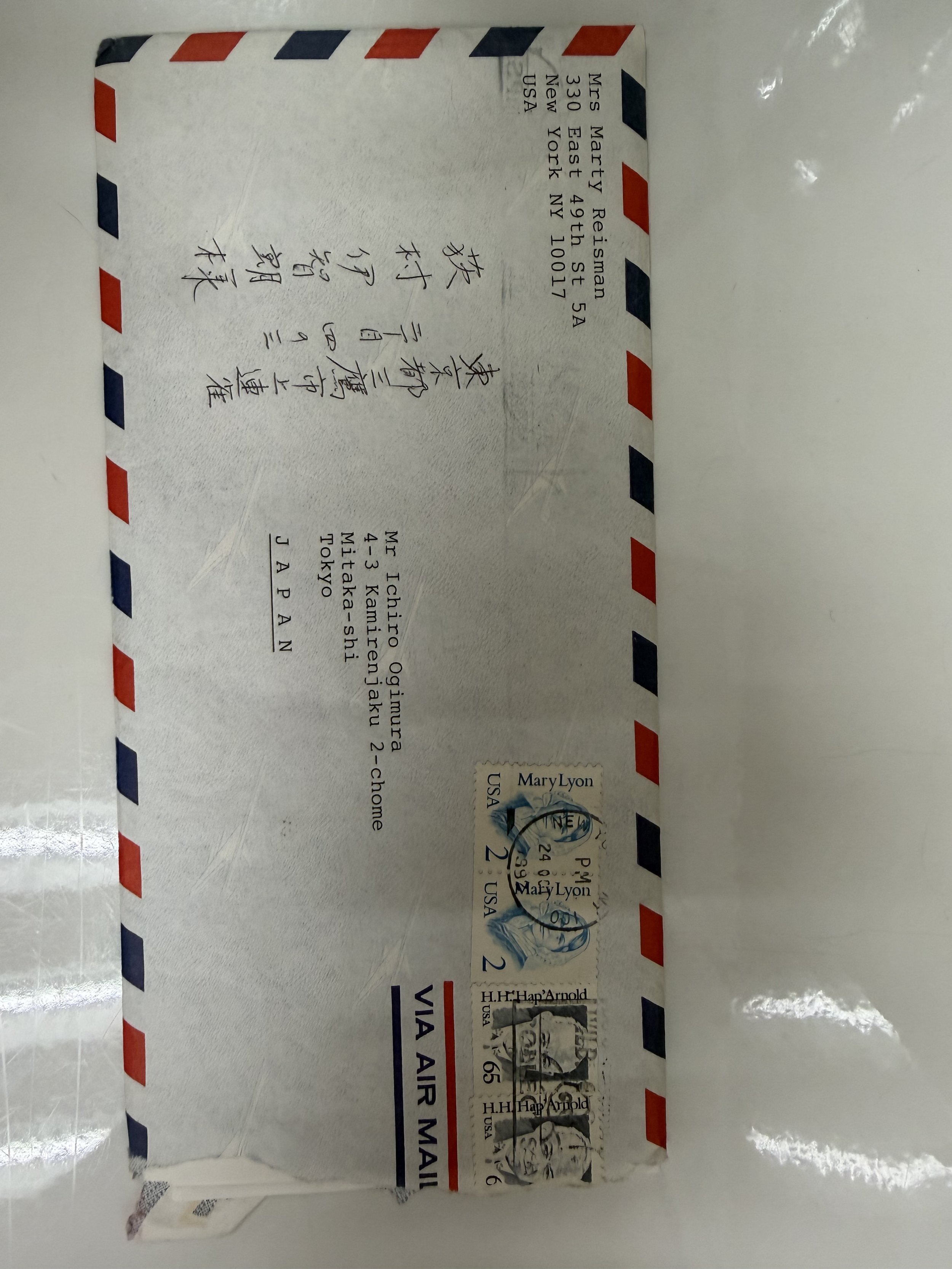
Letter from Mrs. Marty Reisman (Yoshiko Koshino) to Ichiro Ogimura, 1992.
How does it feel to see Koyo Bear have its second spring of its life?
Back then, there weren’t table tennis shoes, and this was the first-ever pair made. It was really easy to play in them. This was a shoe designed by Ogimura. One thing Ogimura told me is that hikers spend—how many minutes was it—around 40 minutes tying their shoes. That’s how important shoes are. So we also can’t put on our shoes carelessly. It’s important that they fit you perfectly. These are some of the things he taught me, and looking at this reminds me of his teachings.