The Collapse of Utility: Inside PLASTICPRODUCT

Every object arrives carrying a silent biography, a predetermined account of what it exists to do and under what circumstances its presence becomes justified, and for most of the last century that biography was written with remarkable consistency. Design answered physical conditions with physical solutions, workwear sat at the center of that agreement, and the relationship between body, environment, and object stayed legible enough that nobody felt the need to interrogate it. The logic held because the threats it was organized around held, and an entire industry built its credibility on the assumption that those threats were permanent.
That assumption has aged poorly in ways the industry has shown little urgency to confront. The conditions bearing down on contemporary life have migrated to a register that canvas and reinforced stitching were never conceived to address, and the designed object has largely responded by continuing to perform its original argument with undiminished confidence, as though the body that needs dressing now is the same body it was dressing a century ago. Attention erodes through friction that leaves no visible mark. Cognitive endurance depletes inside systems architected to extract it. The vulnerabilities are interior and the solutions being offered are still mostly external, which is a fundamental mismatch that utility as a cultural value has been remarkably successful at obscuring.
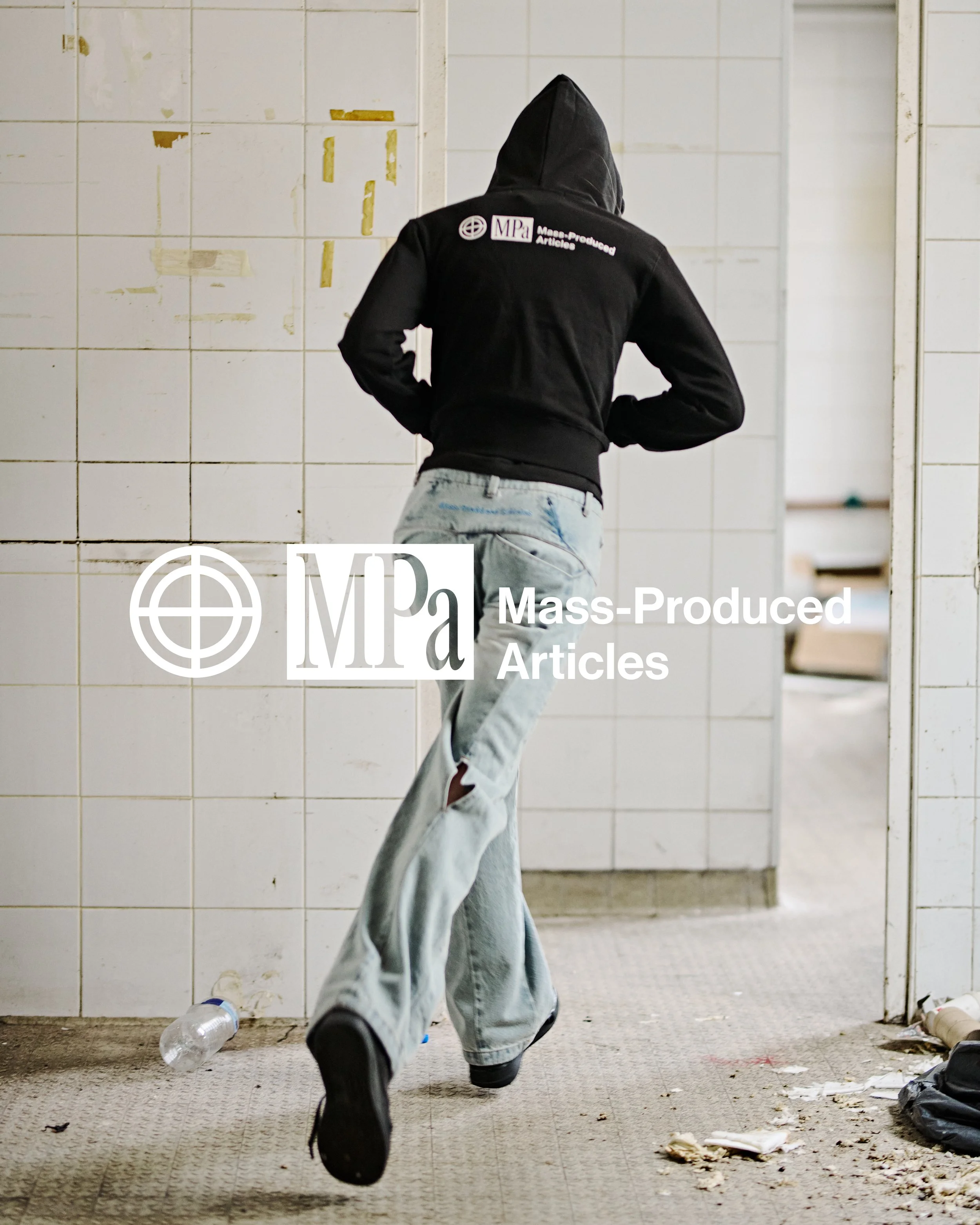
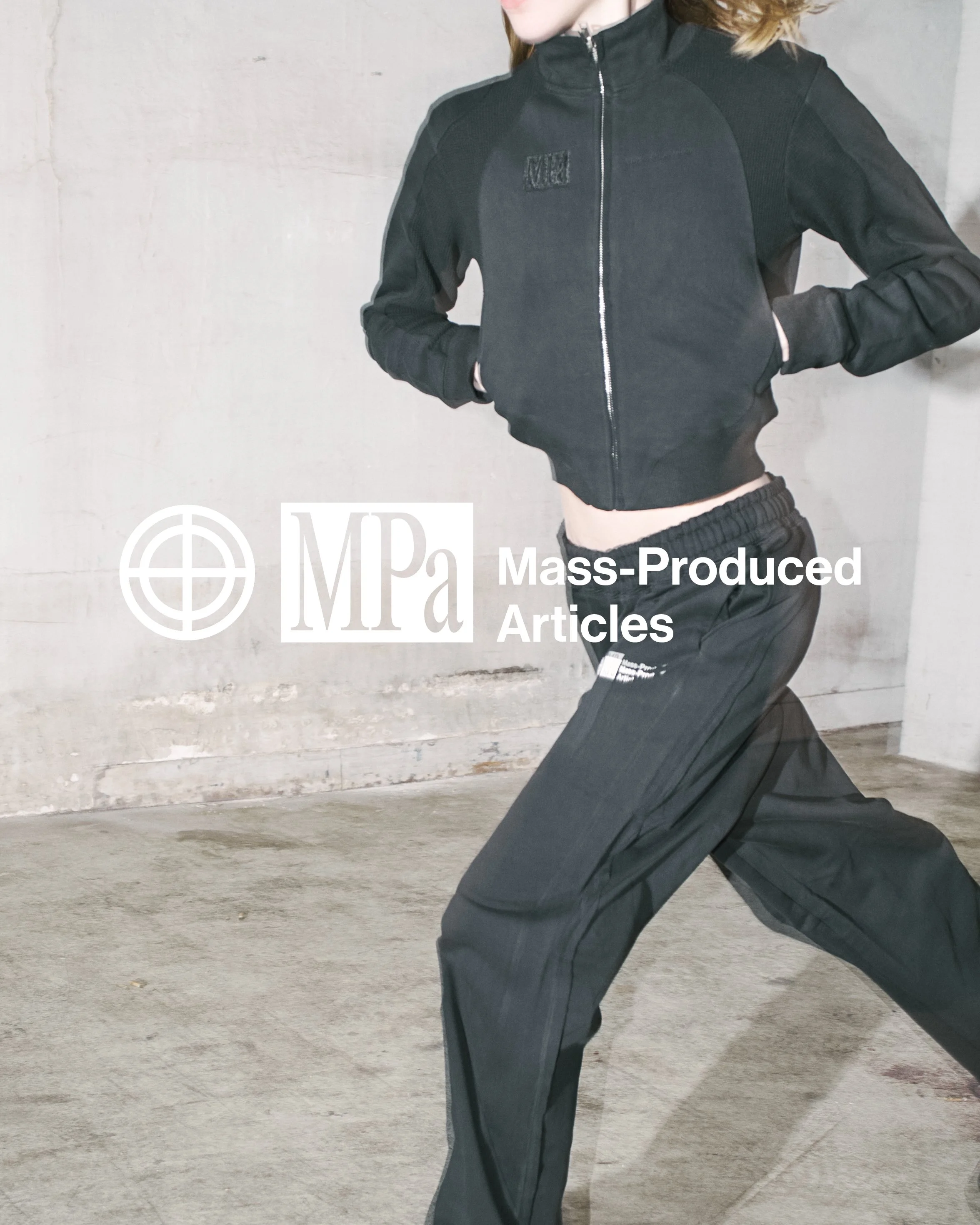
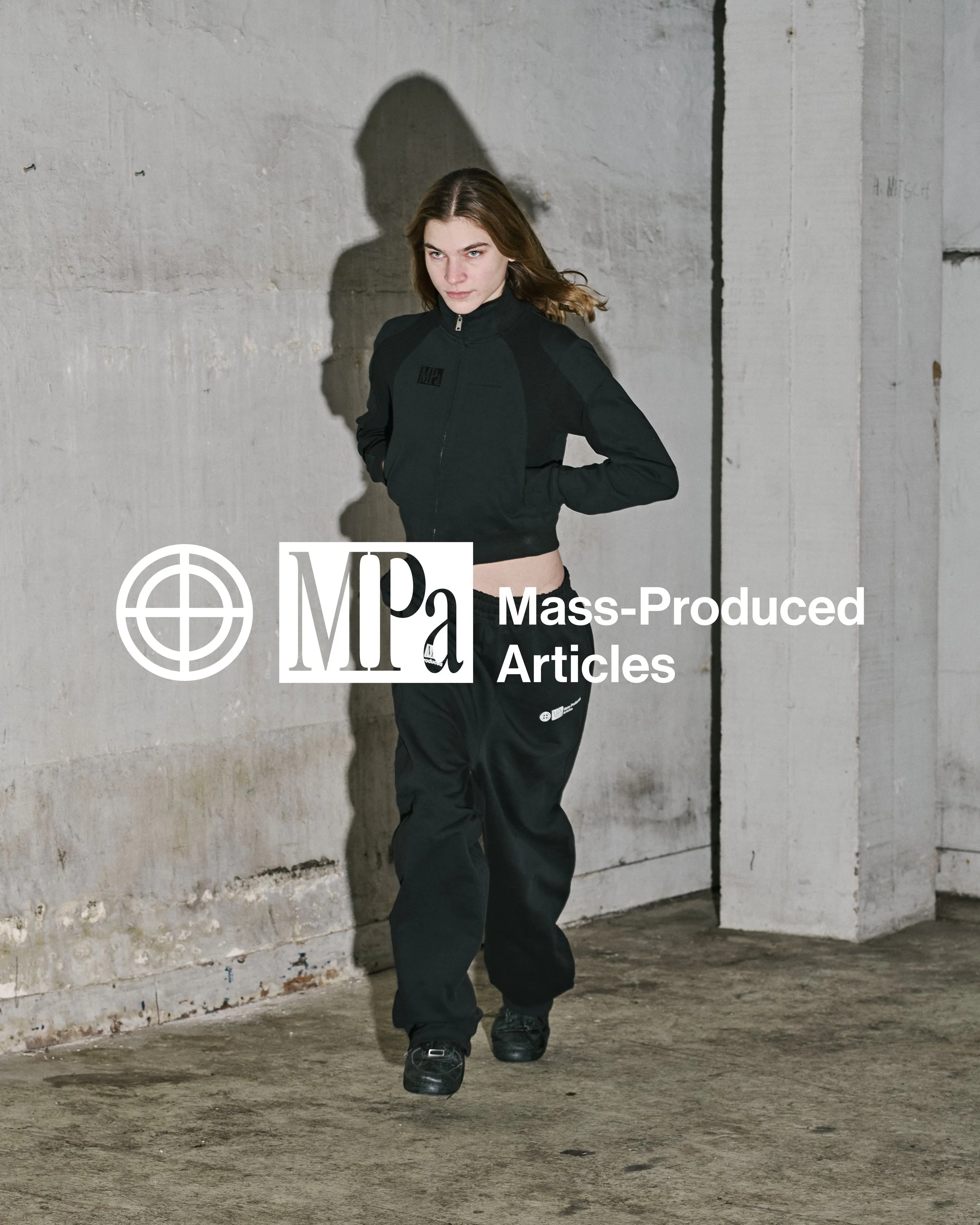
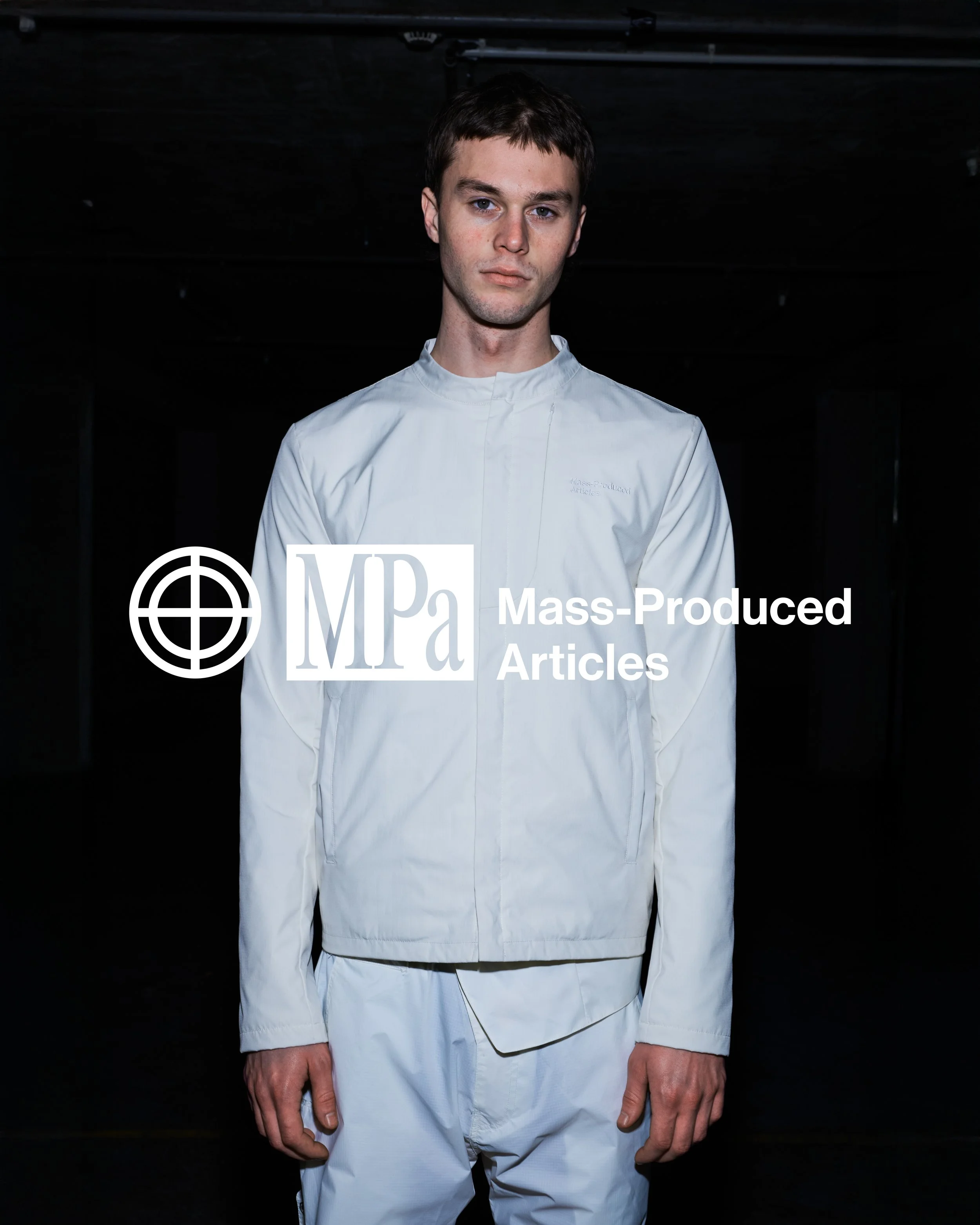
PLASTICPRODUCT, founded by Mincheol Seo, treats that mismatch as the actual site of the work. The Seoul-based collective moves across garments, objects, and spatial projects with a sustained investment in what function becomes once the conditions authorizing it have shifted beneath it without announcement, and Mass-Produced Article (MPa) carries that inquiry directly into workwear and the standardized object, holding the name open as a provocation rather than a definition. Just as PLASTICPRODUCT once extracted plastic from the cultural sediment of disposability and reconsidered it through a personal lens, MPa applies that same pressure to inherited form, refusing to accept that objects whose original justifications have quietly expired are still delivering what they claim.
Workwear for Cognitive Stability
Workwear built its authority on a proposition that was, for a long time, genuinely earned. Every decision made at the level of construction corresponded to something real, a documentable threat, a specific physical demand, a body that needed defending from conditions that would otherwise compromise its capacity to function, and that correspondence gave the category an integrity that the rest of fashion spent decades trying to borrow without fully understanding what it was borrowing from.
What has displaced those conditions is harder to dress for and considerably easier to ignore, which is precisely what the industry has elected to do. The forces shaping how people actually work and move through the world now leave no material surface for reinforced construction to act upon, arriving instead as fractured attention, accumulated cognitive debt, and the particular exhaustion produced by inhabiting systems designed to extract sustained engagement without offering anything metabolically useful in return. These are not problems that a more considered pocket placement resolves, and the continued production of utility's visual grammar as though the circumstances generating it remained intact is one of the more elaborate acts of collective denial contemporary fashion has managed to sustain.
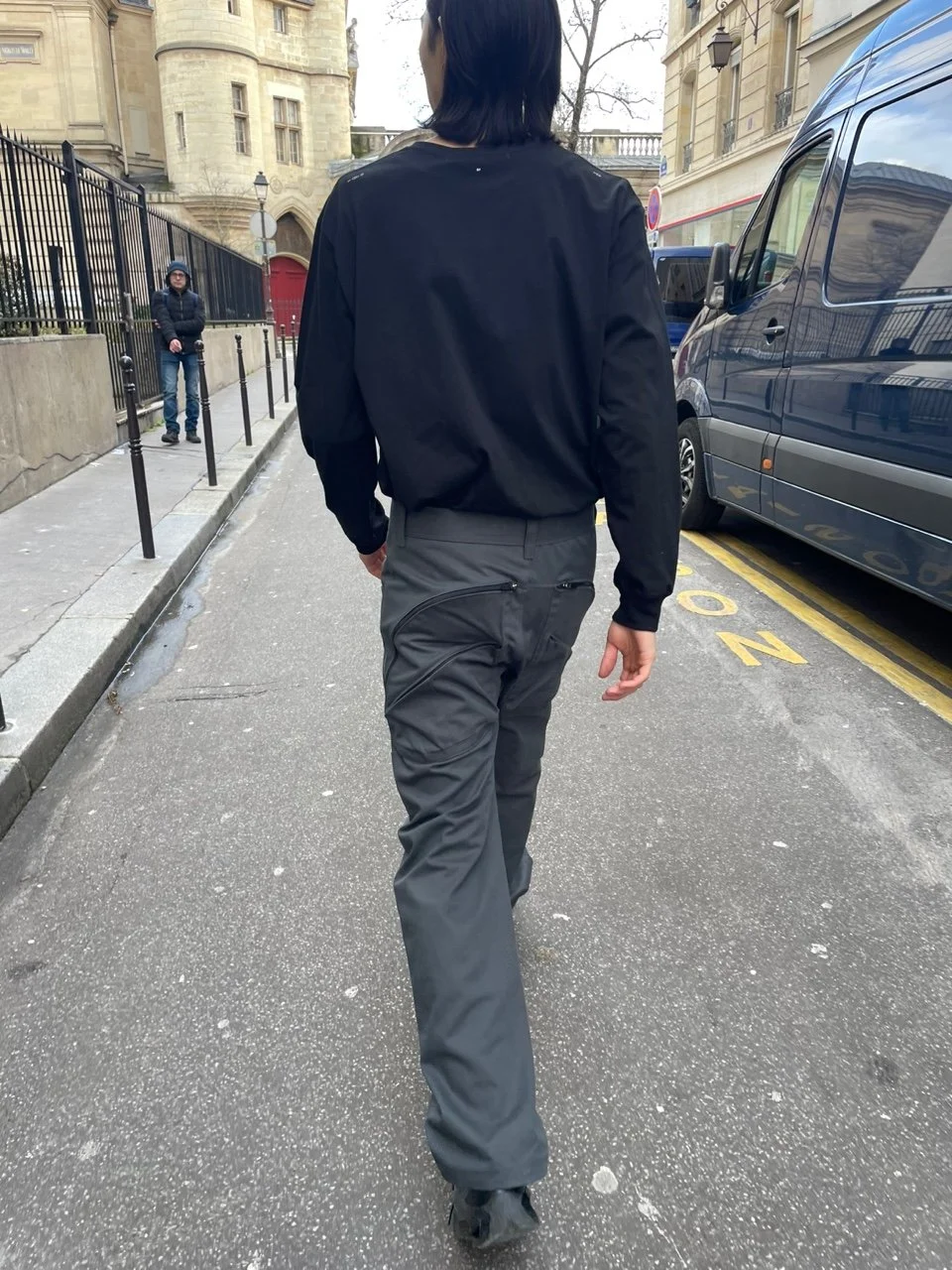
PLASTICPRODUCT does not really participate in that denial, keeping the technical forms and utilitarian structures present while fundamentally relocating what those structures are understood to do, so that the inherited silhouette stays recognizable while the operating logic inside it has been redirected toward perception, toward pace, toward the subtle and largely unacknowledged architecture of how a moment gets processed by the person moving through it, which is a different ambition entirely from what workwear originally set out to accomplish and a more honest account of what the designed object actually needs to address right now.
Function, Failure, and New Utility
Function across PLASTICPRODUCT's work occupies a perpetually unsettled position, engineered to hover at the threshold between operation and its own undoing, where objects present themselves as usable while quietly withholding the straightforward experience that usability typically promises, which in a market that has spent considerable energy convincing people that friction is a design failure reads as a provocation disguised as a product.
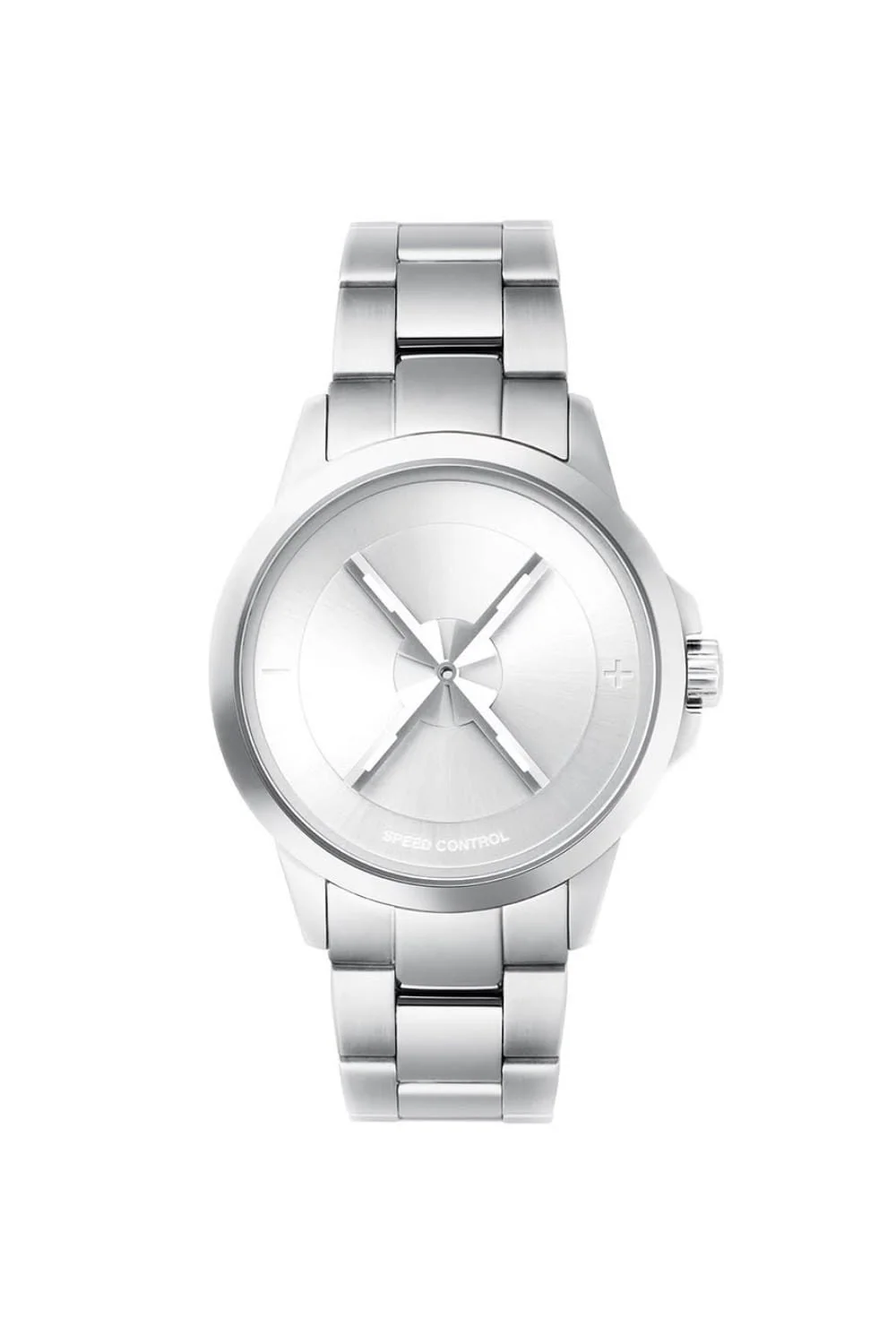
The MPa SPEED CTRL WATCH makes this condition most visible and most legible as a cultural argument, its hour and minute hands cast in identical form so that reading the time becomes an act of genuine interpretation rather than automatic confirmation, demanding that the wearer pause, absorb their surroundings, and reconstruct a sense of the hour from contextual evidence accumulated in the moment, producing a situation where the same object yields a different understanding depending entirely on who is holding it and where they happen to be standing, which is the opposite of what watch design has optimized toward for over a century and considerably more interesting for it.
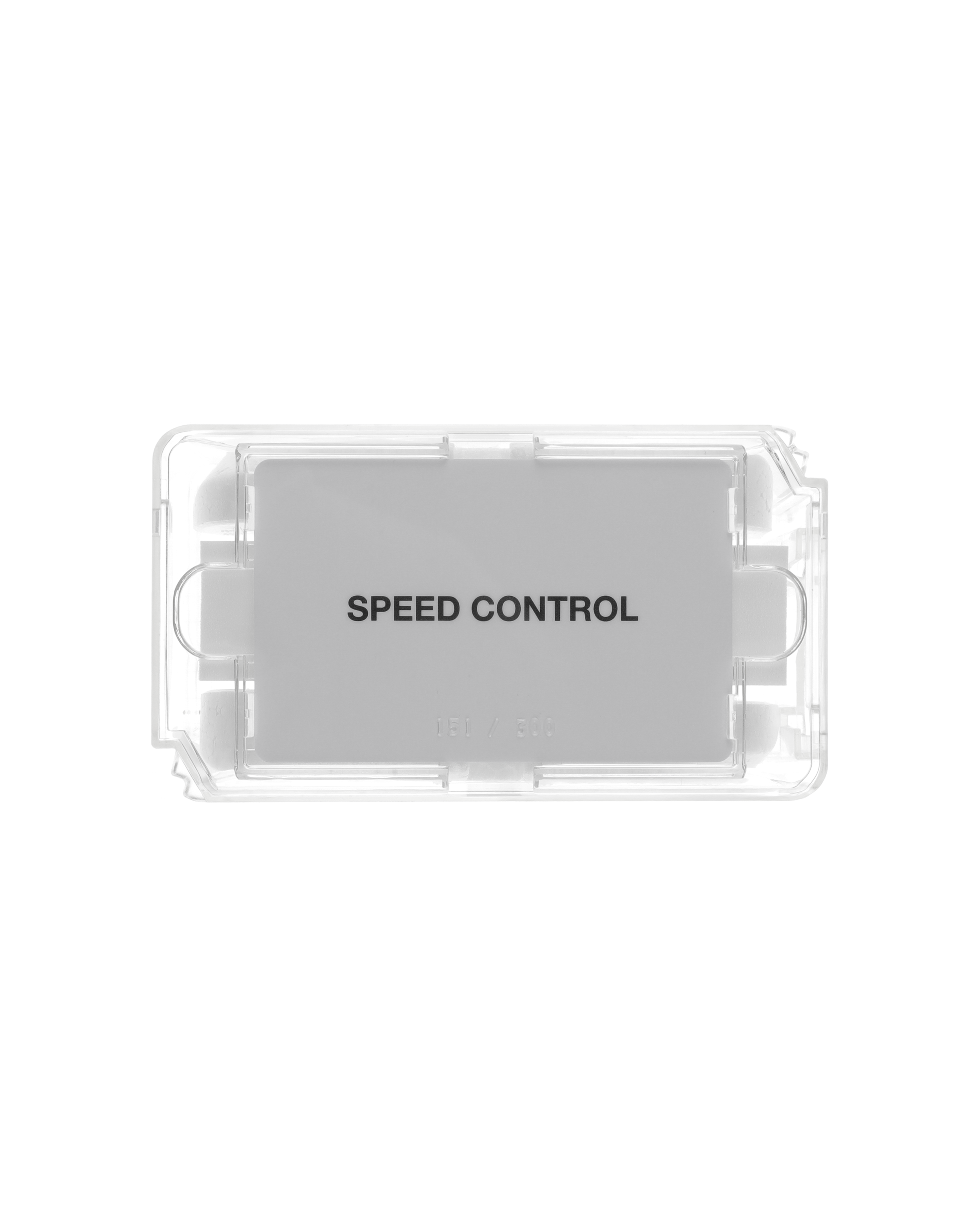
The packaging refuses to let the argument rest at the level of the object alone, a disposable shipping case originally circulated for internal transport repurposed as the product's presentation without apology or explanation, making the case that perceived value has always been a construction rather than an inherent property, and that the elaborate rituals of refinement the designed world deploys to justify premium positioning are conventions that reward examination rather than reverence, a position PLASTICPRODUCT applies with consistency to everything that arrives carrying assumptions it did not earn.
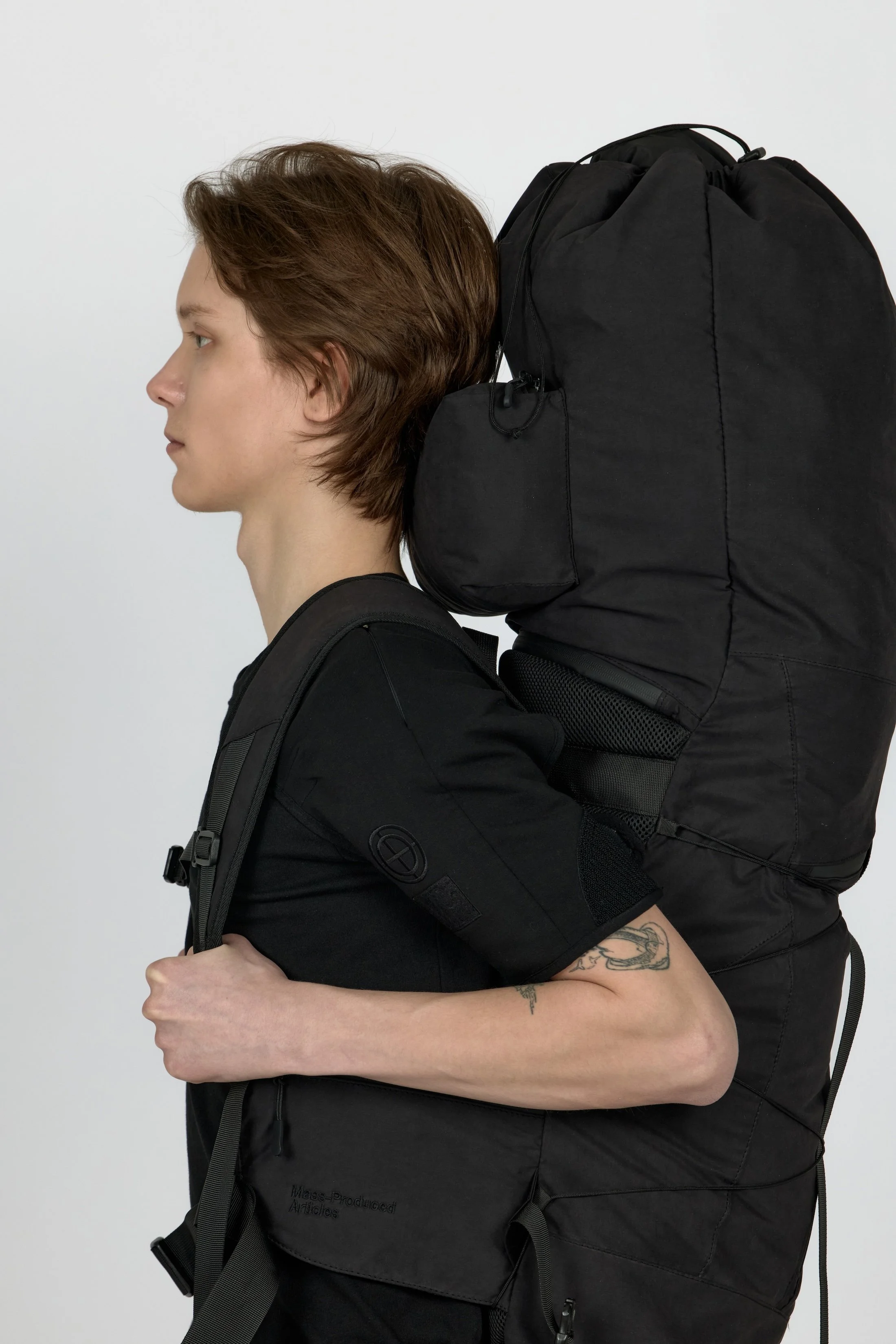
The neck pillow-integrated pieces extend this into territory where the absurdity of the proposition becomes inseparable from its meaning, and where the comedy of the situation is not incidental but load-bearing, garments that are technically functional in the sense that the integrated object retains its original capacity while the conditions required to actually deploy that capacity make doing so genuinely impractical within the context of wearing them, collapsing function and the obstruction of function into the same form so completely that the question of which one is winning becomes impossible to answer and beside the point to ask, which says something fairly damning about how seriously the category of utility was taking itself to begin with.
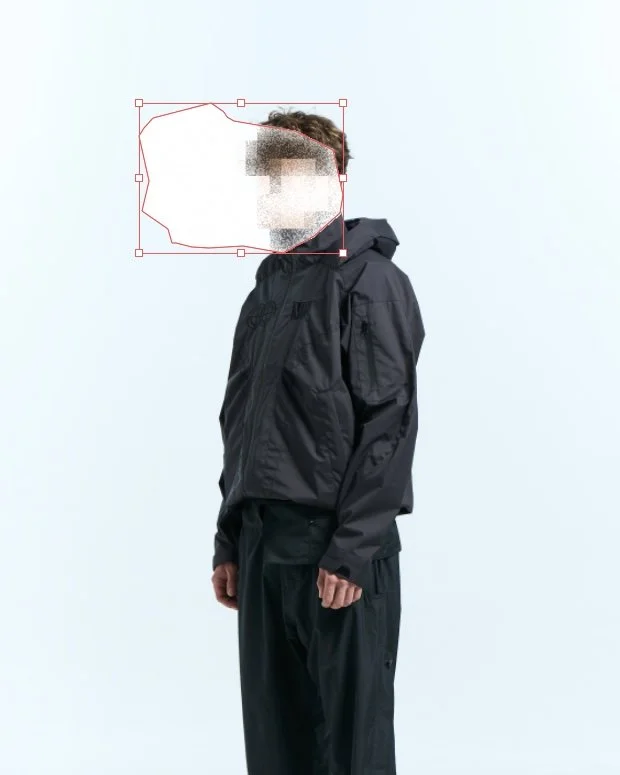
The MPa Protection Series: Corrupted Data operates on a register that is less comedic and more forensic, garments that adopt the visual codes of protective gear with enough fidelity to trigger the recognition those codes were engineered to produce, while the actual protective capacity behind them has been removed so thoroughly that what remains is the outline of a guarantee the object no longer intends to honor, leaving the wearer inside something that the eye reads as shelter and the body experiences as pure proposition, at which point the entire apparatus of protective clothing gets exposed as a set of agreements about appearance that were always doing more cultural work than material work, a revelation the fashion industry has had every incentive to keep obscured and that PLASTICPRODUCT has very little interest in keeping quiet.
Against Instant Words
Fashion has always had a complicated relationship with legibility, but what the current moment has produced is something more corrosive than simple accessibility, a wholesale reduction of meaning into signal, where the emotional response gets manufactured in advance and the encounter with the actual object becomes a formality, a confirmation of something already decided upstream by the machinery of interpretation surrounding it. The collective calls these instant words, and the diagnosis is accurate in a way the industry has little incentive to acknowledge.
What makes this condition particularly difficult to argue against is that it presents itself as democratization, as meaning made available to everyone at the same moment through the same channels, when the actual operation running beneath that premise is closer to the opposite, a consolidation of cultural authority around whoever controls the framing, the timing, and the velocity at which ideas get released and retired. Sensibility stops being something felt and becomes something administered, and the distance between those two experiences is where most of what fashion could genuinely do to a person gets quietly abandoned.
PLASTICPRODUCT builds work that is structurally incompatible with that economy, producing objects and situations that withhold their meaning from the first glance and accumulate it instead through sustained contact, repeated encounter, and the kind of unhurried attention that instant legibility was specifically designed to make obsolete, which in the current landscape reads less like an aesthetic choice and more like a considered refusal to participate in the terms the industry has set for itself.
Objects That Shape States
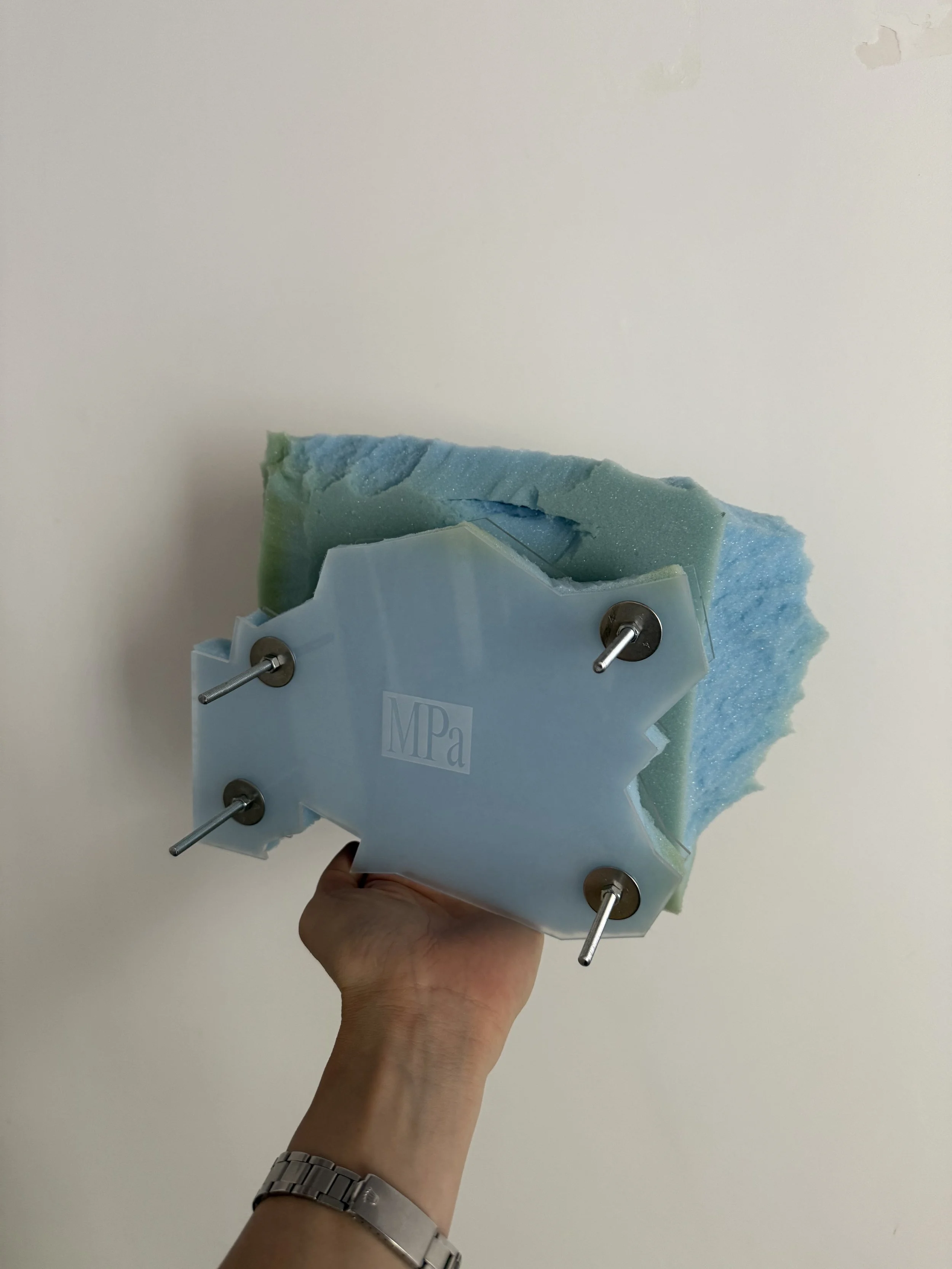
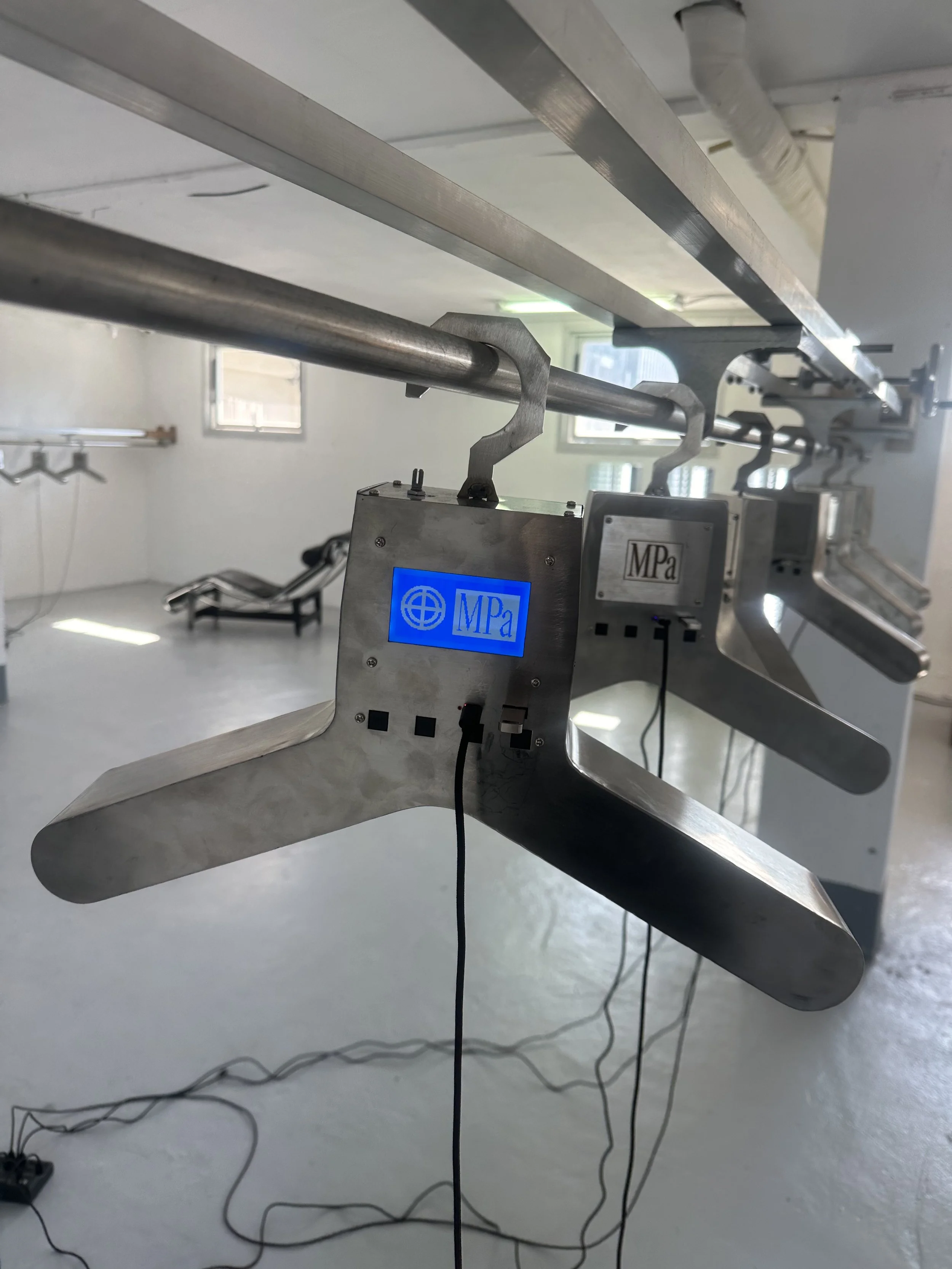
The same logic that destabilizes function at the level of the garment becomes something considerably more immersive when PLASTICPRODUCT moves into spatial and sensory territory, where the body is no longer just wearing the argument but inhabiting it. HANGING SOUND, conceived by Mincheol Seo and produced with SungHoon Kim and Teo Shin, makes this displacement most visceral, built around an object that merges a hanger with a speaker and selects steel as its primary material precisely because steel is what acoustic engineering has spent decades learning to eliminate from the signal chain, treating the distortion it introduces as a defect to be engineered around rather than a property worth taking seriously.
PLASTICPRODUCT takes it seriously, processing the noise steel produces into a form of white noise that does not deliver sound so much as manufacture a condition, an environment with its own texture and psychological weight that influences focus and immersion in ways that a cleaner signal routed through more conventional materials simply could not produce, because the qualities being exploited are the ones that conventional production would remove first, which means the analog sensibility the project maintains is structural to what it actually does rather than an aesthetic preference bolted on afterward.
What utility means inside this project has drifted so far from its origin that performance and clarity are no longer even useful measures, replaced by the capacity to shape what a person feels and how present they are inside a given moment, a standard that the designed object has rarely been asked to meet openly and that most of the industry would struggle to apply to its own work without considerable discomfort.
Distribution Without Framing
Fashion's relationship with image has always been a relationship with control, and the editorial apparatus surrounding the contemporary collection, the photographer, the art director, the carefully managed release, exists primarily to ensure that the object arrives pre-interpreted, its meaning already secured before anyone outside the inner circle has had the chance to form an independent opinion about it. The whole infrastructure is designed to eliminate the possibility of an unmediated encounter, and the industry has invested enormously in making that elimination feel like generosity.
PLASTICPRODUCT's AW25 digital presentation operates as a structural rejection of that apparatus, embedding garments inside Google Street View where they exist as 360-degree images uploaded into a system built for geographic navigation and utterly indifferent to the demands of aesthetic composition, which means the clothes sit inside an environment that was never designed to flatter them, never designed to construct desire around them, and never designed to deliver them to an audience preconditioned to receive them in a particular way, stripping away every layer of mediation that fashion ordinarily depends on to do the work the object itself is not trusted to do alone.
What remains when that apparatus is removed is genuinely uncomfortable for an industry that has confused curation with communication for long enough that the distinction has become difficult to argue for, and the images that result carry an accidental honesty that no amount of controlled image-making could manufacture, existing inside a platform that treats a garment and a street corner with identical indifference and finds, in that indifference, something that looks remarkably like integrity.
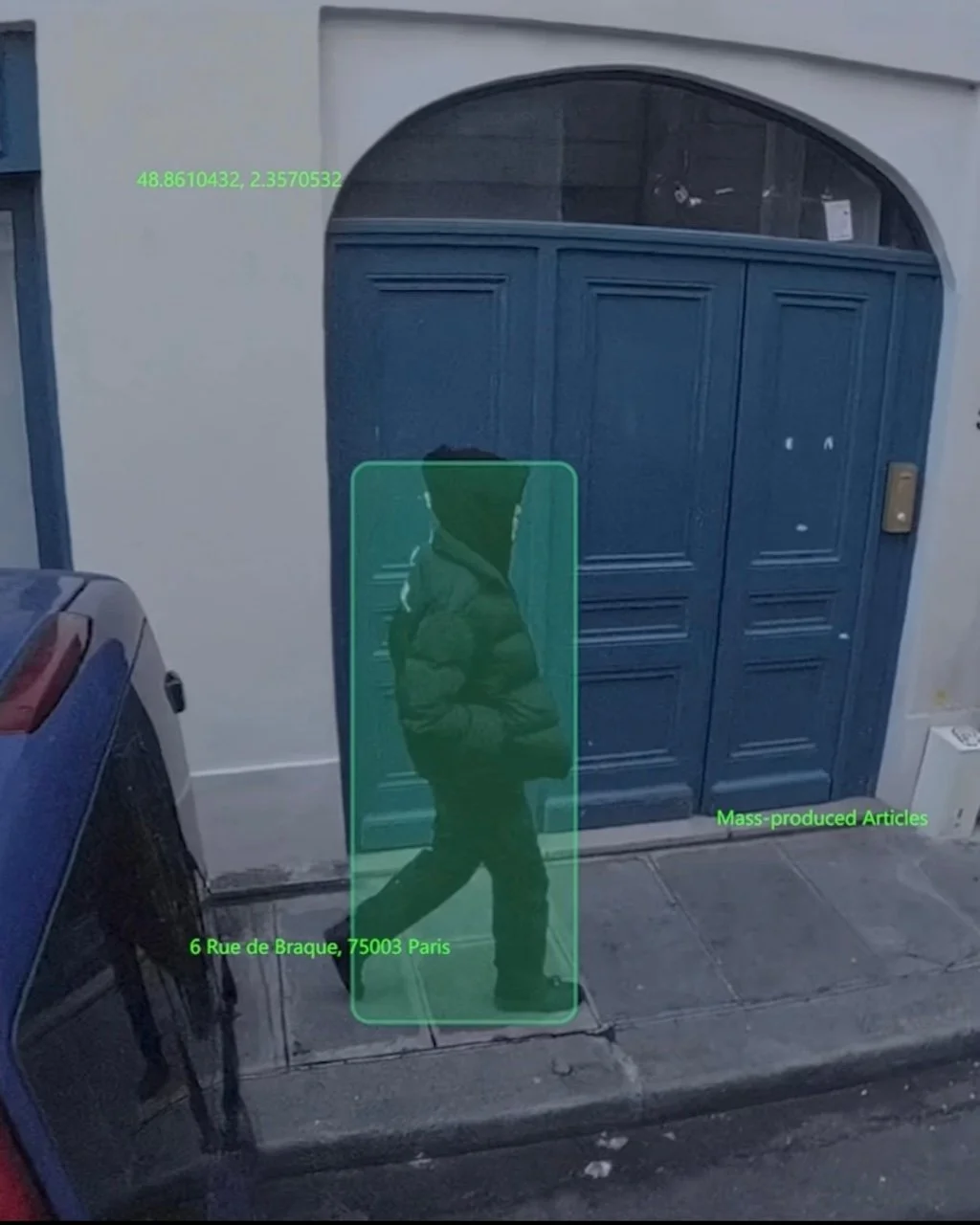
DIGITAL_PREV extends this into something with a longer and more unsettling arc, conceived by Mincheol Seo in collaboration with Juyoung Lee, whose own personal practice lives inside Google Maps as an accumulation of memories that the platform preserves or discards according to its own logic and nobody else's, which is precisely what makes it a productive site for work that is interested in what happens to an object once the conditions of its presentation have been surrendered entirely to a system with no investment in its survival.
By depositing garments inside that system, PLASTICPRODUCT introduces the work into an archive that operates on geographic rather than editorial terms, where a piece of clothing becomes retrievable through location the way a street corner is retrievable, accumulating inside a platform that was built to map the world and has no particular interest in fashion's ongoing project of managing its own mythology, which strips the work of the protective framing the industry normally provides and leaves it subject to the same impermanence and indifference that everything else inside that system is subject to, a condition most labels would find intolerable and that PLASTICPRODUCT treats as the most honest form of distribution currently available.
Placing work inside a system that was built to document the world rather than beautify it is a position that most fashion labels would find architecturally incompatible with their entire reason for existing, because the industry's relationship with image has always been premised on the belief that controlled presentation is not a vanity but a necessity, that without the apparatus of curation the work cannot mean what it needs to mean to the people it needs to mean it to, an assumption PLASTICPRODUCT treats as precisely the kind of inherited certainty worth dismantling.
What emerges from that dismantling is a relationship between object, image, and viewer that the conventional fashion system has no framework for, where the person encountering the work arrives at it through navigation rather than invitation, through the accidental geography of a platform indifferent to their desire or the label's intentions, producing an encounter that carries none of the pre-loaded meaning that editorial framing deposits into the experience before it begins, and everything that the object is capable of generating on its own terms without assistance, which turns out to be a far more revealing test of whether the work actually holds than any amount of carefully managed image-making could ever provide.
Toward a Different Framework
What PLASTICPRODUCT has been building across every project, every platform, and every object is an argument about what utility was always capable of being had the category not been captured so completely by the logic of performance and efficiency, two values that served the twentieth century well enough but have been coasting on inherited authority ever since, applied to conditions they were never designed to address by an industry that found their vocabulary too useful to retire even after the circumstances justifying it had quietly expired.
Utility inside this framework gets relocated to the friction between what an object promises and what it actually delivers, a gap that most design treats as a problem to be eliminated and that PLASTICPRODUCT treats as the most generative territory available, where habitual behavior gets interrupted long enough for something like genuine perception to occur, where the automatic gesture stalls and the person performing it is briefly returned to the present tense of their own experience rather than moving through it on autopilot.
The broader implication of this, and the reason the work carries weight beyond its immediate formal interests, is that it proposes a fundamentally different account of what mass-produced objects are, not fixed vessels of predetermined meaning delivered to passive recipients, but open propositions whose significance shifts depending on who encounters them, under what circumstances, and with what degree of attention they are willing to bring, which is a more demanding relationship between person and object than the contemporary market has any interest in encouraging, and considerably more honest about what objects have always had the capacity to do.
Text by Abeer Salah