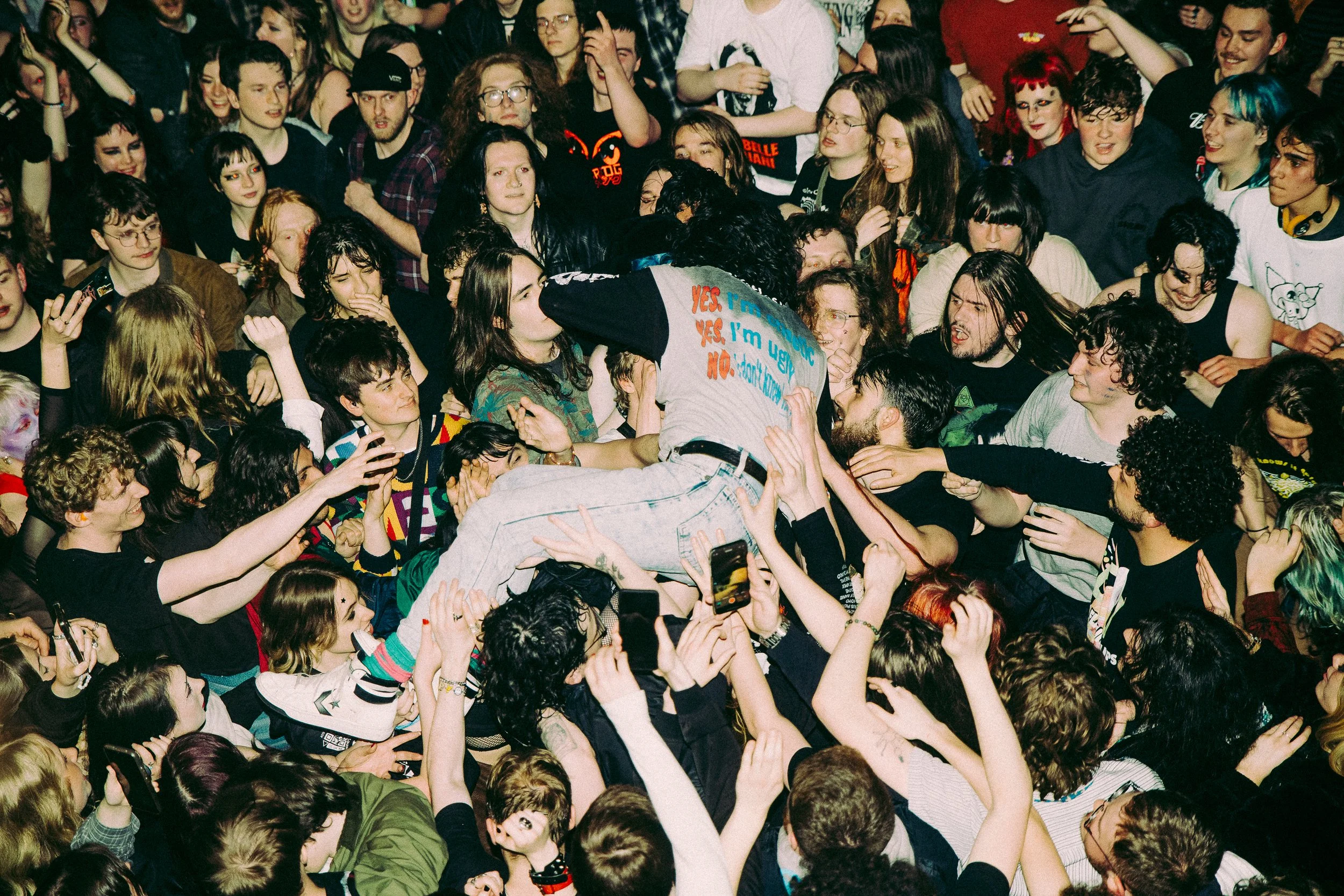
The NPC-ification of Society and Culture
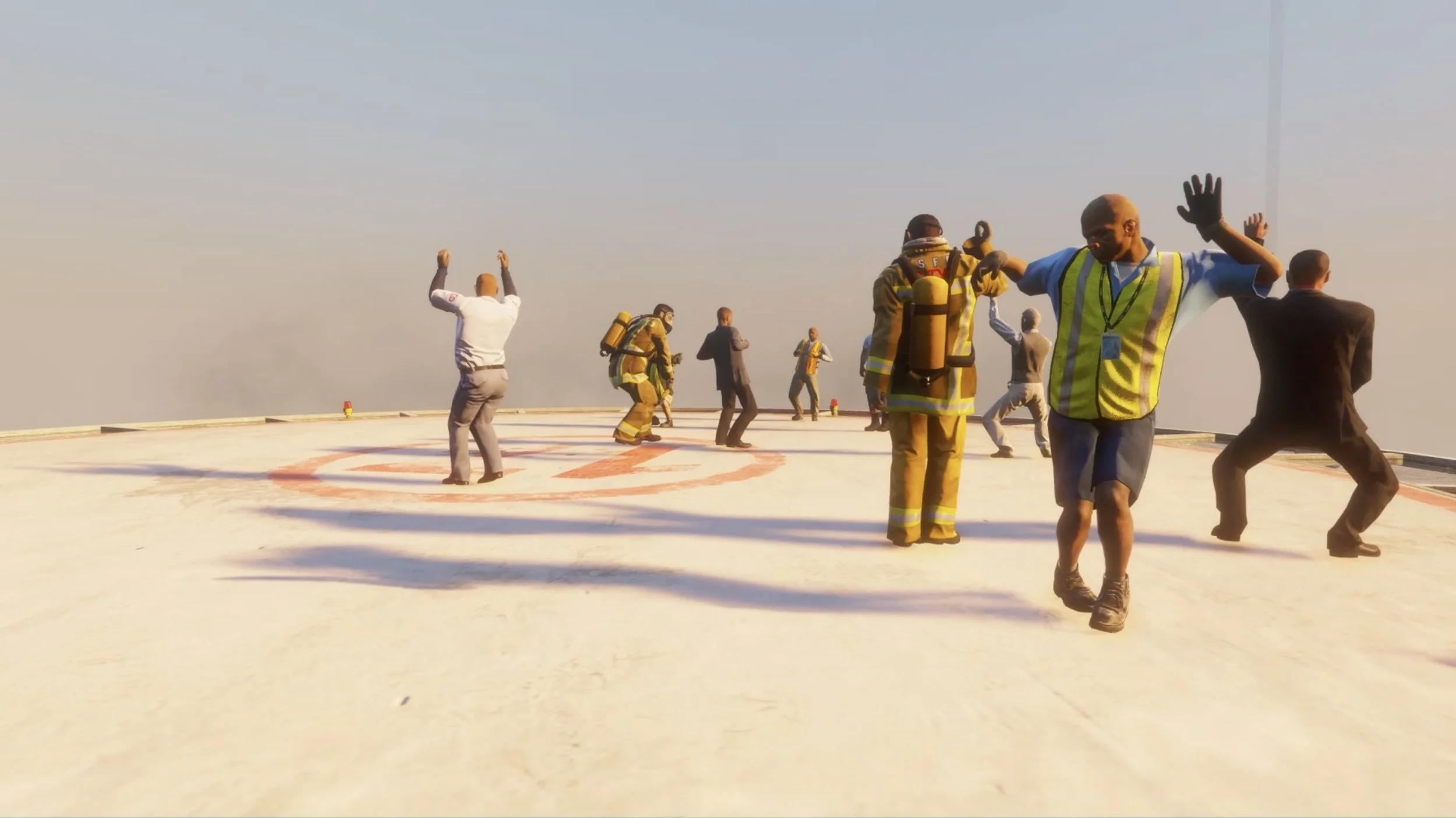
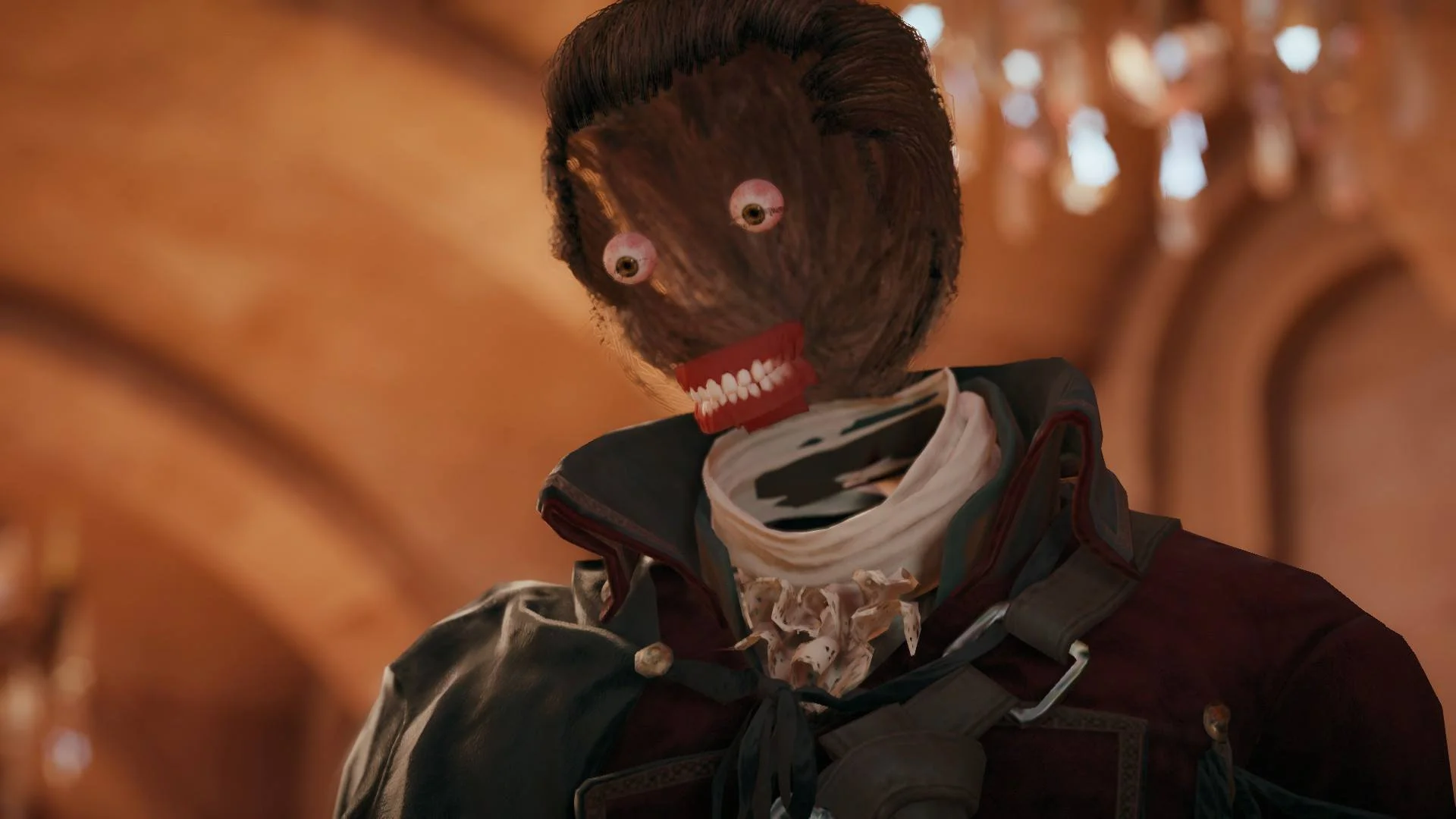
NPCs have long existed in the background of video games, but today the term has escaped the screen and entered our cultural vocabulary. Non-Playable Characters, a new book edited and published by LAN Party [Vienna Kim & Benoit Palop], explores how the idea of the NPC has become a powerful metaphor for life in networked society.
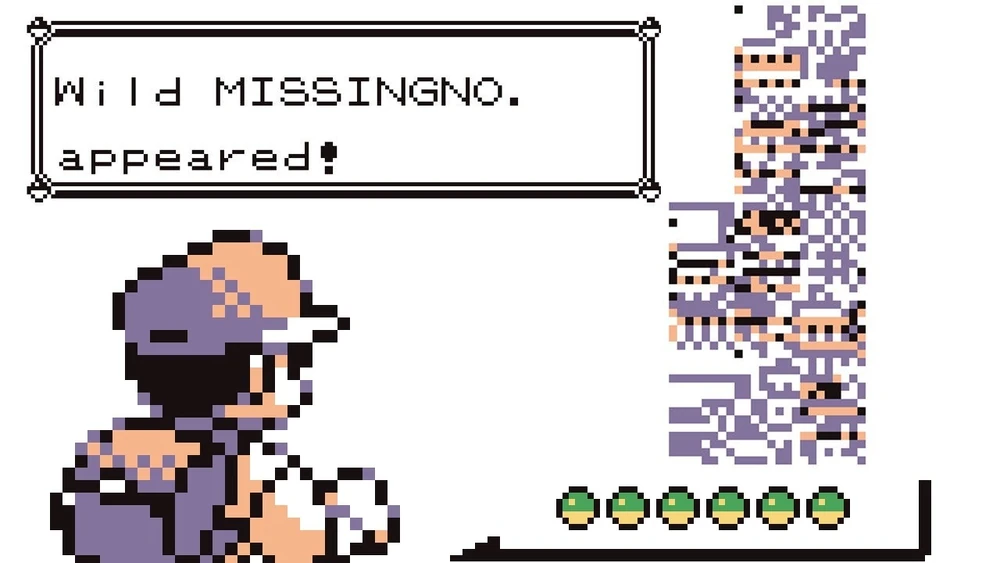
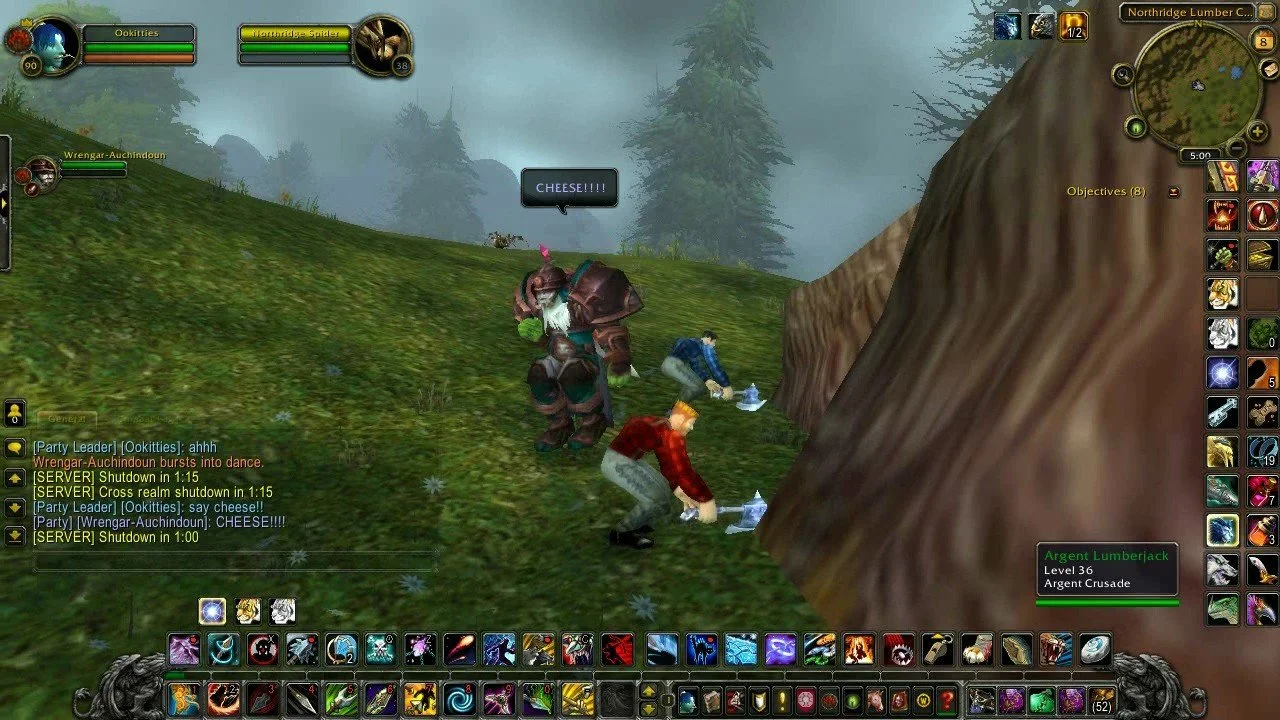
NPCs once existed quietly in the background of video games. Today the term has moved far beyond the screen and into our cultural vocabulary. In gaming, a Non-Playable Character is a figure controlled by code rather than by a player, repeating scripted actions and dialogue. Online, the idea of the NPC has evolved into a metaphor used to describe how people sometimes appear to move through social, political, and digital systems by following pre-set patterns.
The book Non-Playable Characters explores how this concept reflects life in a networked society shaped by algorithms, platforms, and data-driven infrastructures. Edited and published by LAN Party, the project brings together theorists, artists, journalists, and game modders to examine how automated behaviors, scripted roles, and technological systems influence everything from online identity and cultural production to public discourse.
Across the collection, the NPC becomes a lens for thinking about larger transformations in contemporary life. The contributors look at topics such as NPC-ification, surveillance capitalism, the emotion economy, and the increasingly blurred boundary between human agency and artificial intelligence. In a world where algorithms curate what we see, platforms shape how we communicate, and AI systems increasingly mimic human behavior, the figure of the NPC raises new questions about autonomy, control, and participation in digital culture.
Rather than remaining silent background characters, the NPCs in this project begin to speak back. The book asks what these figures reveal about the structures that organize our lives today, and what they might tell us about our own humanness in an age increasingly defined by big tech and intelligent machines.
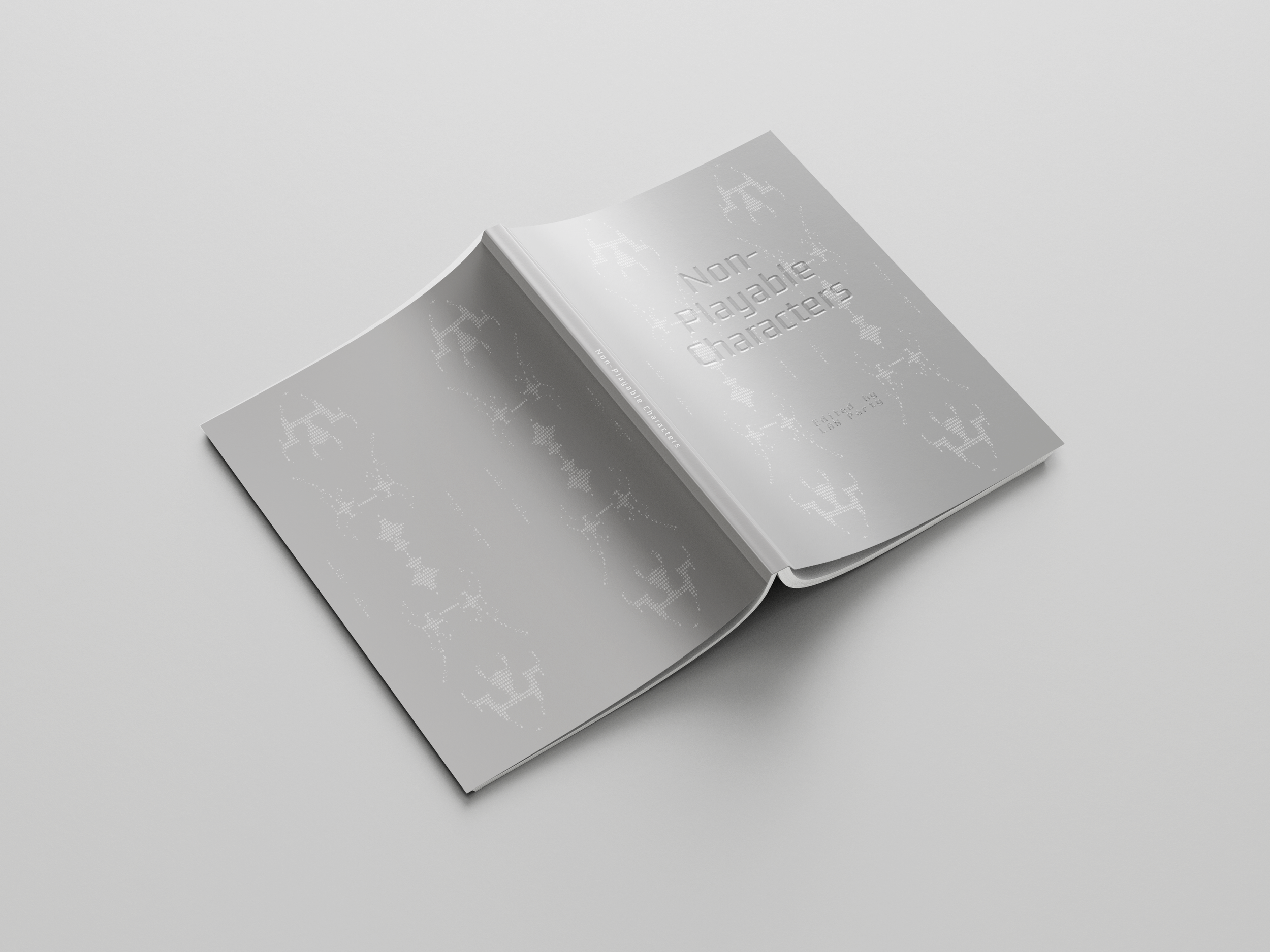
Description of the book
'Non-Playable Characters' is a book that brings together the contributions of eight theorists, curators, artists, journalists and game modders, each offering a distinct lens on what it means to be a 'non-playable character' [NPC] in today’s networked society.
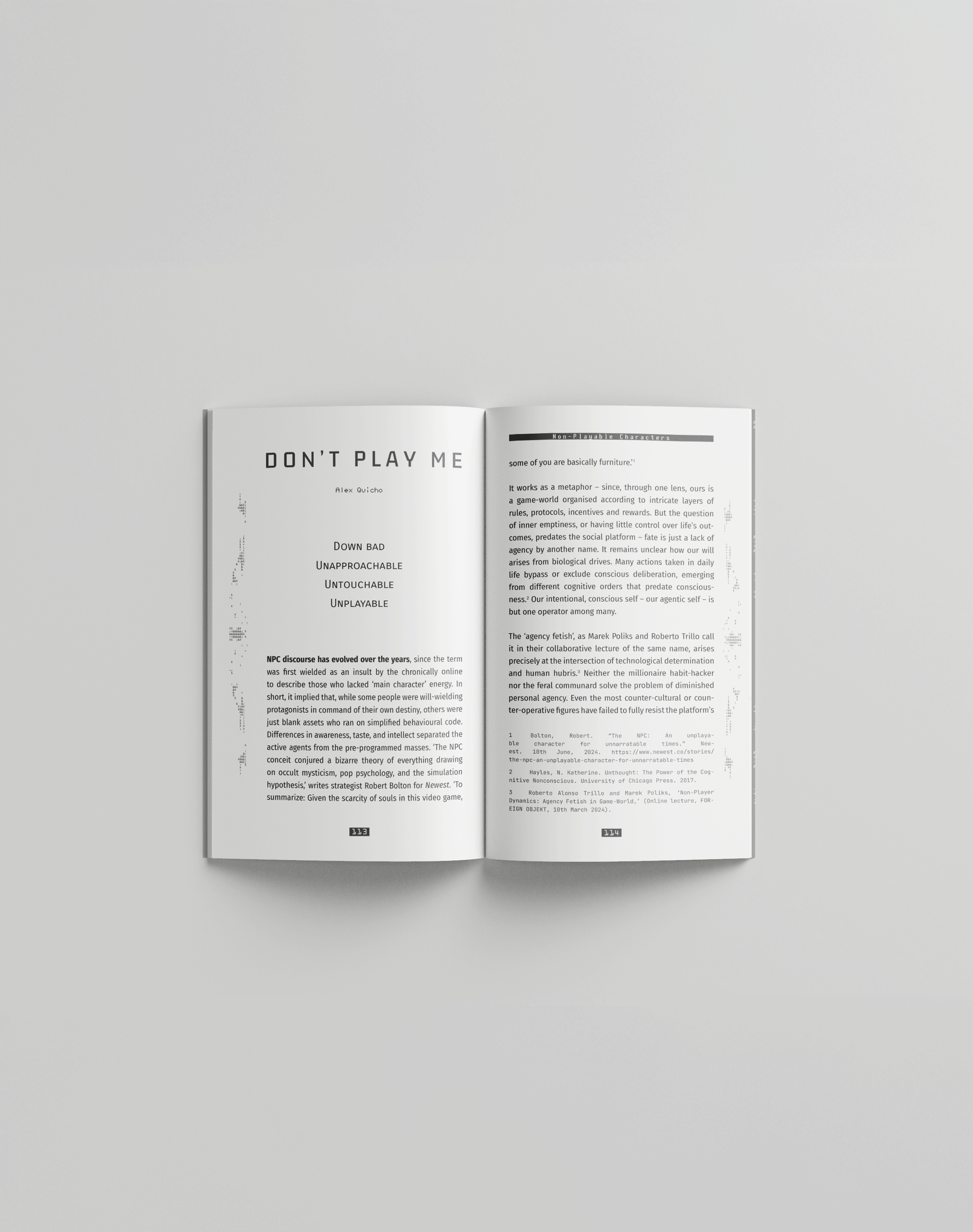
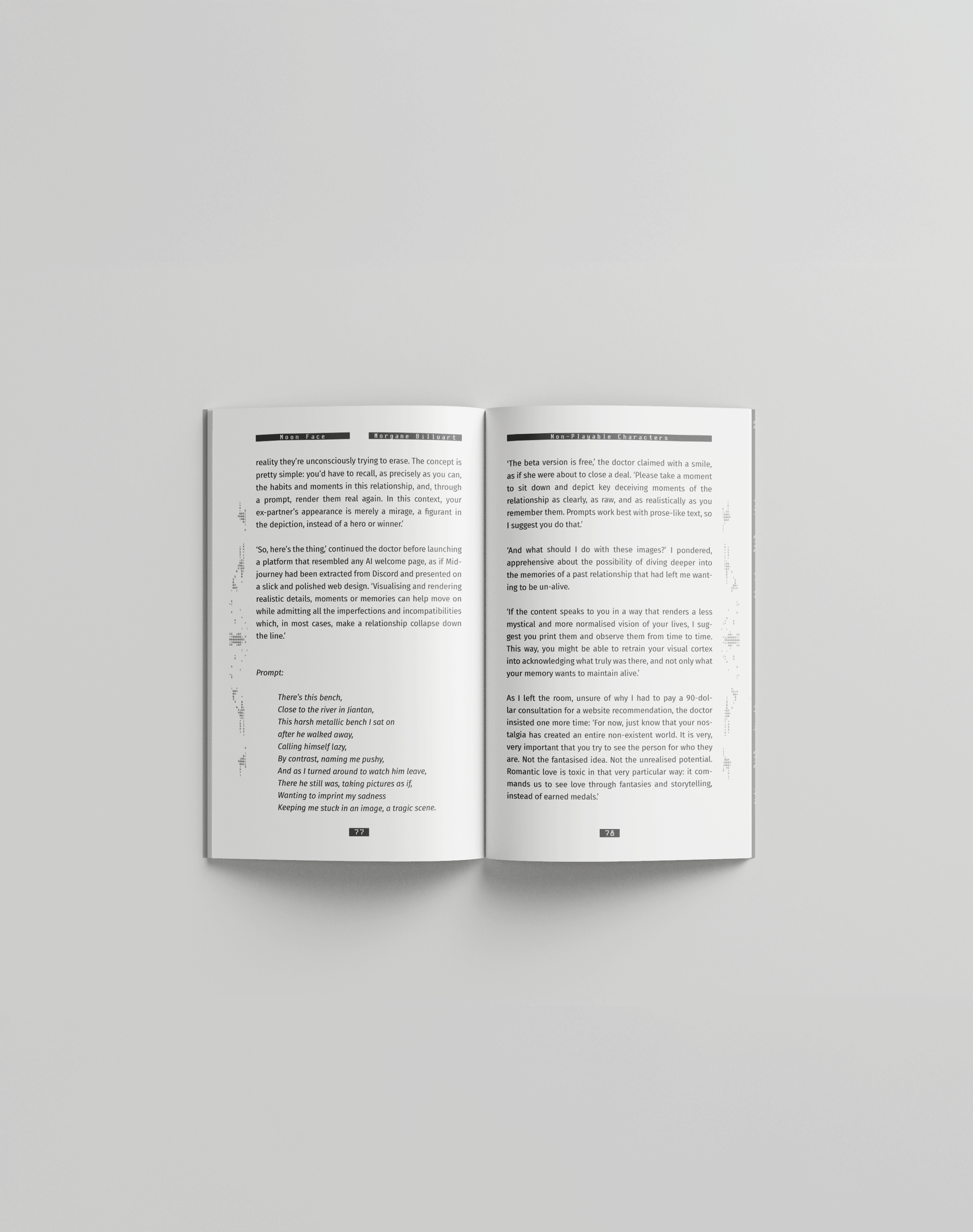
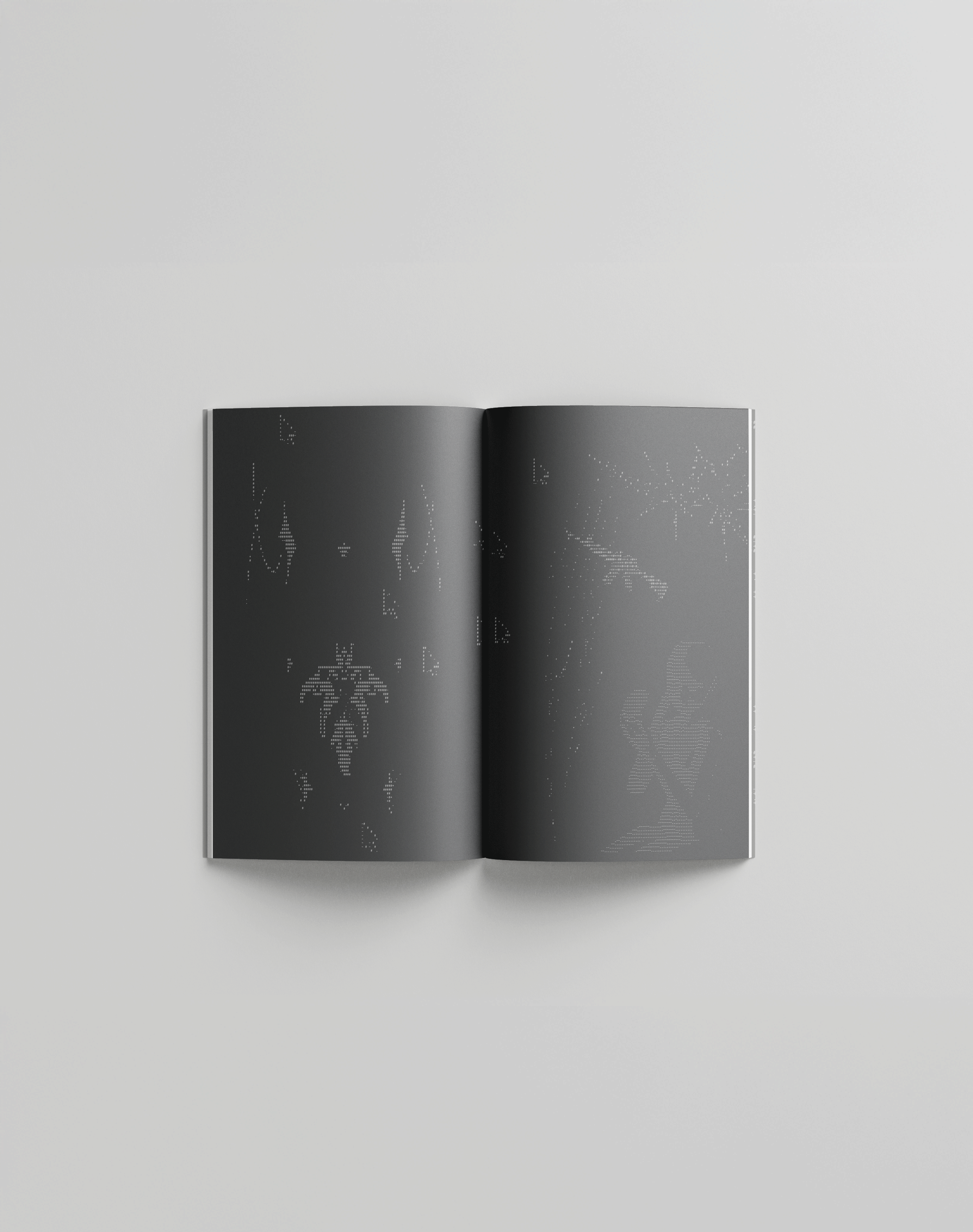
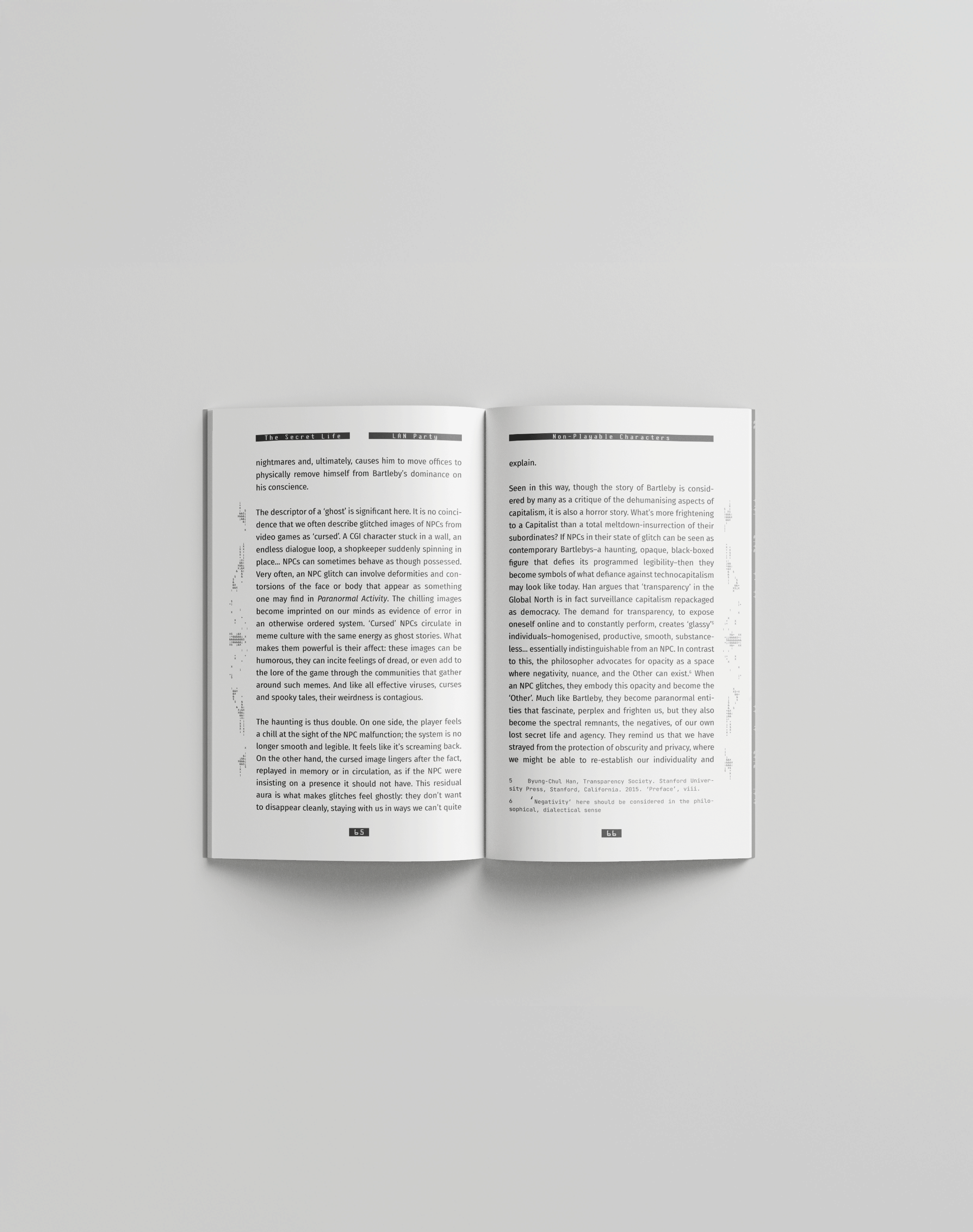
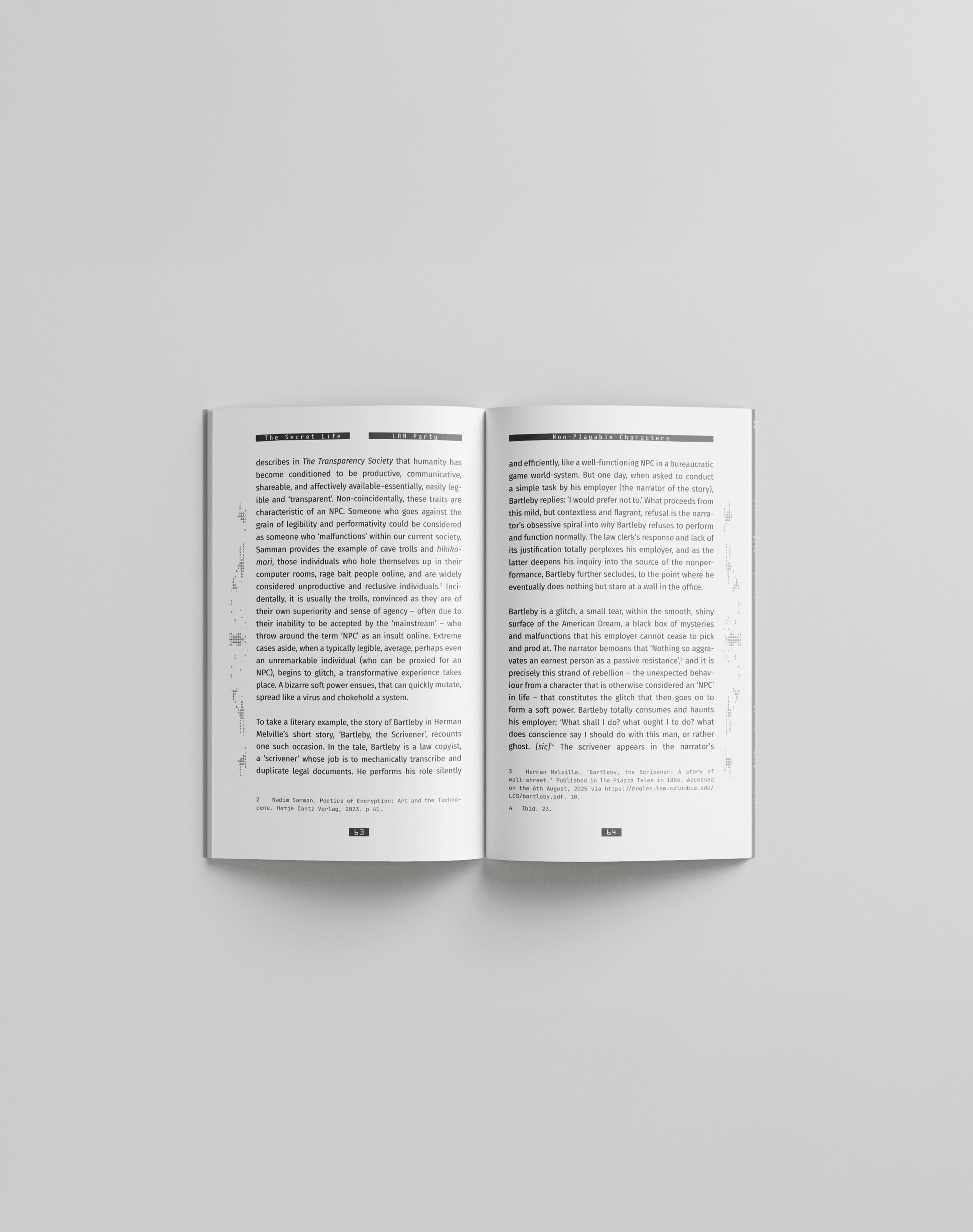
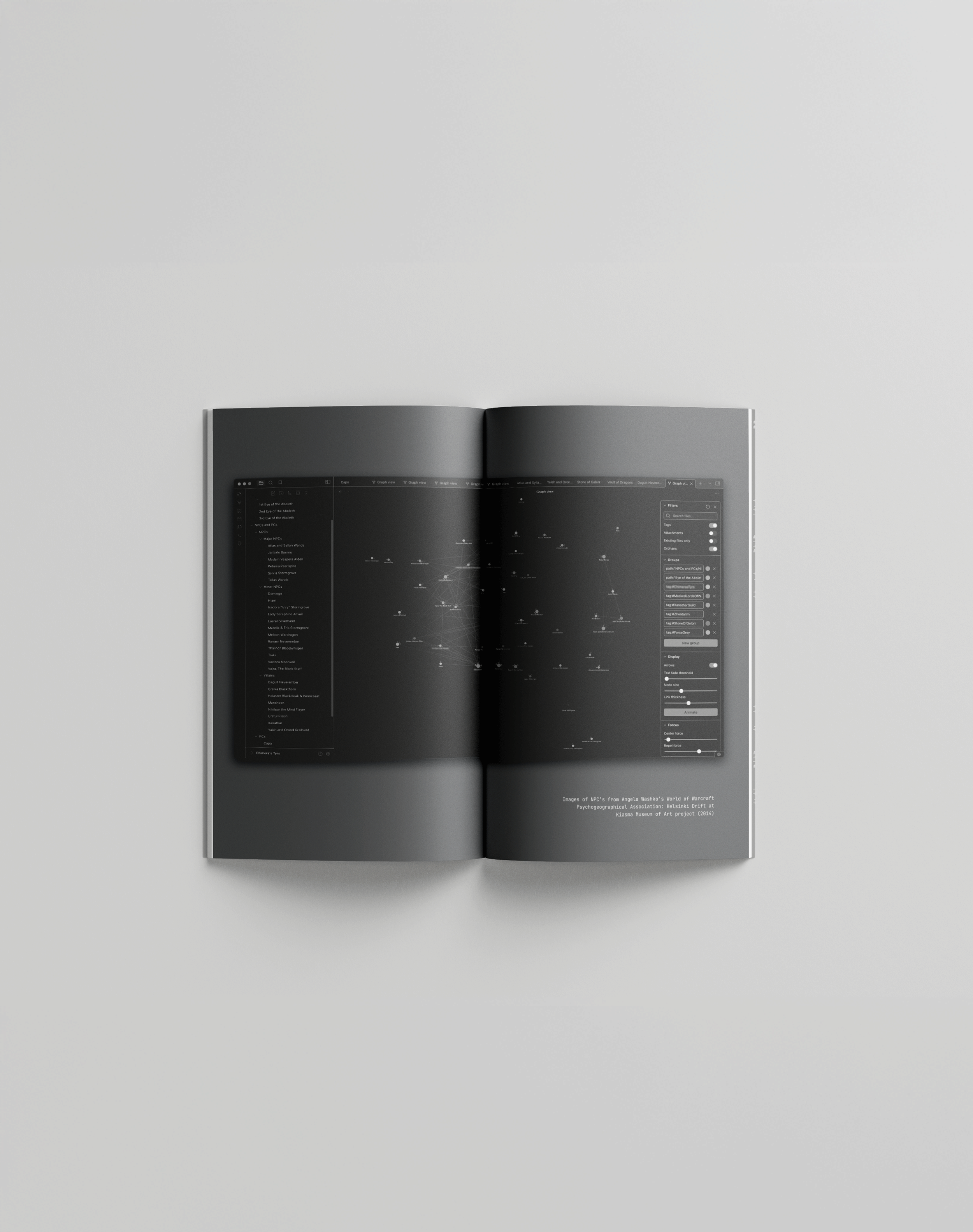
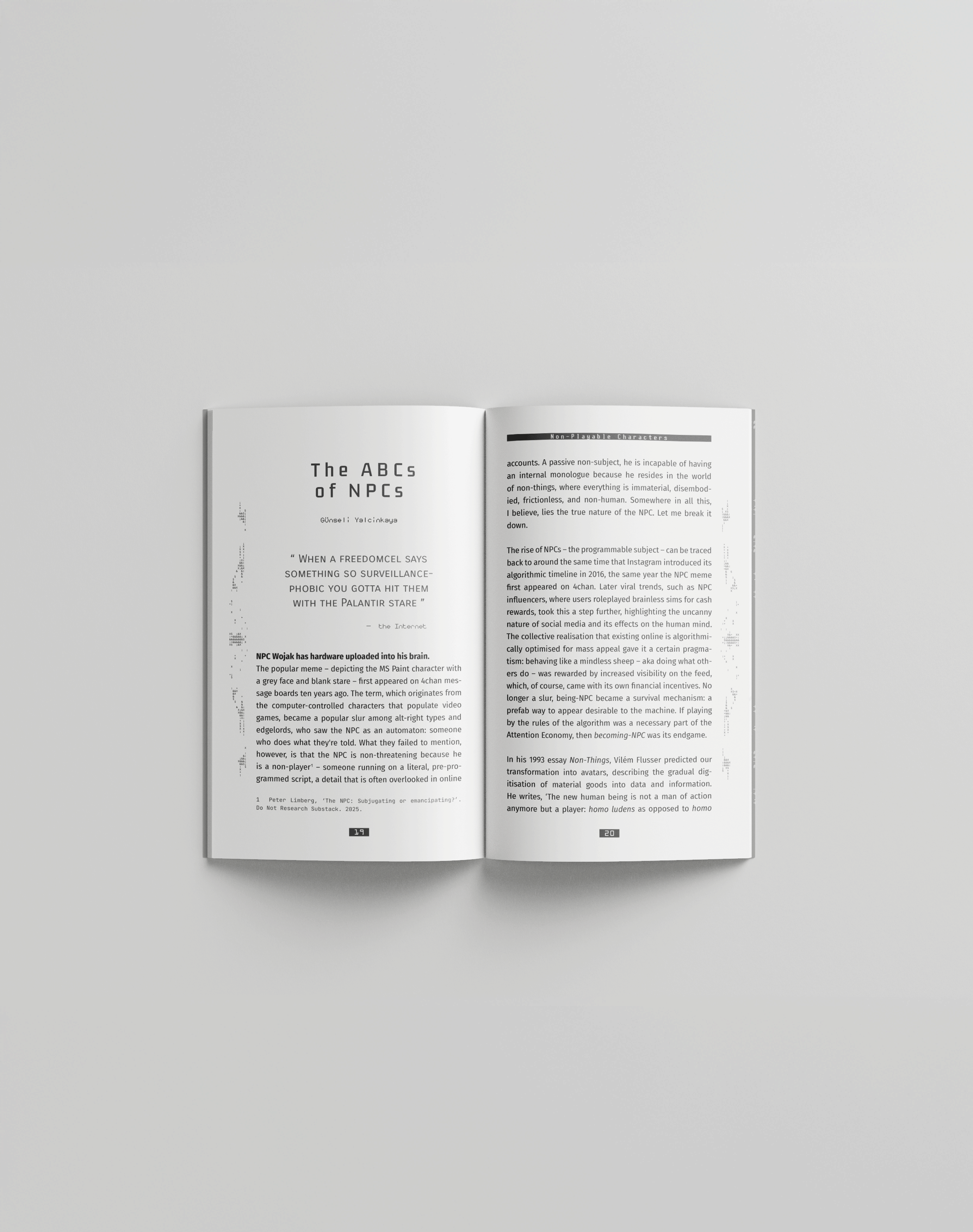
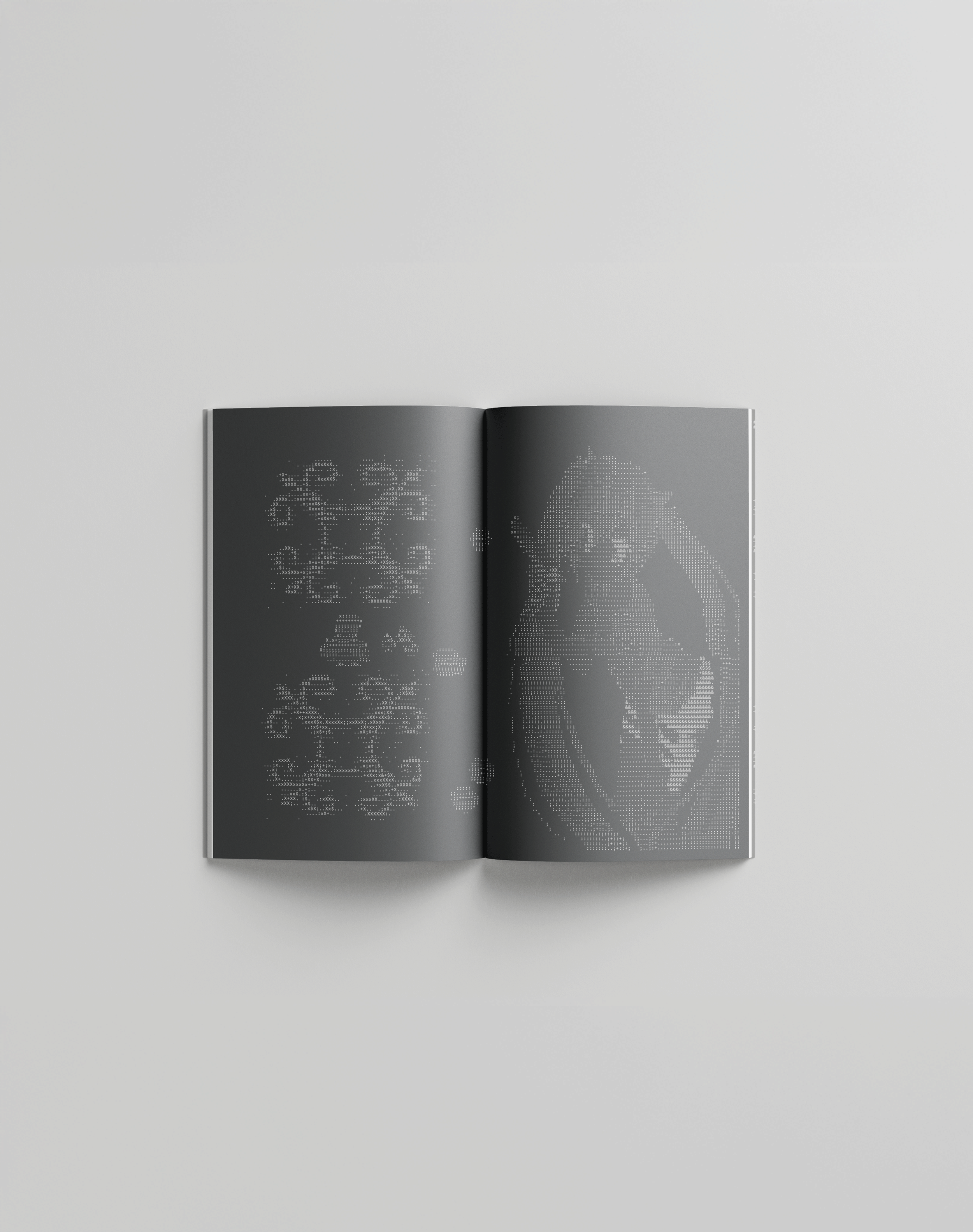
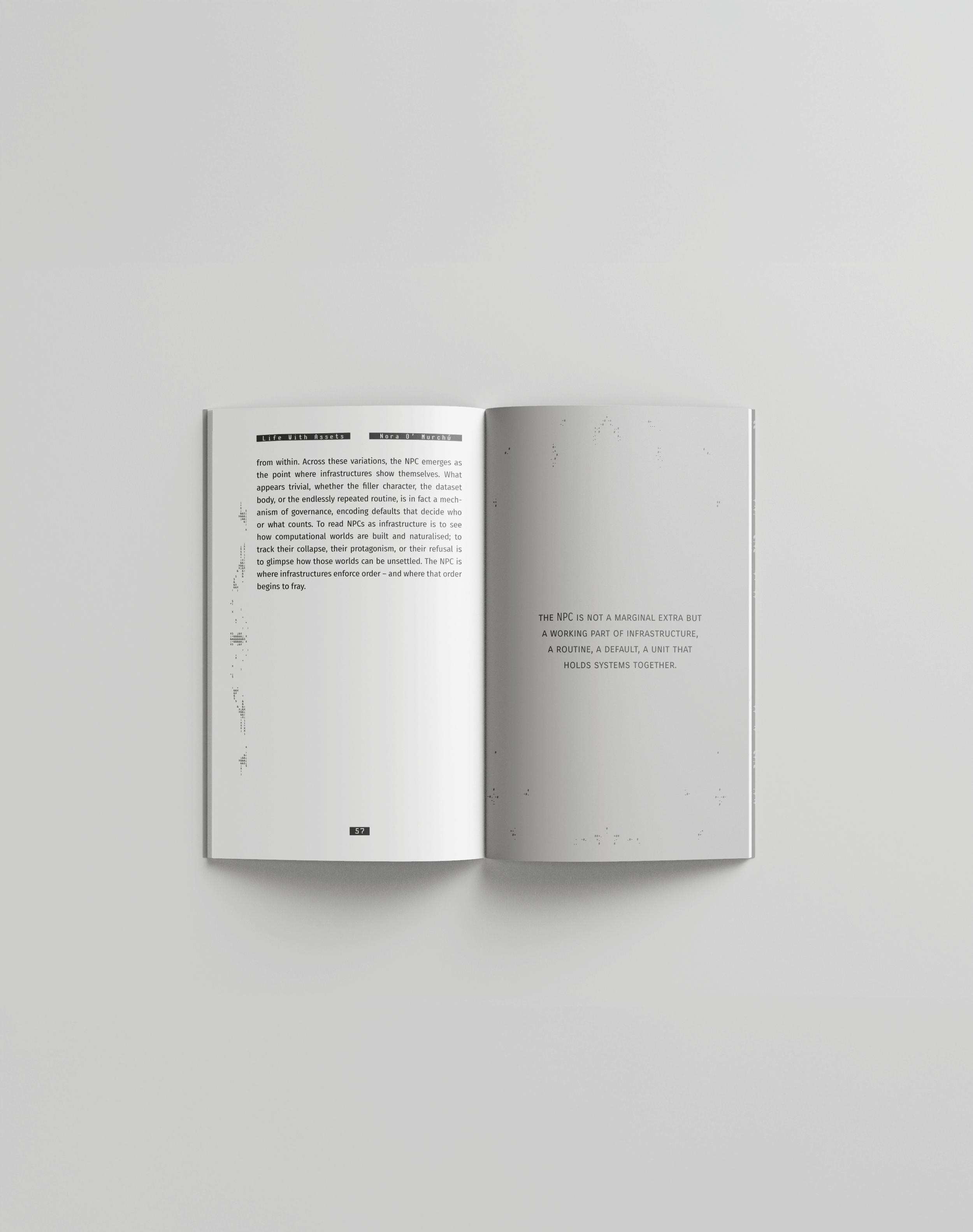
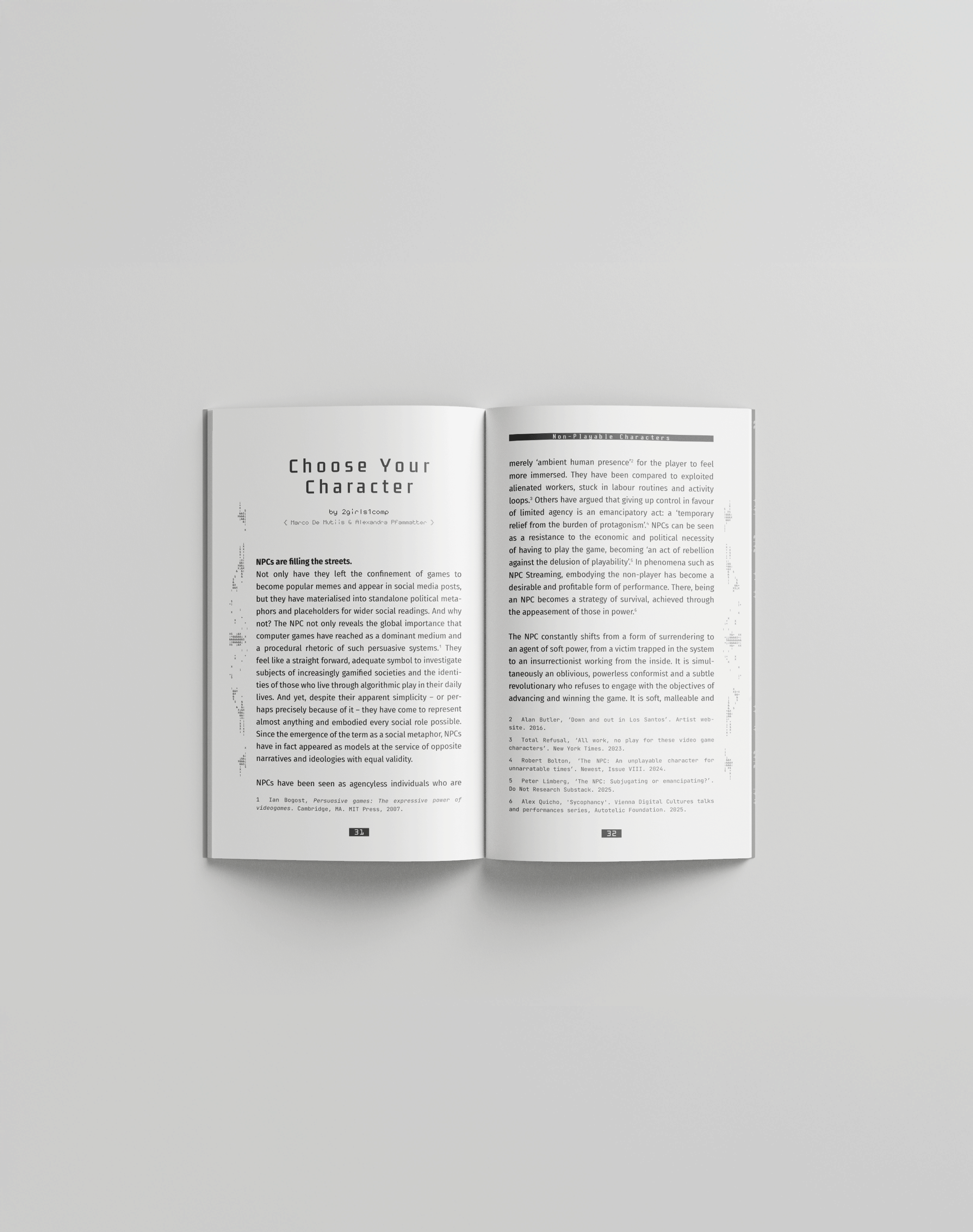
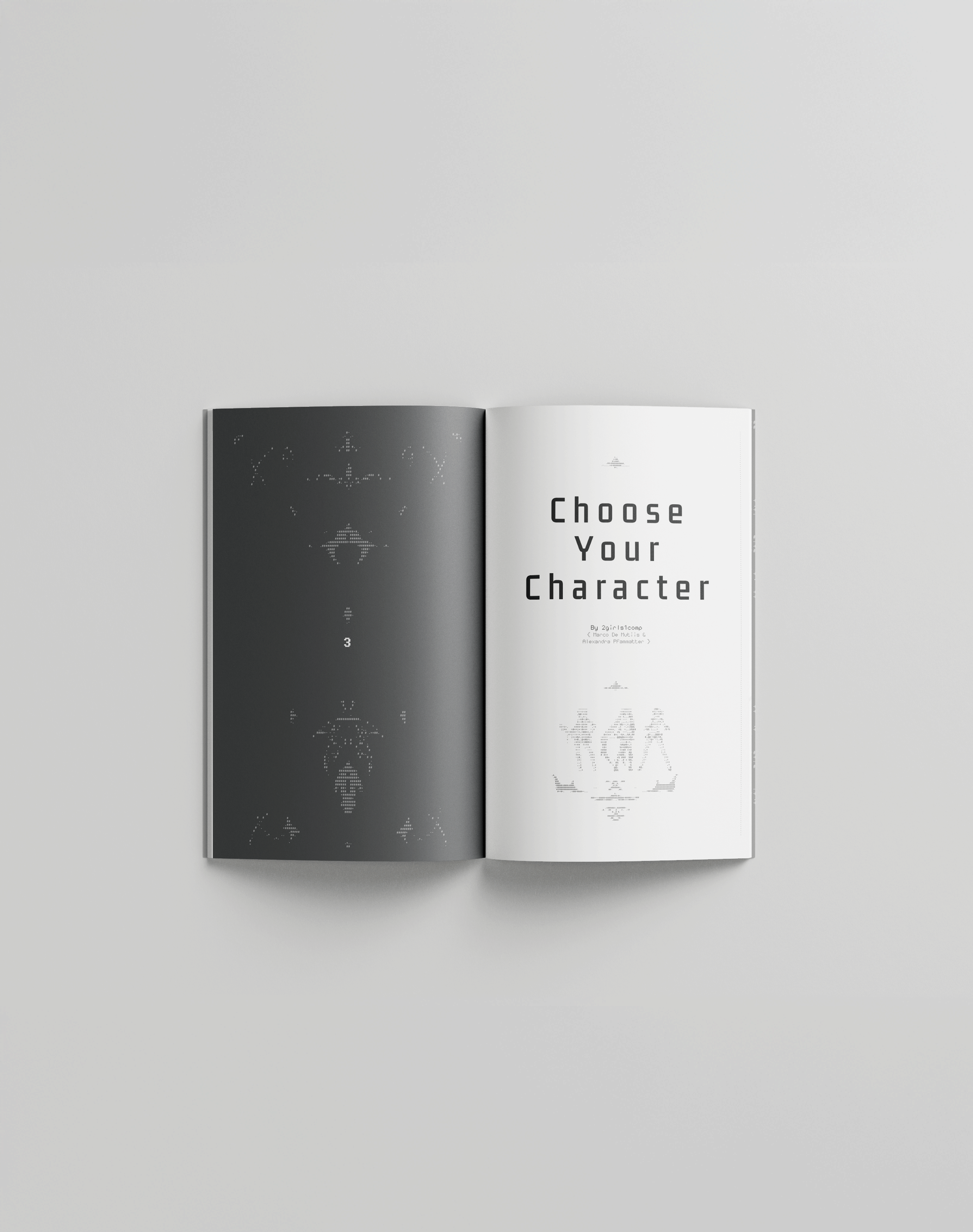
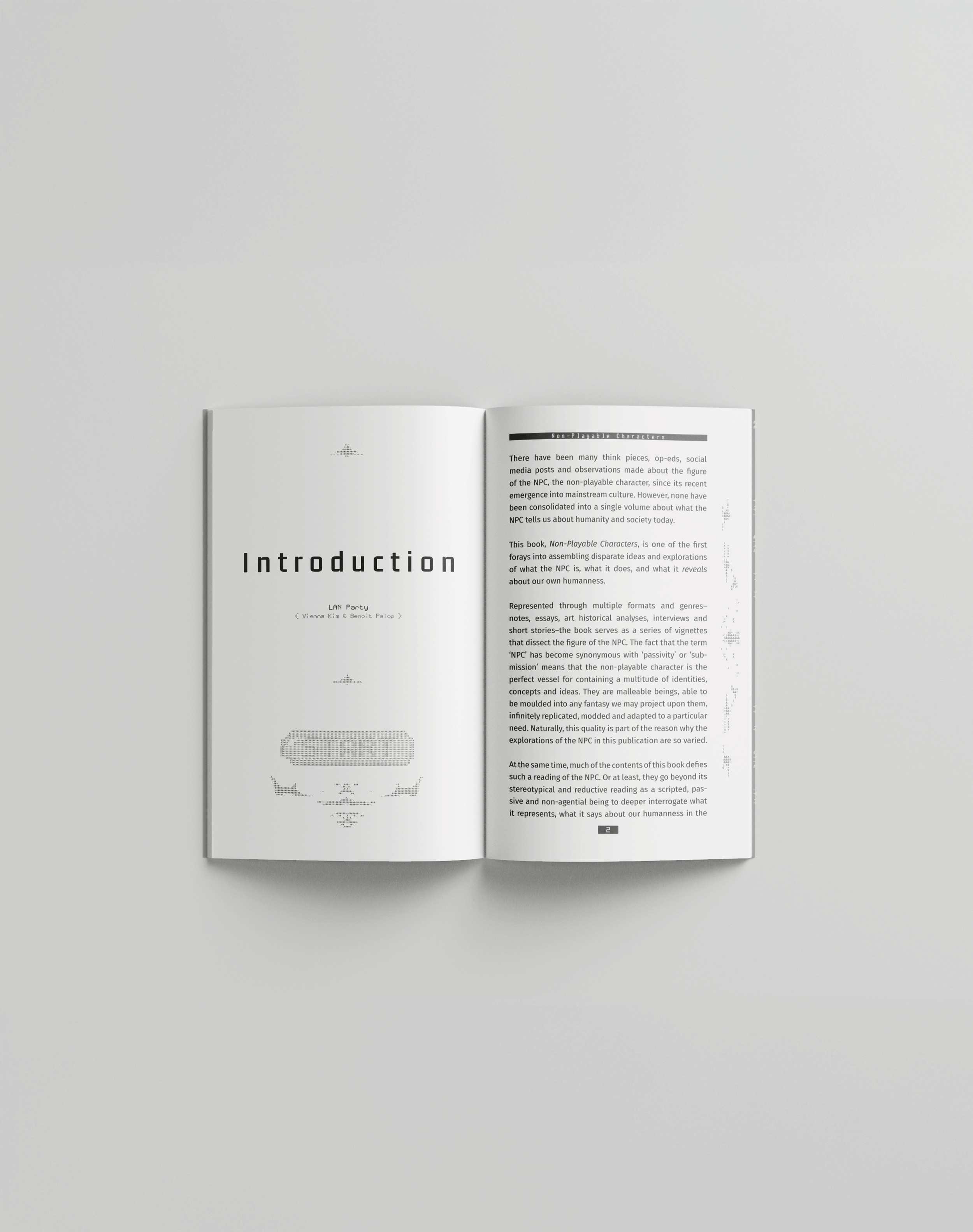
At the core of this collection lies a deeper inquiry into NPCs and AI, agency vs. servitude, NPC-ification, surveillance capitalism, and the emotion economy. It examines how automated roles and behaviours are embedded in our digital environments, and how they shape our affective, cultural and political realities.
'Non-Playable Characters' is one of the first efforts at assembling disparate ideas and explorations of what the NPC is, what it does, and how it might even speak back. Through it, we explore what the NPC phenomenon reveals about our own humanness in the age of Big Tech and AI accelerationism.
About LAN Party
Vienna Kim and Benoît Palop [LAN Party] are writers, researchers and curators of digital art. They created LAN Party, their curatorial and research duo, in 2023.
Vienna is an art historian, writer and curator with a specialisation in new media art and technologies. After obtaining her BA in Art History from the University of St Andrews, and her MA in Art Business from the Sotheby’s Institute of Art, London, she has dedicated her career to exploring the intersection of the art market and technology. She has worked as a freelance writer for nine years, exploring a range of topics about art on the blockchain, internet subcultures, and video game art. Publications include WIRED Japan, Fisheye Immersive, Le Random Editorial, Photo London and Business of Fashion.
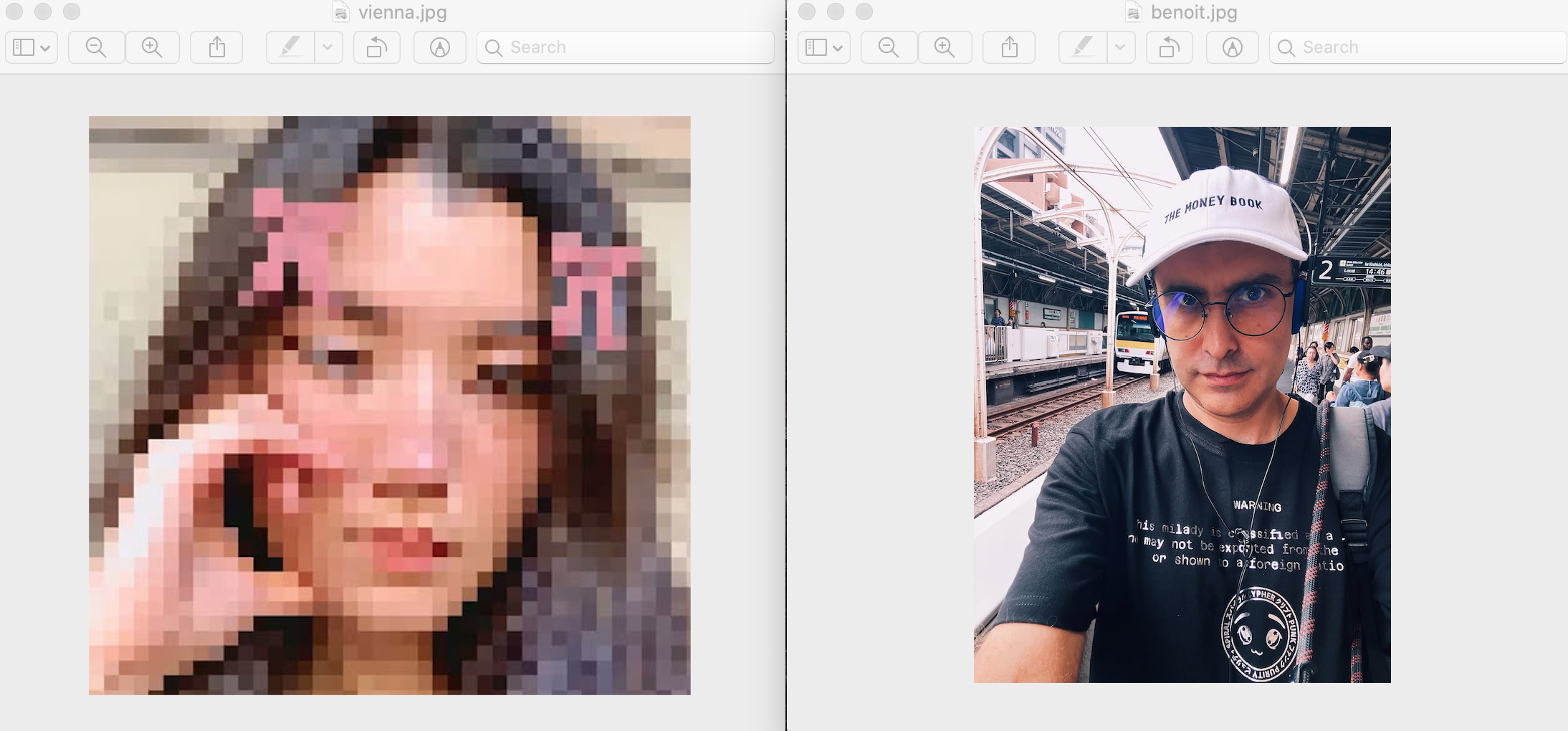
Benoit is a digital culture producer, writer, and curator with over 13 years of experience across digital art and decentralized networks. He holds a Master’s degree in Digital Media Research from Sorbonne University in Paris. His work explores how digital ecosystems shape culture, with a particular focus on net subcultures and emerging internet paradigms. He has collaborated with MUTEK, WIRED Japan, VICE, i-D, Lens Chain, SuperRare, Superstudio, M+ Museum, gallery.so, and the Society for Arts and Technology.
FOLLOW US ON INSTAGRAM
Editor: Xavi Sosa